Electrify your comfort with electric boilers.

How electric boilers work
Understanding the principle of electric boilers.
Electric boilers differ from conventional heating systems that run on oil, gas, coal or wood in one key detail: They don’t require the burning of gaseous or solid materials to generate heat. Your home is heated with warmth generated by electricity. Electric boilers are a good solution if your home is not connected to a gas network. They also serve as a supplement in a hybrid system with other heat generators.
Advantages of electric boilers
Why electric boilers can make sense.
- Less disruption and low maintenance.
As there are few moving parts in the electric boiler, less malfunctions occur.
- Quiet operation.
Electric boilers are quieter in operation, mainly due to the less moving parts inside.
- Easy placement for installation.
Because Electric Boilers do not need a chimney or gas pipe they are more flexible regarding the installation location.
- Close to 0 % carbon emissions.
If it is operated with electricity from renewable energy sources, the electric boiler is completely emission-free.
The appropriate use of an electric boiler depends on the given circumstances. In many cases other heating devices e.g. a heat pump can make more sense. When considering an electric boiler these aspects need to be taken into account:
- Cost-intensive: Although the purchase costs are lower, electricity is the most expensive energy for heating, so the costs are higher in the long run.
- Limited hot water: Electric boilers can only produce a limited amount of hot water. This can lead to problems in larger houses with several residents or overall higher water consumption.
- Eco-friendliness depends on the electricity used: The eco-friendliness drops when electricity needed is generated from fossil fuels instead of renewable sources. In that case the efficiency is significantly lower than the efficiency of a heat pump.
Decentral and central electric boilers
Types of electric boilers.
You get central and decentral solutions, electric boilers only for heating, only for domestic hot water or for both: There is a suitable type of electric boiler for every need. Find out which boiler is right for you.
Central solutions.
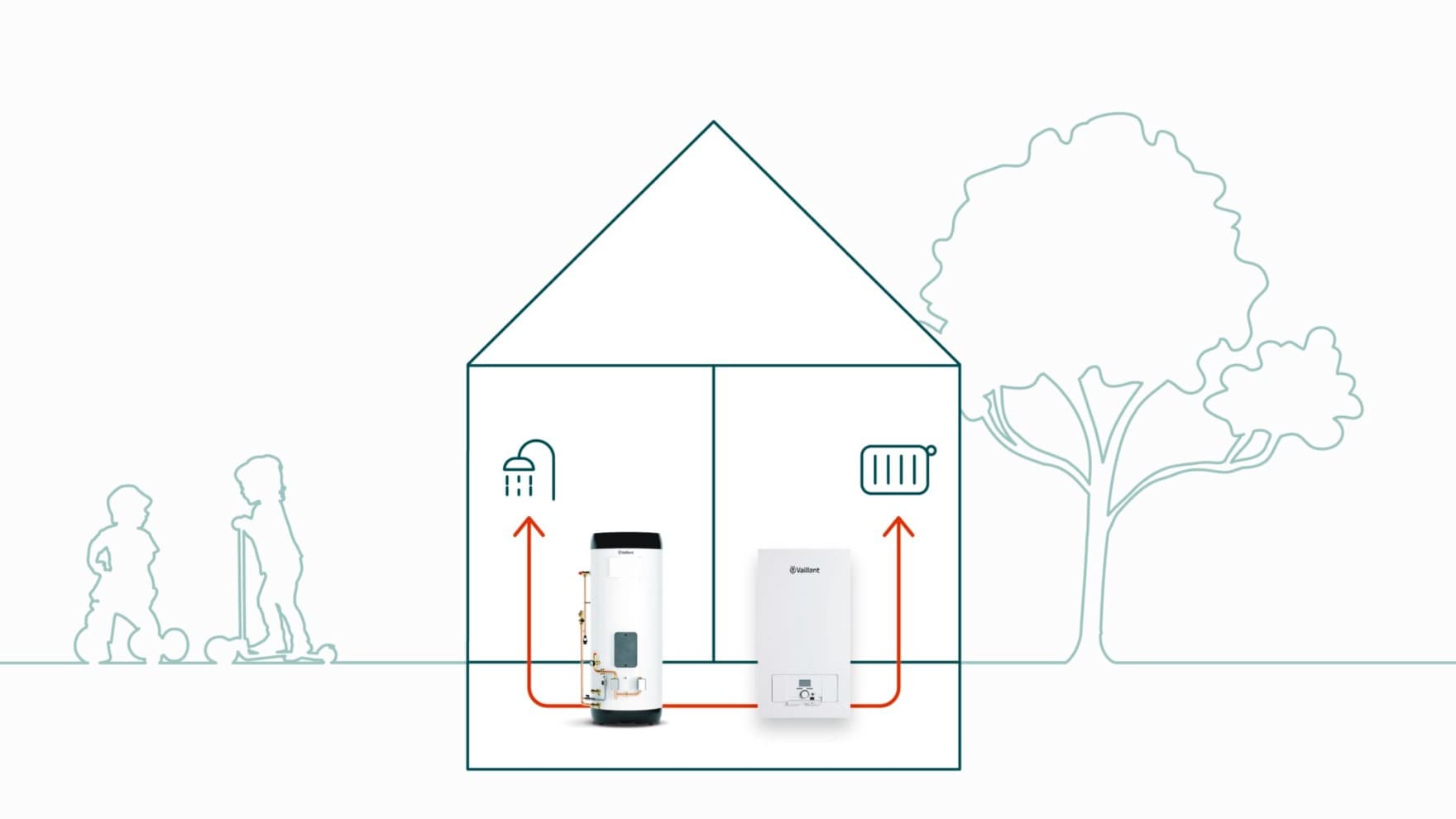
Centralized heating refers to a heating system that operates from a single point in a home (e.g. the basement), generating heat that is then distributed to different rooms. This method ensures that the temperature in the entire house is consistent and can be regulated using a thermostat.
Central heating systems are Ideal for the cellar or utility room of a single-family or multi-family home.
- Heat only boiler
- Electric storage water heater
- System boiler
This type of electric boiler supplies the radiators directly with heat generated from electricity. Often used as a main heating generator solution for people who want to use electricity instead of fossil fuels to heat their home.
It is often also used in holiday homes or as a backup for heat pumps during peak loads. Heat only boilers are particularly suitable for centralised systems, but also work decentral.
Decentral solutions.
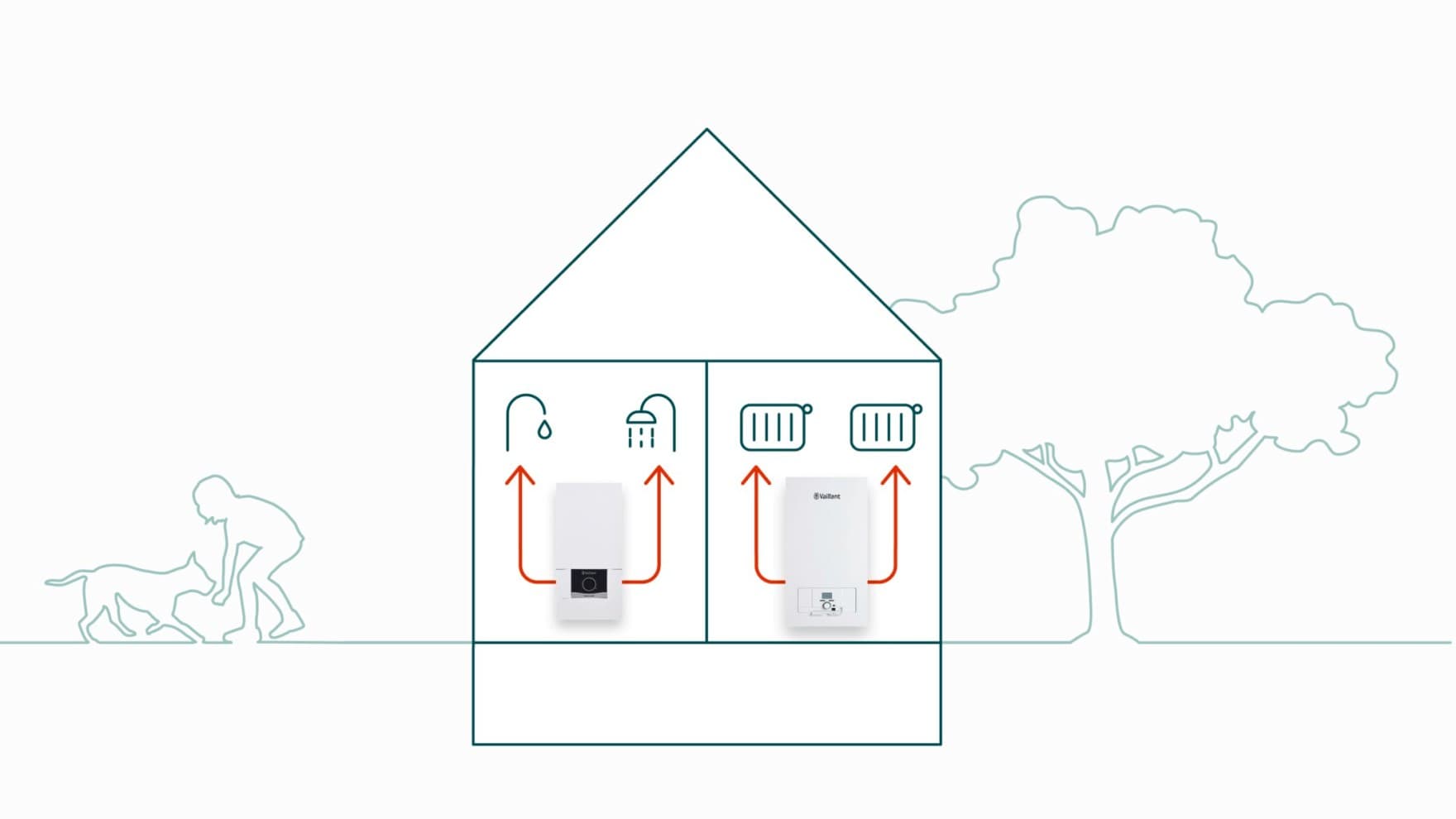
Decentralized heating systems differ from centralized ones in that they use individual units to control the heating and domestic hot water in specific areas or rooms, rather than relying on a single source to distribute heat throughout the entire house.
- Electric instantaneous water heater
- Electric combi boiler
An electric water heater is often used in the flat, right in the room where hot water is needed. The water heater heats the water directly without using a storage tank. When a hot water tap is turned on, cold water flows through a pipe into the appliance, where it is heated immediately.
Electric solutions for modern homes
Get to know some of our electric boilers.
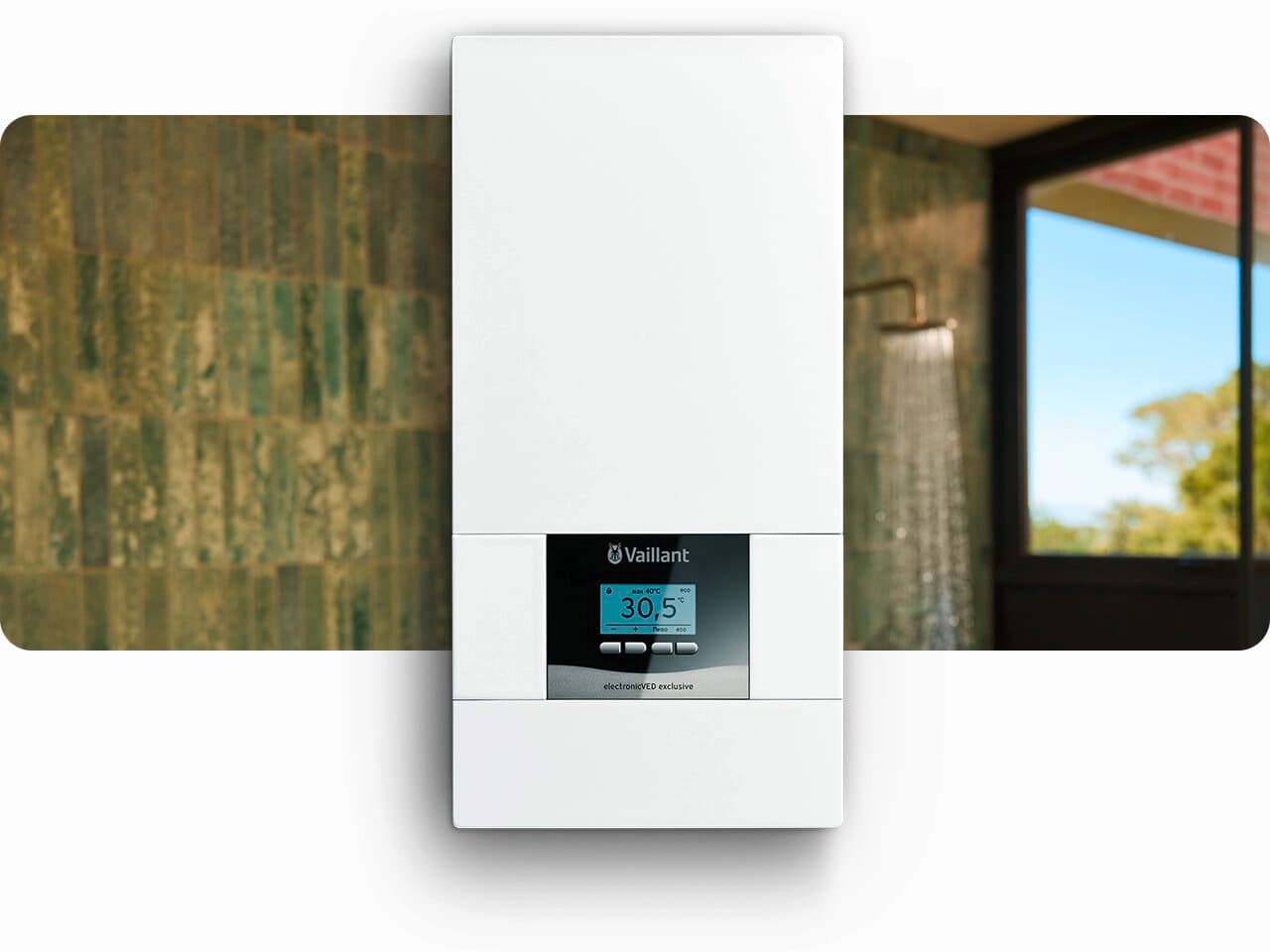
- 1/3Electric Instantaneous Water HeaterelectronicVED exclusivePremium tankless water heater for ultimate hot water convenience.Get more details
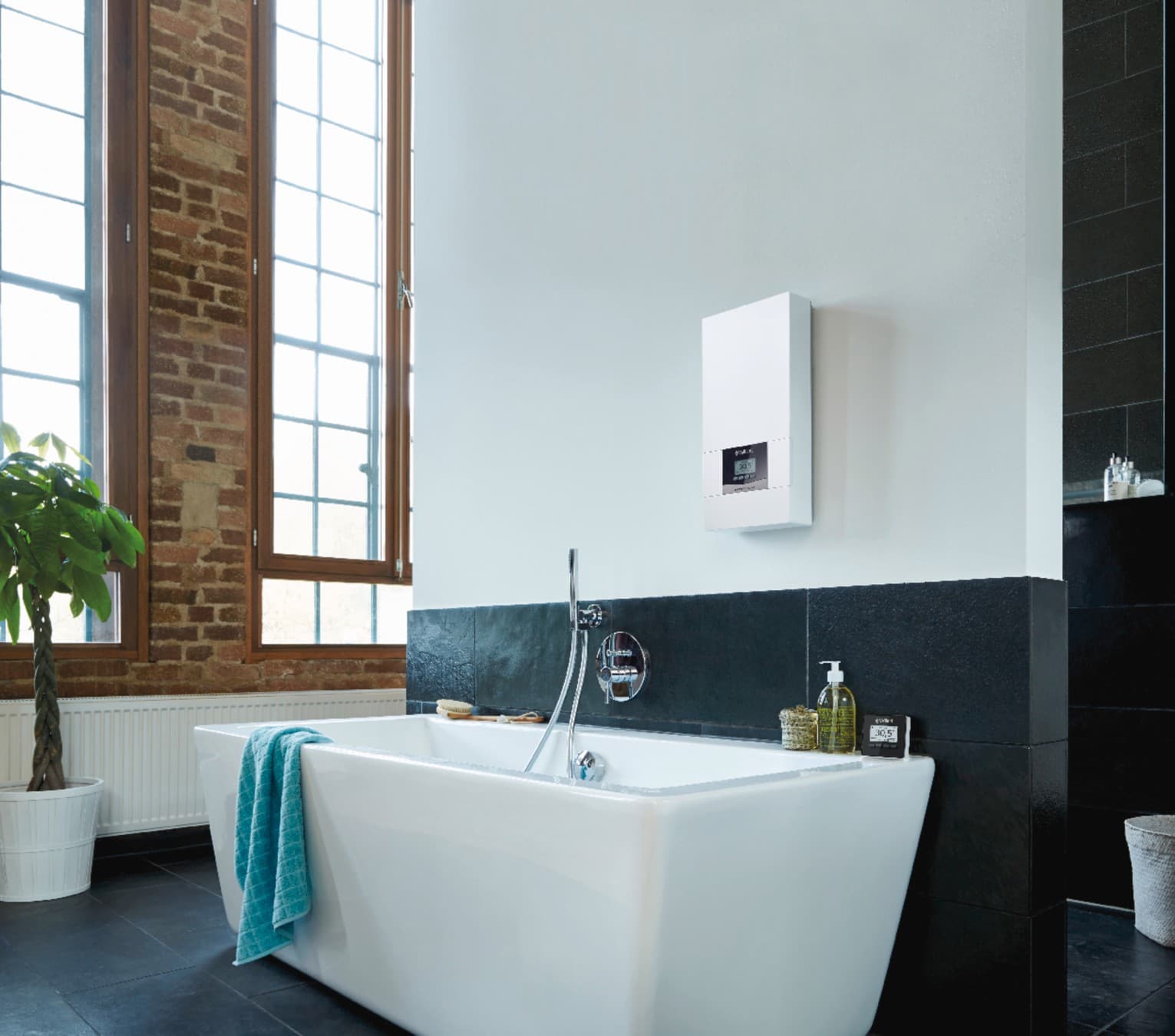
Premium tankless water heater for ultimate hot water convenience.
- Precise hot water temperature from 20°C to 55°C
- All consumption data at a glance with EnergieMONITOR
- 30% energy and water savings compared to hydraulic units
- Scald protection & child safety lock as additional safety features
- Timeless design with UV-resistant housing
The electronicVED exclusive instantaneous water heater provides hot water exactly when you need it. With a capacity of up to 16 liters per minute, you can easily use two taps simultaneously. Enjoy precise temperatures between 20 and 55°C without any performance loss. The EnergieMONITOR shows you at any time how much energy you're consuming, so you can supply your home with hot water efficiently and conveniently. The wireless remote control additionally enables comfortable operation.
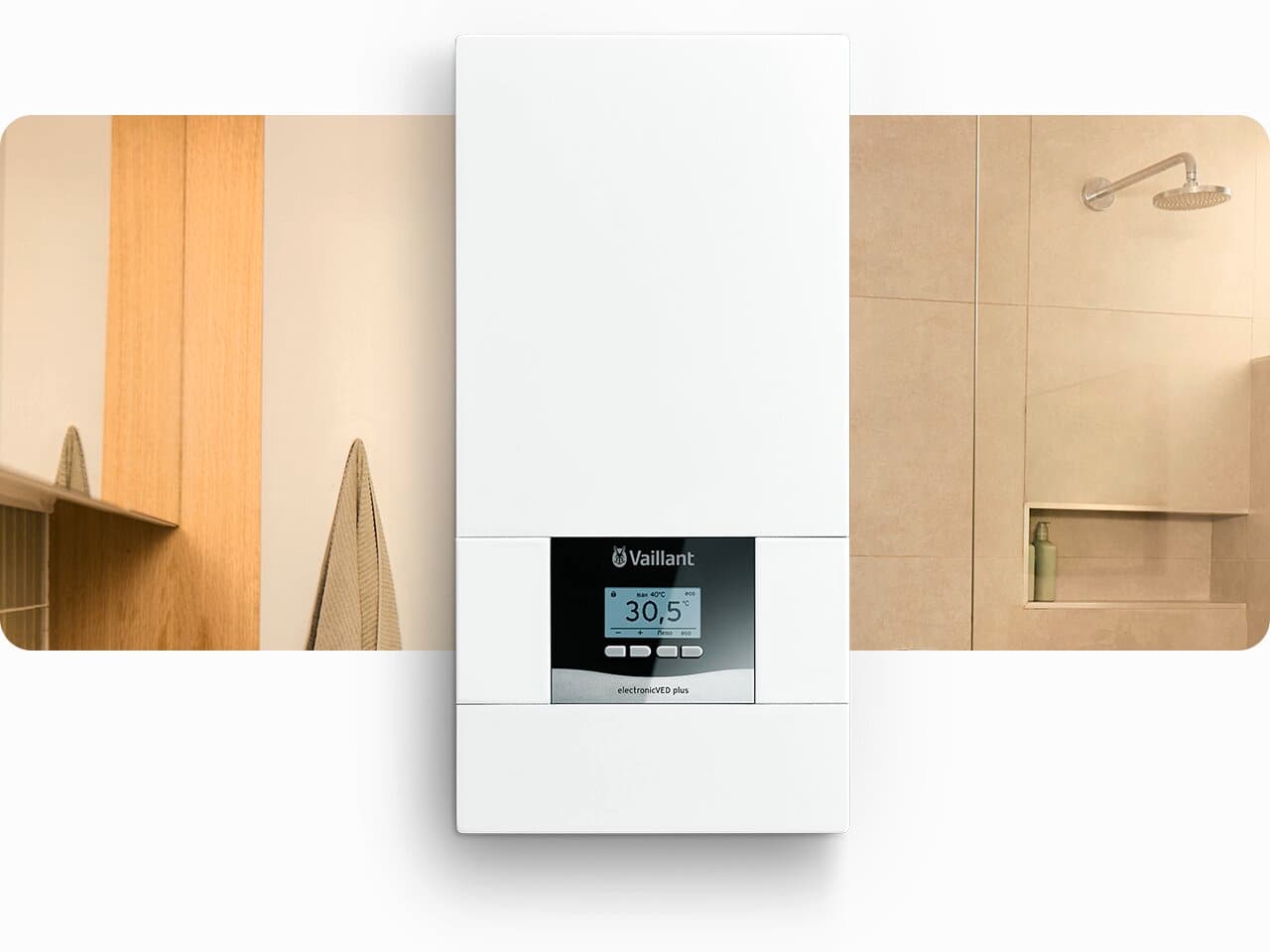
- 2/3Electric Instantaneous Water HeaterelectronicVEDReliable electronic instantaneous water heater with simple operation.Get more details
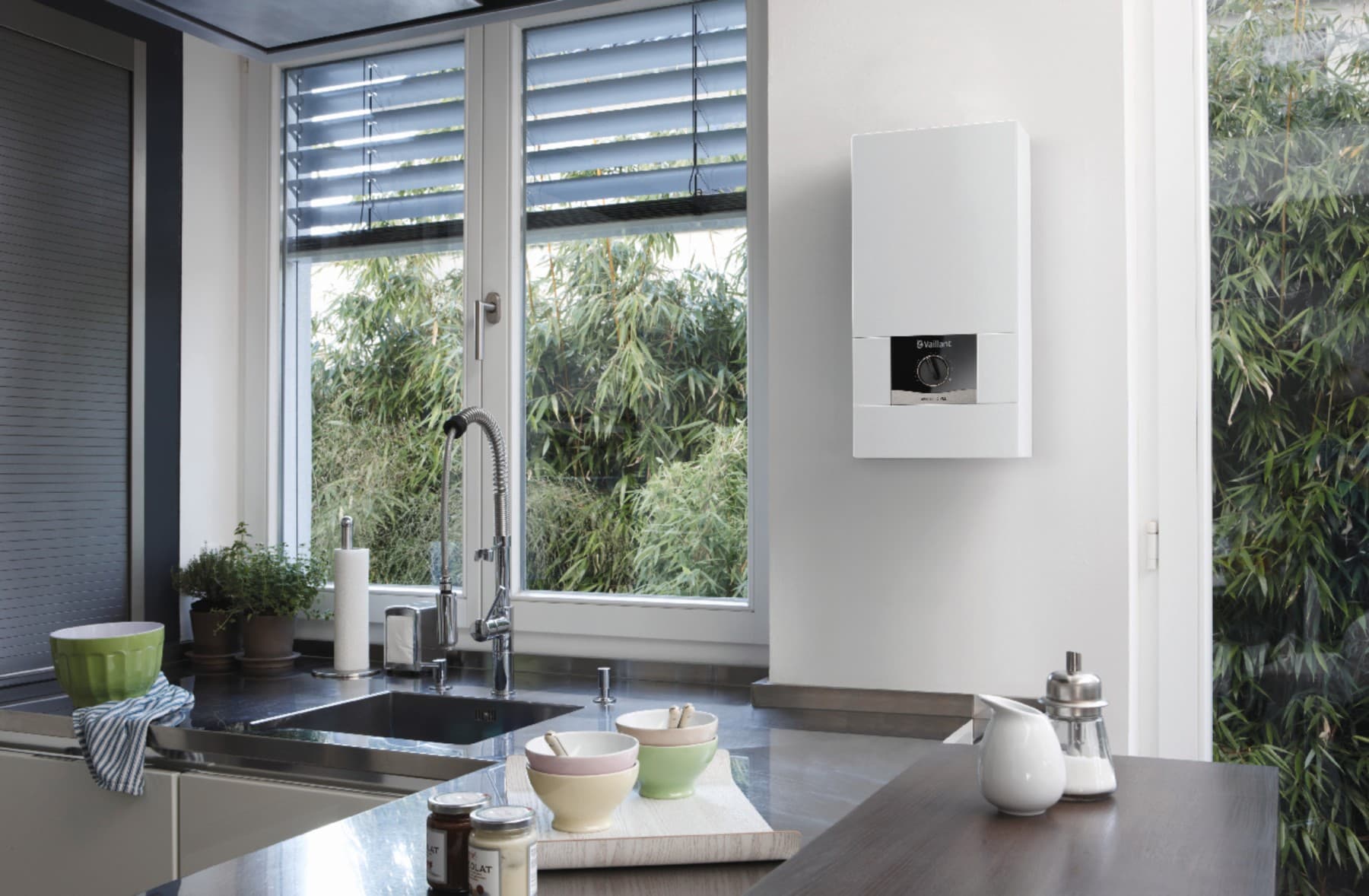
Reliable electronic instantaneous water heater with simple operation.
- Our bestseller with excellent price-performance ratio
- Ideal for decentral hot water preparation in flats
- Can be used flexibly in a room with two or three tapping points
- Three-step switch for setting the water temperature (display)
- Flat, space-saving design fits in every apartment
The electronicVED can be used flexibly in a room with two to three tapping points, for example in the shower and at the basin or the bathtub. It is possible to cut energy costs by up to 30 % compared to hydraulically controlled instantaneous water heaters which always heat the water to the power limit. It is the ideal solution for all those who prefer a particularly simple operation: Just set the desired temperature continuously between 30°C and 55°C on the rotary control and read it off the digital temperature display.
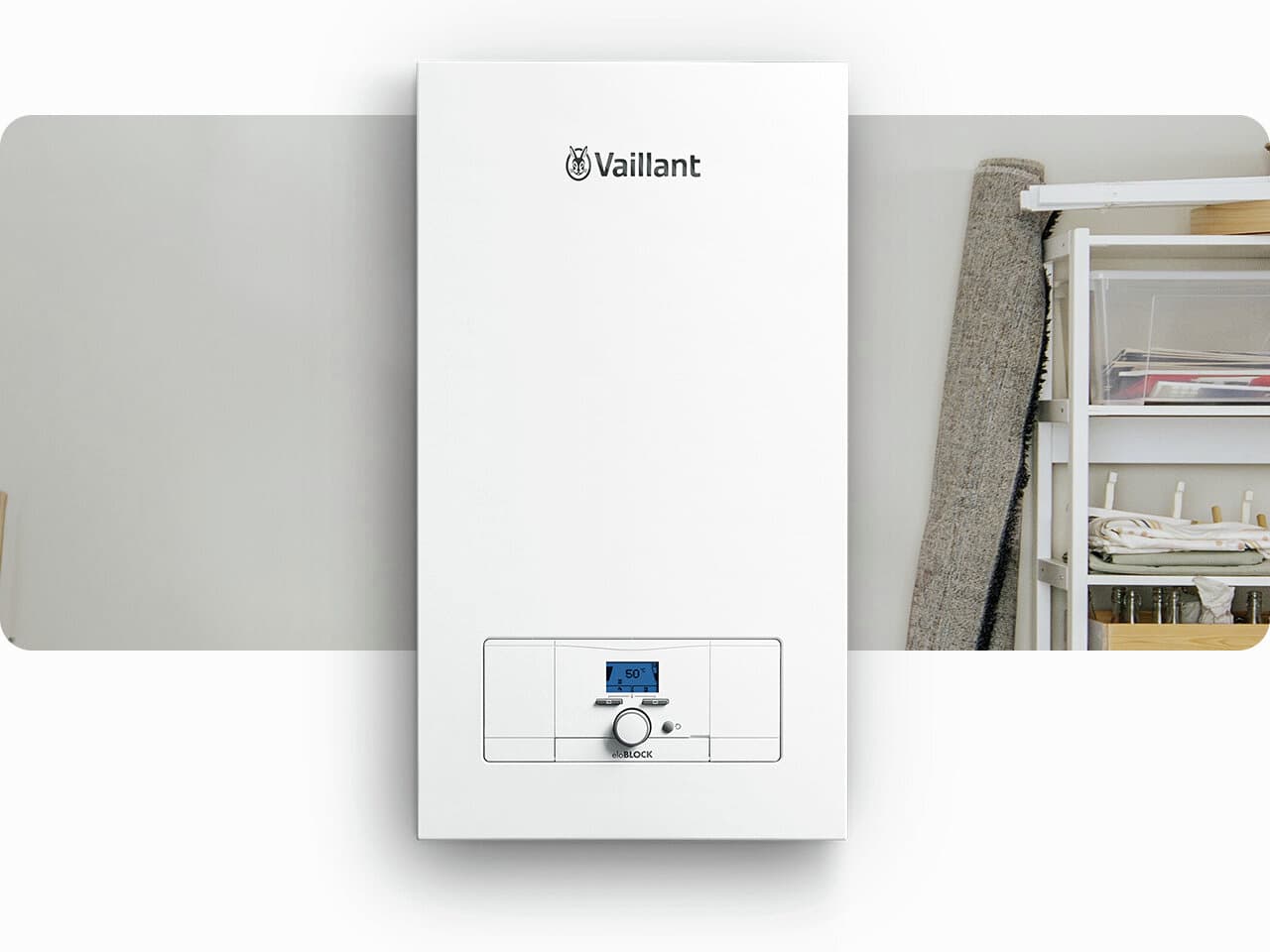
- 3/3Electric Wall-Hung BoilereloBLOCKThe perfect heating solution for holiday houses and homes without gas access.Get more details
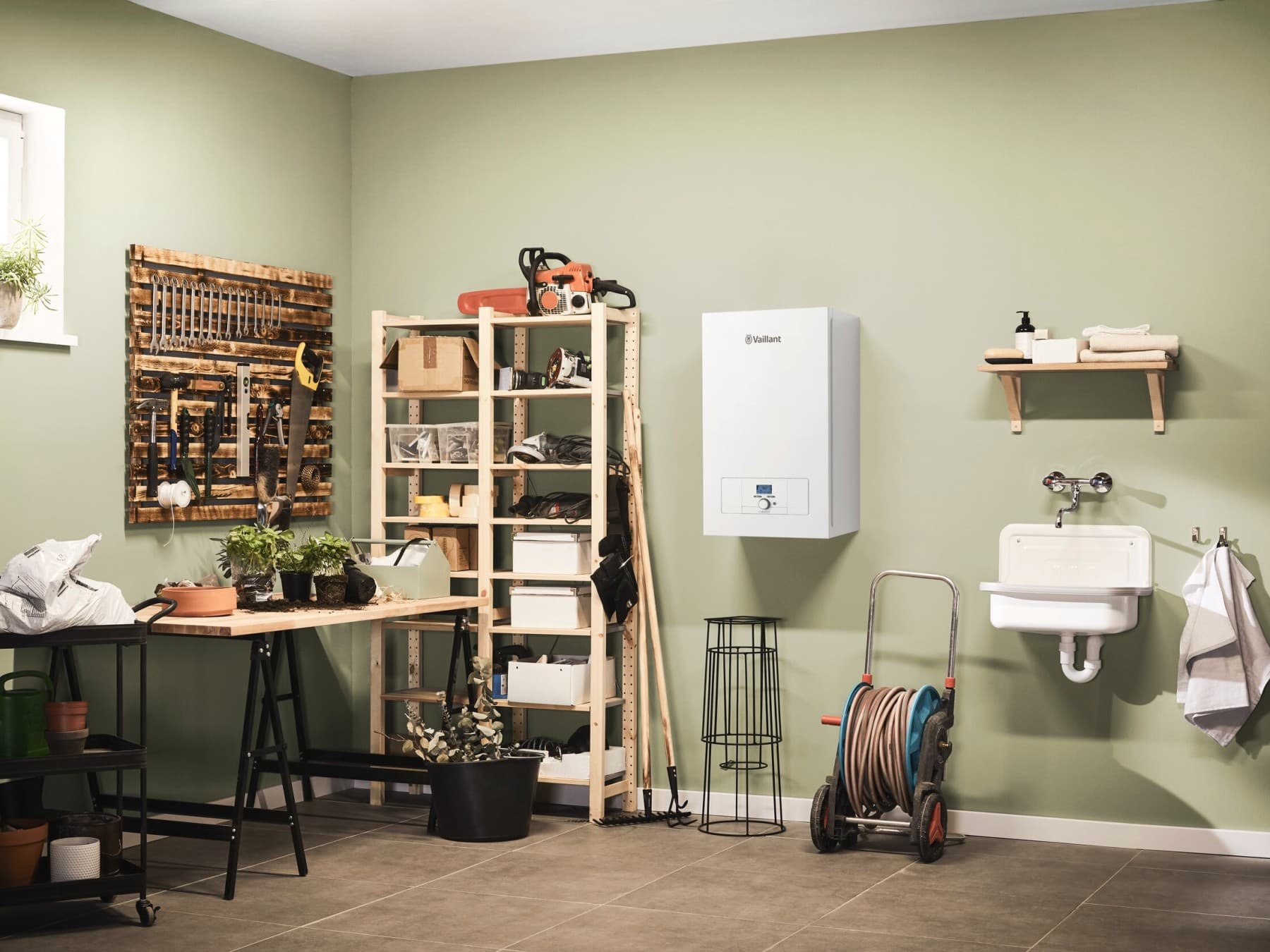
The perfect heating solution for holiday houses and homes without gas access.
- Ideal solution for special heating needs, such as holiday cabins or homes without access to gas
- Can be integrated as a backup in existing heating systems
- Designed to ensure high comfort and reliability while using only electricity as a power source
- Smart control from anywhere with your smartphone
- Low power consumption due to high-efficiency pump
Our eloBLOCK offers a special heating solution for remote holiday houses, homes without access to gas, or as a backup. The system operates on electricity, supplying radiators, floor heating, and hot water. With its high-efficiency pump, it ensures fast and even heat distribution and automatically compensates for slight temperature differences. Due to the optimal power adjustment and the fine power gradations, our electric wall heater is additionally economical in power consumption. Maintenance is effortless due to the long-lasting materials used and no burning of fossil fuels.
Electric boilers in hybrid system
The role of hybrid systems in modern Homes.
Combining electric boilers with heat pumps creates a hybrid heating system that maximizes efficiency and flexibility. Heat pumps are highly efficient in moderate temperatures, using ambient air or ground heat to warm spaces. During colder periods, when heat pump efficiency may decrease, electric boilers can provide supplementary heating to maintain comfort. This combination allows for optimal energy use, reducing overall heating costs and environmental impact. The integration of both systems offers reliable heating solutions, leveraging the strengths of each technology to ensure consistent indoor temperatures and enhanced energy efficiency.
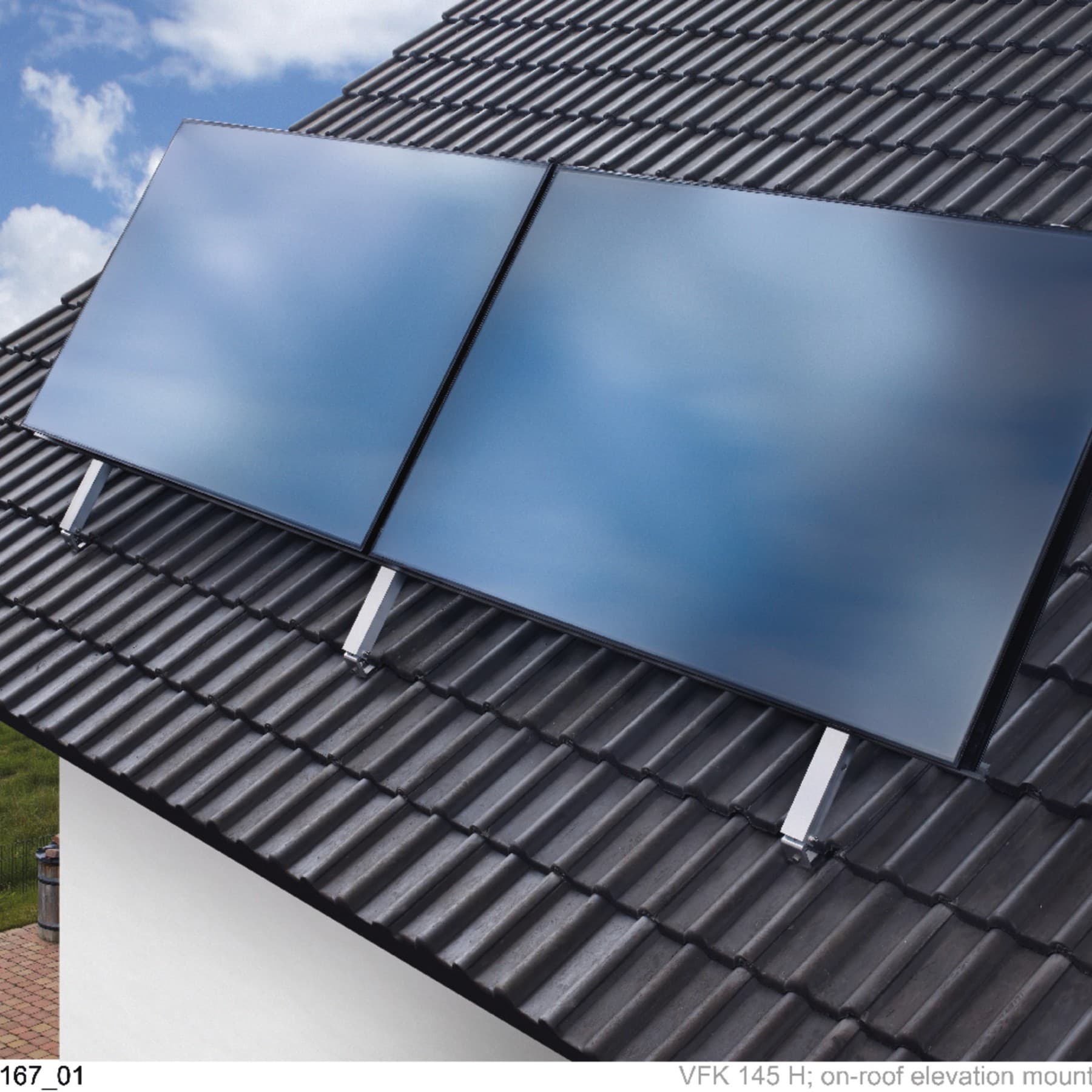
The ideal and sustainable duo: electric boilers in combination with a solar system.
Solar and electric boilers are a great and cost-efficient combination. With the self-generated electricity, you can directly power the electric boiler. The electricity generated can be used for your own domestic purposes or fed into the grid for a fee. The use of renewable energies is particularly worthwhile if you have a high level of self-consumption. In times of low solar power production due to little solar radiation, it is possible to counterbalance the power fed into the grid with the power needed from the electricity provider.