Everyone is talking about heat pumps. We explain them to you.

Why heat pumps are the new standard
The new efficiency standard in heating.
What is so special about heat pump technology? The answer is both simple and ingenious: A heat pump uses the free energy from the air, the soil, or groundwater and converts these renewable energies into warmth. With an exceptional efficiency ratio, it it can deliver up to 100% energy for heating from just 25% electric energy. This innovation boosts your independence from fossil fuels and enables you to actively contribute to climate protection.
Advantages of heat pumps
Why the heat pump is the first choice.
- Heat cost-efficiently.
A heat pump's high energy efficiency class ensures high comfort with low operating costs.
- Gain independence and sustainability.
Heat pumps draw up to 75% of energy from the environment and use only 25% of electricity - which makes you 100% independent of increasing CO₂ taxation in future.
- Go for longevity.
Vaillant's dedication to high standards ensures durable products that undergo over 300 tests during production. These systems are designed to perform flawlessly in extreme weather conditions, from the scorching heat of the Sahara to the icy cold of the Arctic.
- Heating & cooling for year-round climate control.
Heat pumps actually cover both: besides heating in winter, they can cool your home on hot summer days. By efficiently transferring heat from indoors to outdoors, they offer an energy-efficient solution for lowering indoor temperatures.
Operating principle
How does a heat pump work?
The heat pump borrows its inspiration from the workings of a refrigerator – but with a difference. What a refrigerator does, the heat pump does in reverse. Whereas the fridge draws warmth from the interior and transports it to the outside, the heat pump extracts thermal energy from the environment and transfers it as heating energy into your home. 75% of its energy it draws from the environment – namely by means of heat from air, groundwater or soil. The remaining 25% is electricity required for operation. Let’s have a closer look at what's happening inside.
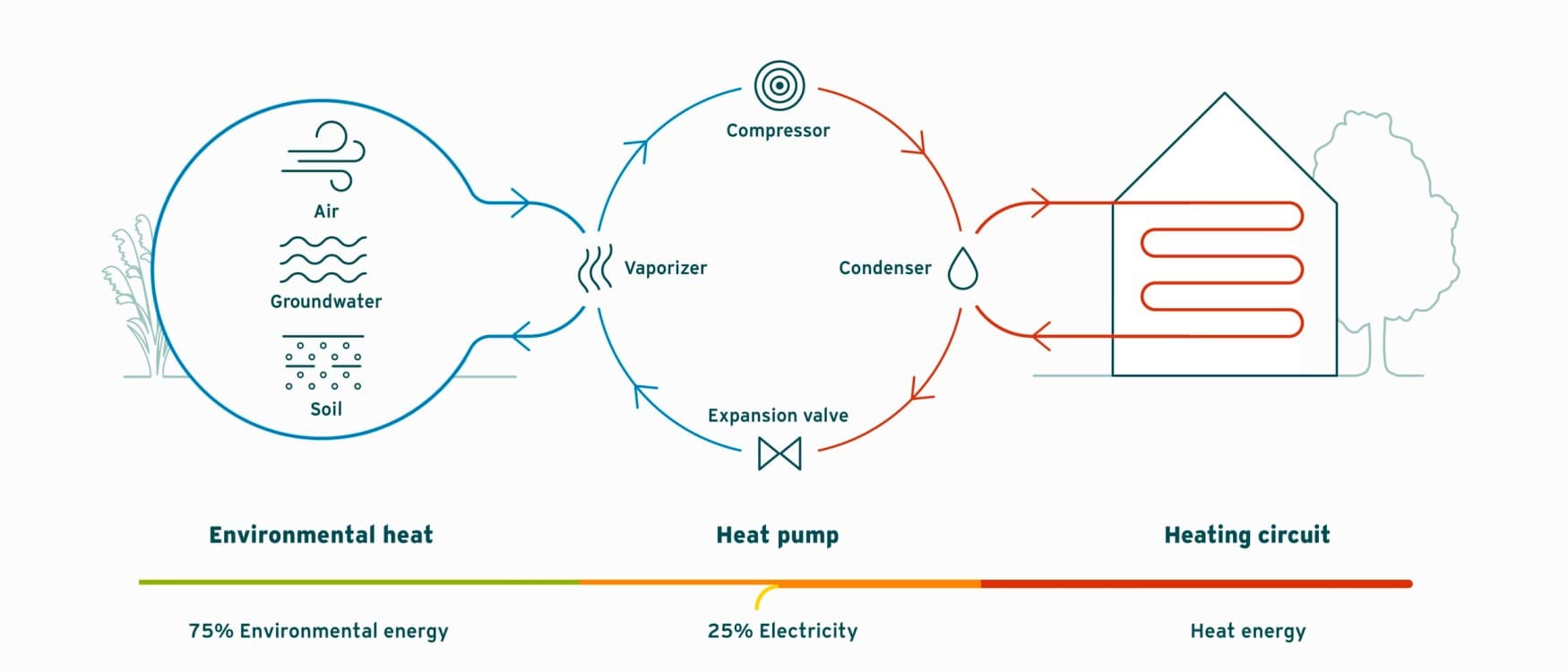
The refrigerant cycle within a heat pump can be succinctly outlined in four key steps:
Step 1: Evaporation
Environmental heat is absorbed by the refrigerant through a heat exchanger. Due to its exceptionally low boiling point, the refrigerant undergoes evaporation.
Step 2: Compression
The vaporized refrigerant is then compressed by an electric compressor. This compression increases both the pressure and the temperature of the refrigerant.
Step 3: Condensation
Another heat exchanger extracts heat from the refrigerant gas, transferring it to the heating water until the desired flow temperature is achieved. This heat is subsequently conveyed to the heat storage tank of the heating system and distributed through underfloor heating or radiators.
Step 4: Expansion
Following the heat transfer to the heating water, the refrigerant condenses back into a liquid. It is then routed back to the evaporator via the expansion valve, ensuring complete expansion and restarting the cycle.
Different types of heat pumps
One technology. Three different types.
- Air-source heat pumps
- Water-source
- Ground-source
Air-source heat pumps.
Air source heat pumps utilise the ambient heat of the air to bring comfort to your home. They can be divided into two types:
The air-water heat pump utilises the ambient air temperature and transfers its heat to a water based heating system. It's simple installation – both from the point of view of installation and space requirement – make it the most popular choice. The air-air heat pump is only appropriate in certain cases like for buildings with a very low heating requirement and excellent insulation. Instead of underfloor heating or radiators, air serves as the heat distribution system.

Cooling with a heat pump
Did you know? Heat pumps can cool too.
It's not as contradictory as it sounds! There are two different ways a heat pump can support you in cooling: active and passive. This depends on the type of Vaillant heat pump you choose.
Active cooling only works with air-water heat pumps in a similar way to heating, but in reverse. Warm air is extracted from your room and discharged into the environment. This is the fastest way to cool down your rooms by up to 3°C.
Passive cooling only makes sense for brine-water and water-water heat pumps as it utilises the low temperature of the soil or groundwater to cool down. Only the pump of the appliance runs and consumes significantly less power compared to active cooling.
As you can see, heat pumps are real all-rounders.
We have summarised the complete cooling process here.

Requirements for a heat pump
Are you keen to ramp up more about heat pumps? Here are five things that might interest you.
- What is the optimum flow temperature?All about the flow temperature
The flow temperature for a heat pump to operate efficiently should not exceed 55°C. You can quite easily test whether your home can support a heat pump by reducing the flow temperature of your radiators to 55°C. The lower the flow temperature, the greater the efficiency of your heat pump.
- What size is your budget?All about heat pump costs
This is your starting point when it comes to planning a heat pump system and choosing the best one for your needs. There is a considerable price difference between the four heat pump systems and their installation. An air source pump is at the lower end of the price range.
- What COP can you achieve with a Vaillant heat pump?All about the efficiency of heat pumps
Our heat pumps boast impressive efficiency, as shown by the COP (Coefficient of Performance). The aroTHERM plus air source heat pump averages a COP of 4, delivering four kW of heat per kW of electricity. This efficiency can significantly cut your heating costs compared to conventional systems.
- What would be possible installation locations?All about the right heat pump installation location
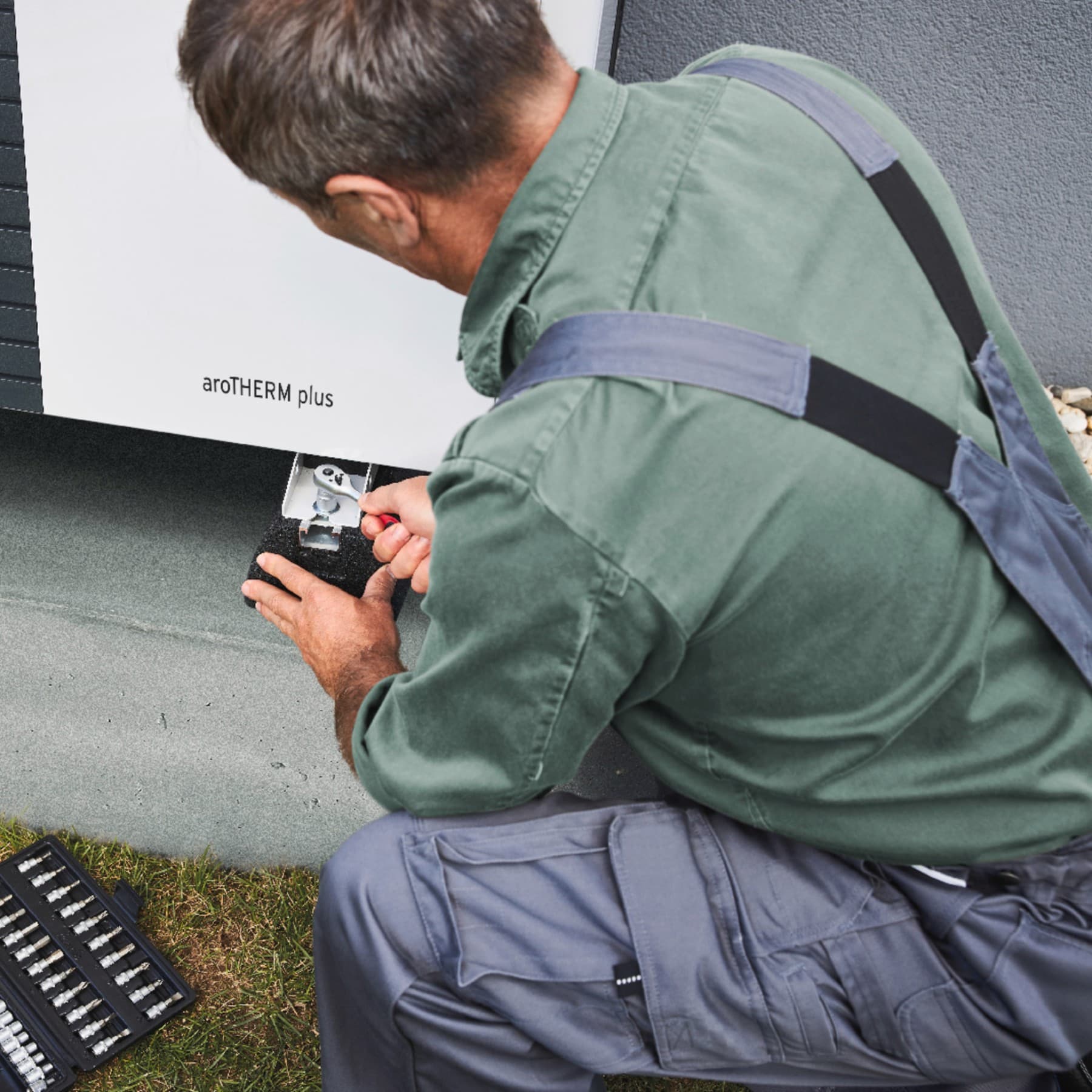
The appropriate location can be determined by a number of factors – not just technical considerations, but also the distance to a neighbour’s property for example, or local government regulations. Your installer is the perfect person to give you the necessary guidance.
- How much space is available in my house for the system?All about the right sizing of a heat pump
Vaillant heat pump systems vary in ouput (kW) and therefore also in size, from wardrobe-like dimensions (190 cm x 180 cm) to smaller dresser sizes. Some, like air source heat pumps, also require outdoor space.


Sustainable systems for modern homes
Setting new benchmarks with Vaillant. For you and the climate.
At Vaillant, we blend expertise with innovation to deliver heating solutions for more than 30 million customers all over the world. Our heat pumps offer exceptional efficiency and reliability, fitting seamlessly into homes. Each unit undergoes about 300 tests during the production cylce to ensure it performs perfectly, even in the toughest climates. Choosing Vaillant means stepping into a future where comfort and sustainability come together, setting new benchmarks for you and the environment.
Efficient heat pump technologies for your home
Different heat pump technologies as the foundation of your new heat pump system.
- 1/4Air-to-Water Heat PumparoTHERM proMinimum size for maximum comfort: the aroTHERM pro with an output of 5 to 11 kW is our space-saving heat pumpGet more details
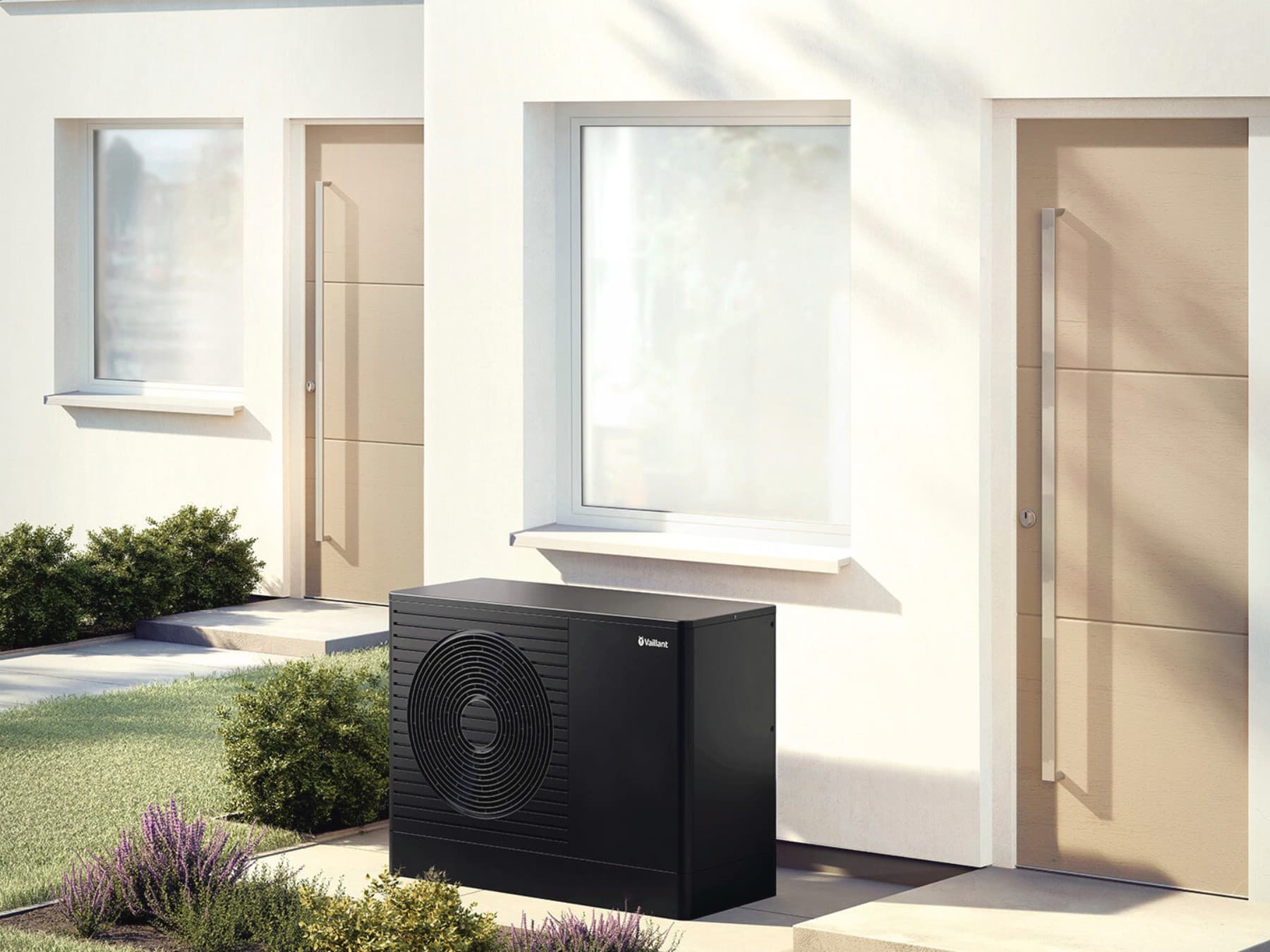
The space saver for outdoor installation
Minimum size for maximum comfort: the aroTHERM pro with an output of 5 to 11 kW is our space-saving heat pump. It is not only the ideal solution for new buildings. Due to its high flow temperatures of up to 70 °C, it is the ideal solution for modernising your heating system while keeping existing radiators. Thanks to our industry-unique safety concept to reduce protective zones, the heat pump can be placed almost anywhere. With ErP labels up to A+++ (D - A+++), it offers highly efficient heating and is also eligible for subsidies. Furthermore, its use of the natural refrigerant R290 makes it a future-proof choice.
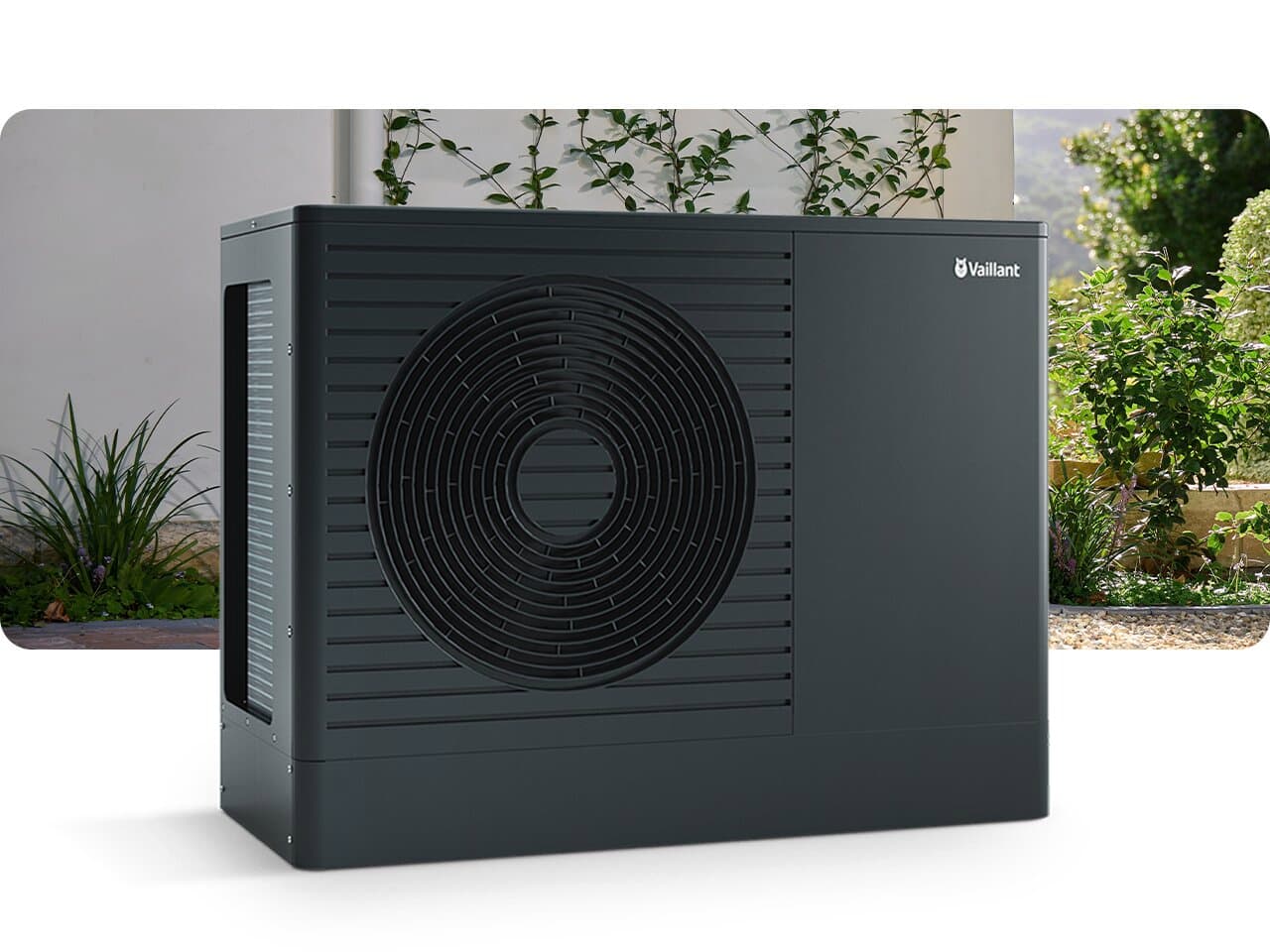
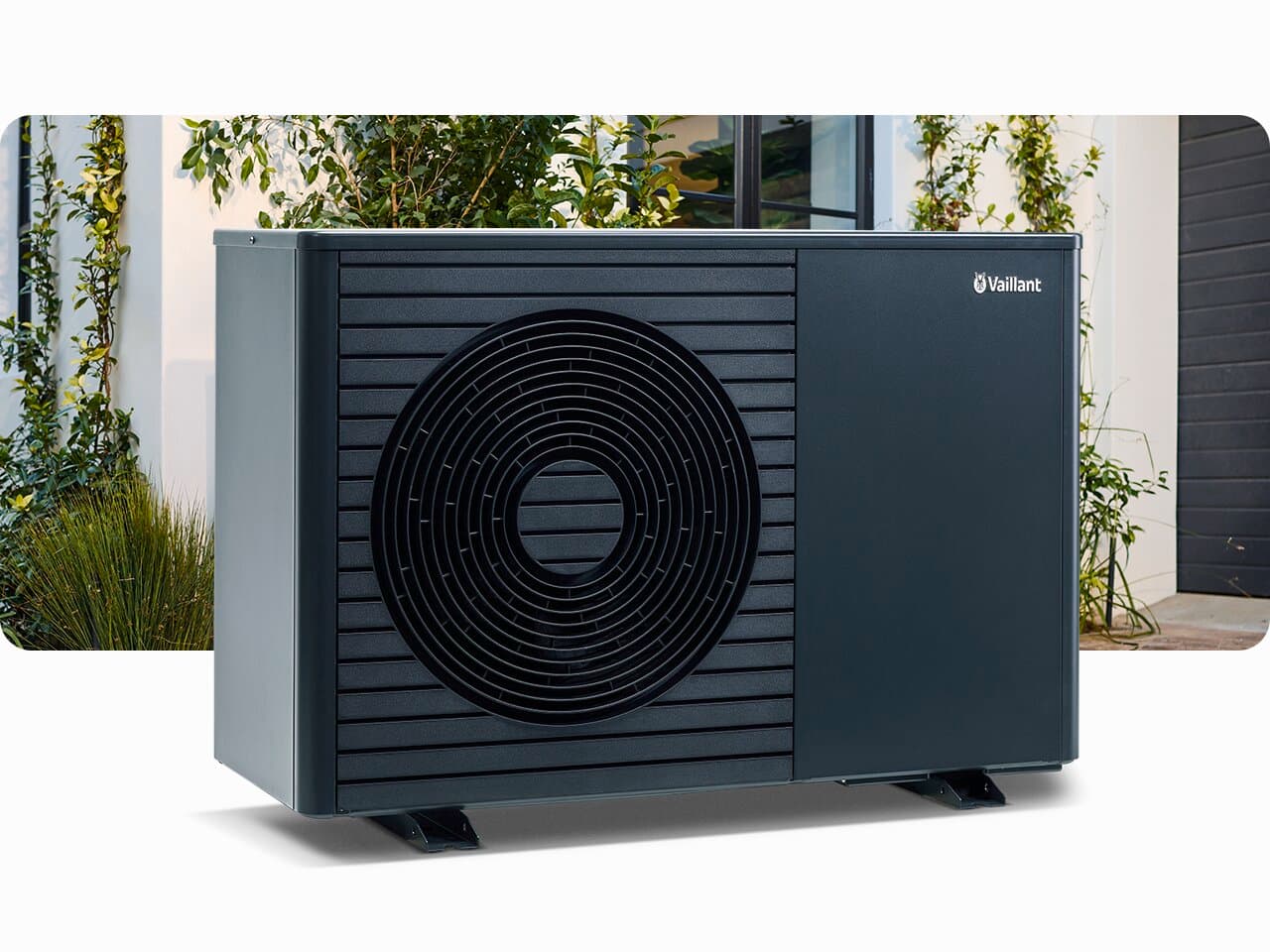
- 2/4Air-to-water heat pumparoTHERM plusOur most efficient air/water heat pump reduces operating costs.Get more details
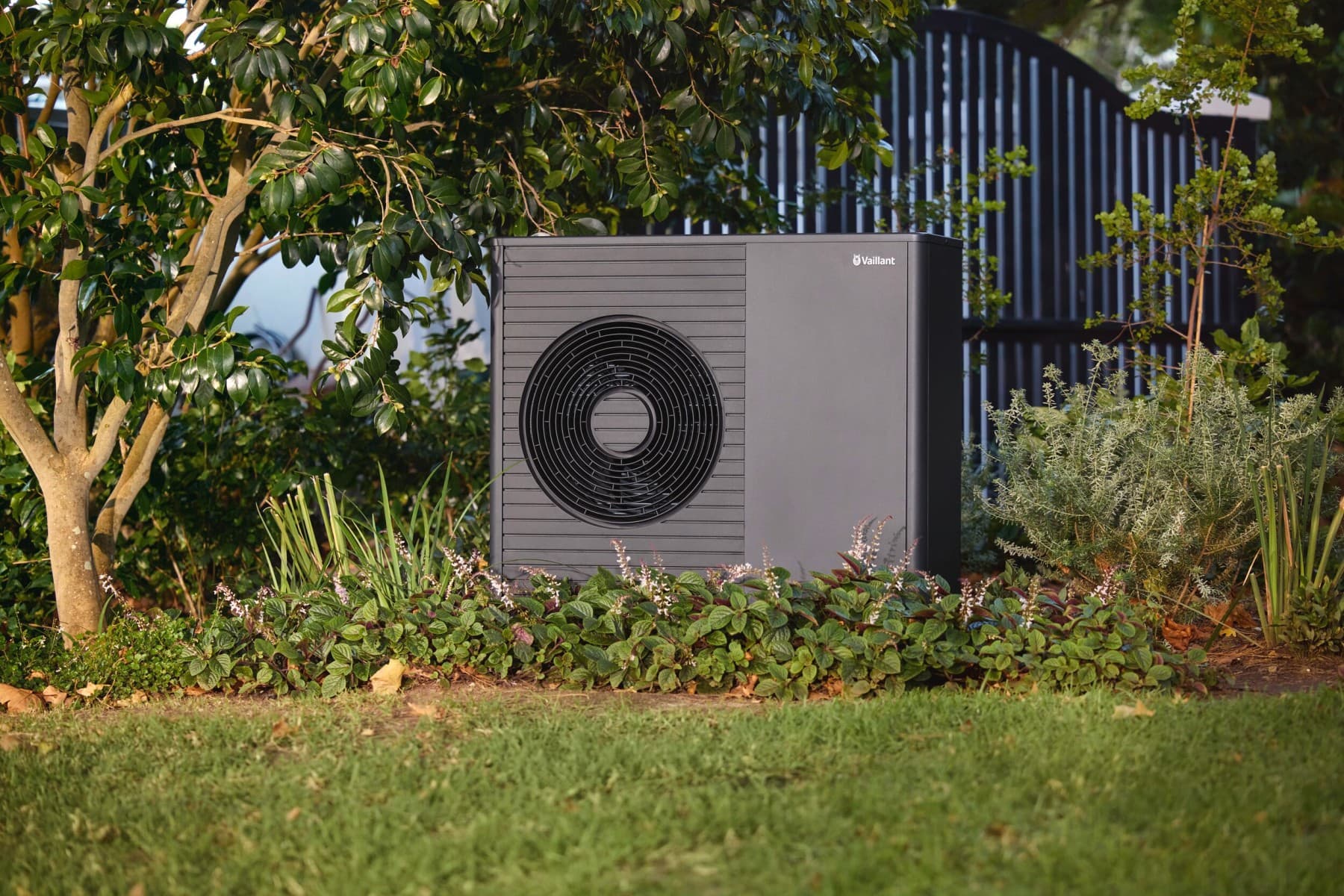
Efficiency in its most flexible form.
- Our most efficient air/water heat pump reduces operating costs.
- Our quietest air/water heat pump with 28 dB(A) for a peaceful neighbourhood
- Maximum freedom of positioning thanks to uniquely minimal protective zones.
- Elegant design in black grey
- Including free 5-year guarantee
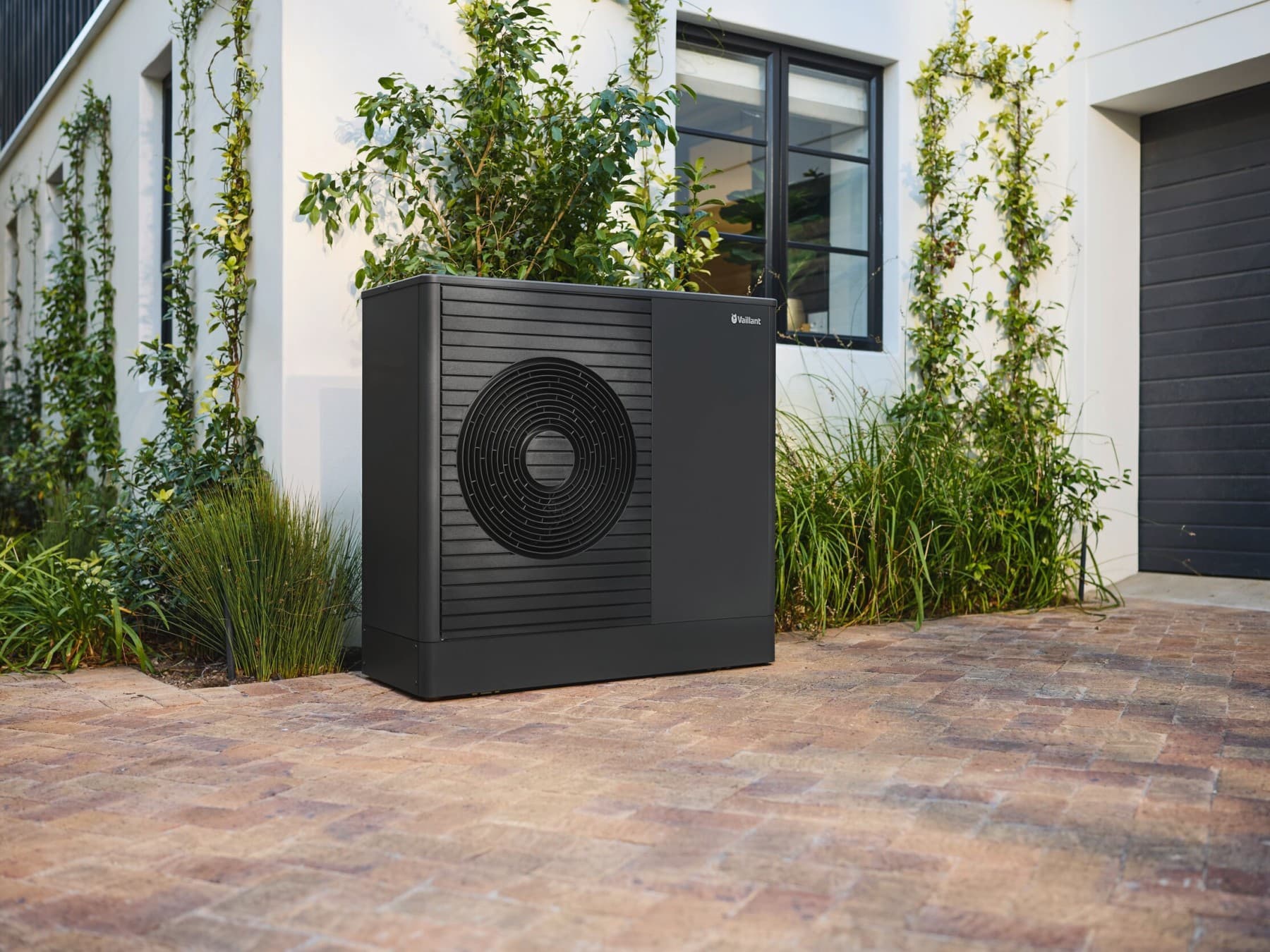
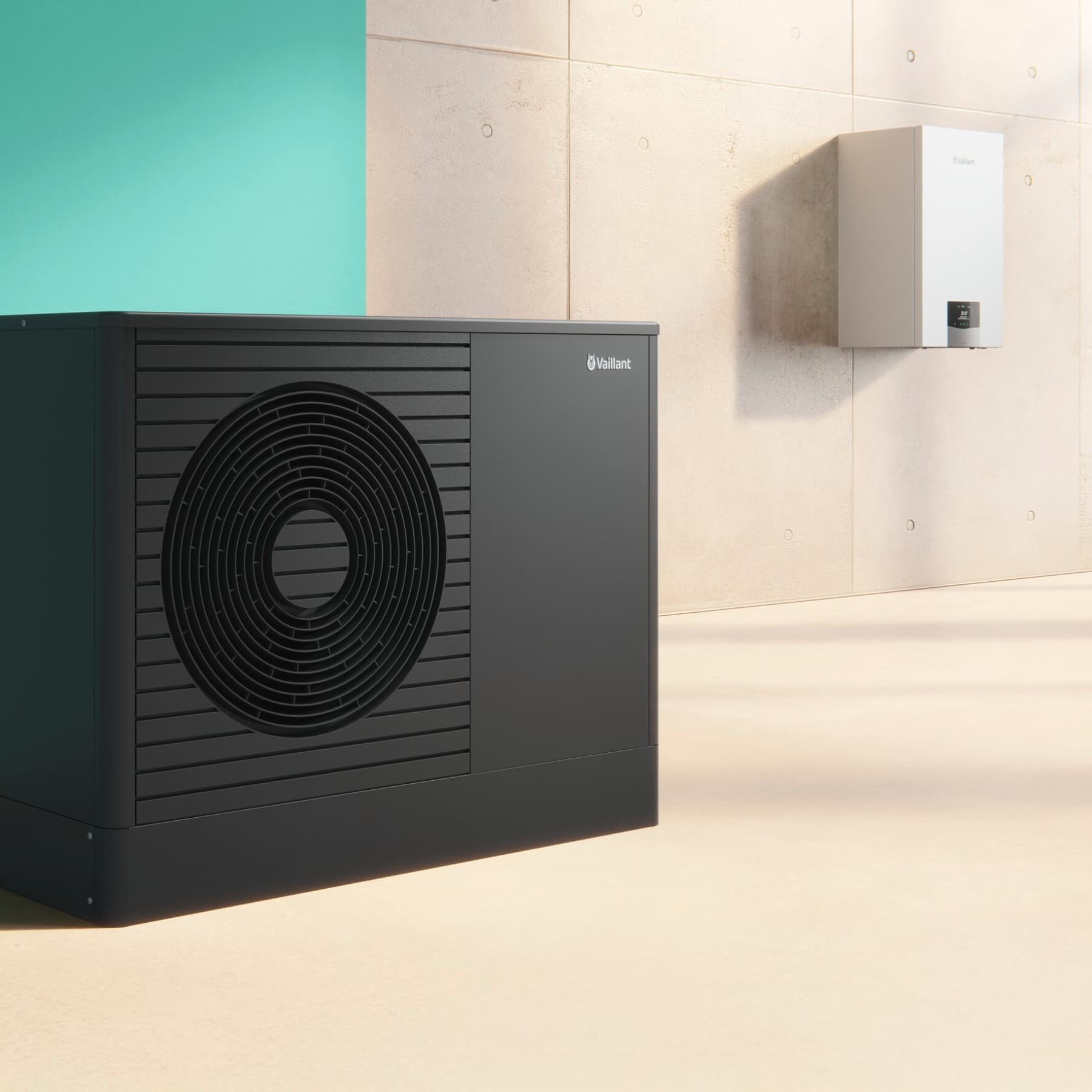
The new standard: Our new aroTHERM plus heat pump always finds its place. This is because our safety concept, which is unique in the industry and minimises the necessary distances. Equipped with the natural refrigerant R290, it is our most efficient air-to-water heat pump and generates up to five parts heat* from one part electricity. Available in output sizes from 3 to 12 kW, it is ideal for one-family houses - even with existing radiators, of course.
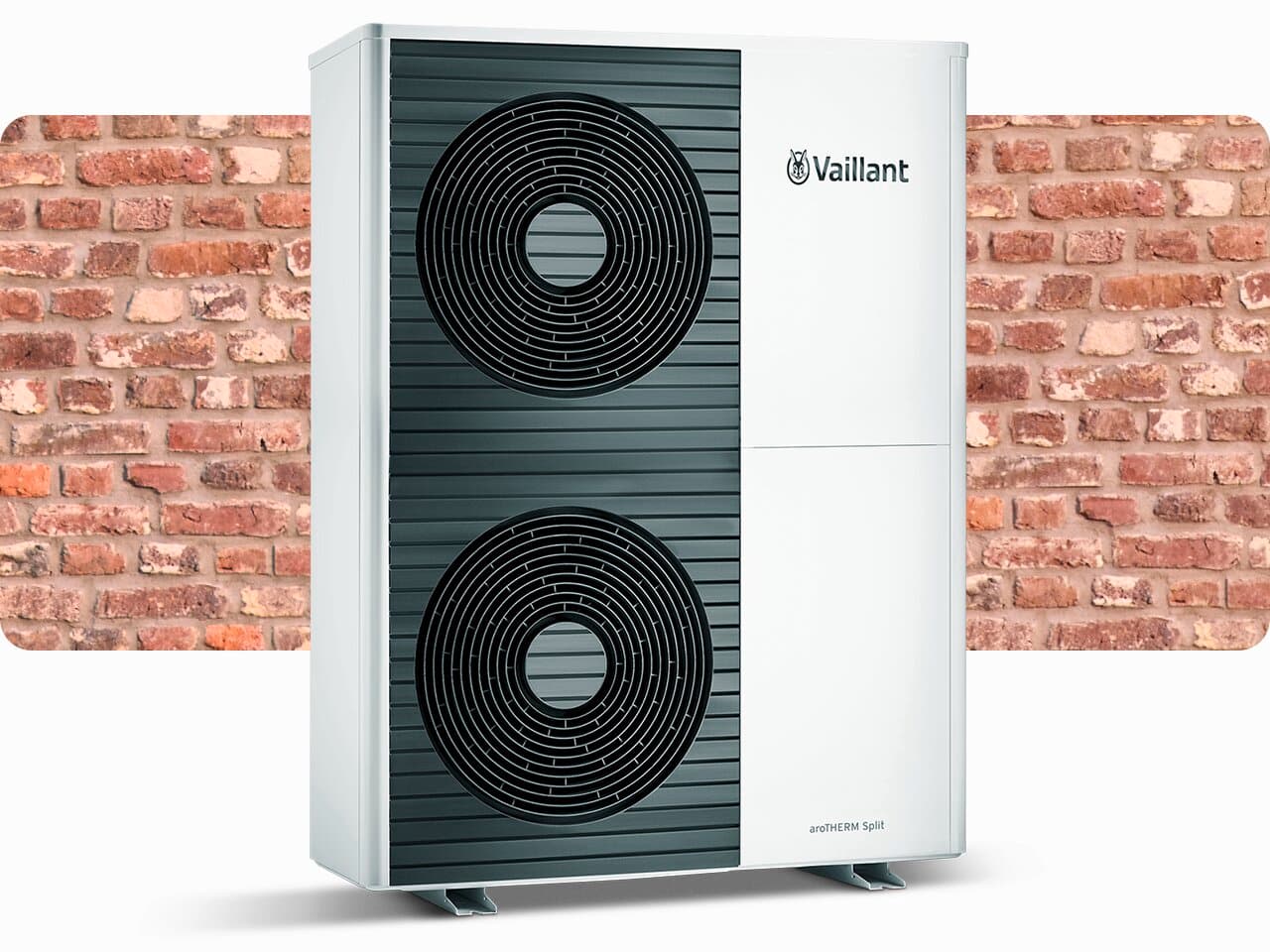
- 3/4Air-to-Water Heat PumparoTHERM SplitA split heating solution with up to 12 kW output for larger single-family houses or multi-family houses.Get more details
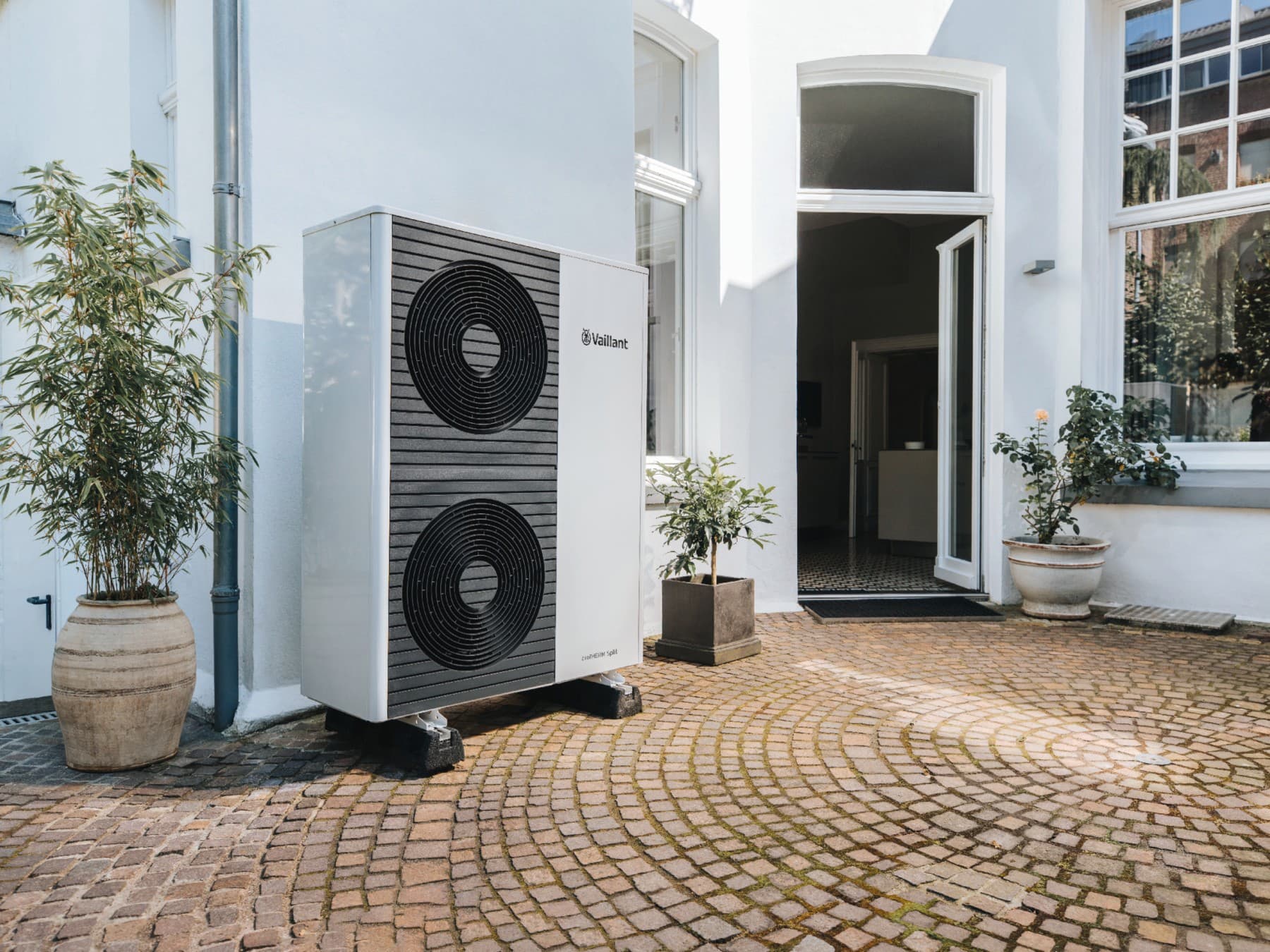
A split heating solution with up to 12 kW output for larger single-family houses or multi-family houses.
- Super quiet operation
- High energy efficiency at low operational costs
- Outstanding quality and durability
- Can even be installed up to 40m away from your property
The aroTHERM Split heat pump increases your energy efficiency by using free environmental heat as its main energy source. With its output of 10 and 12 kW it is a cost-efficient heating solution for larger single-family houses or multi-family houses.
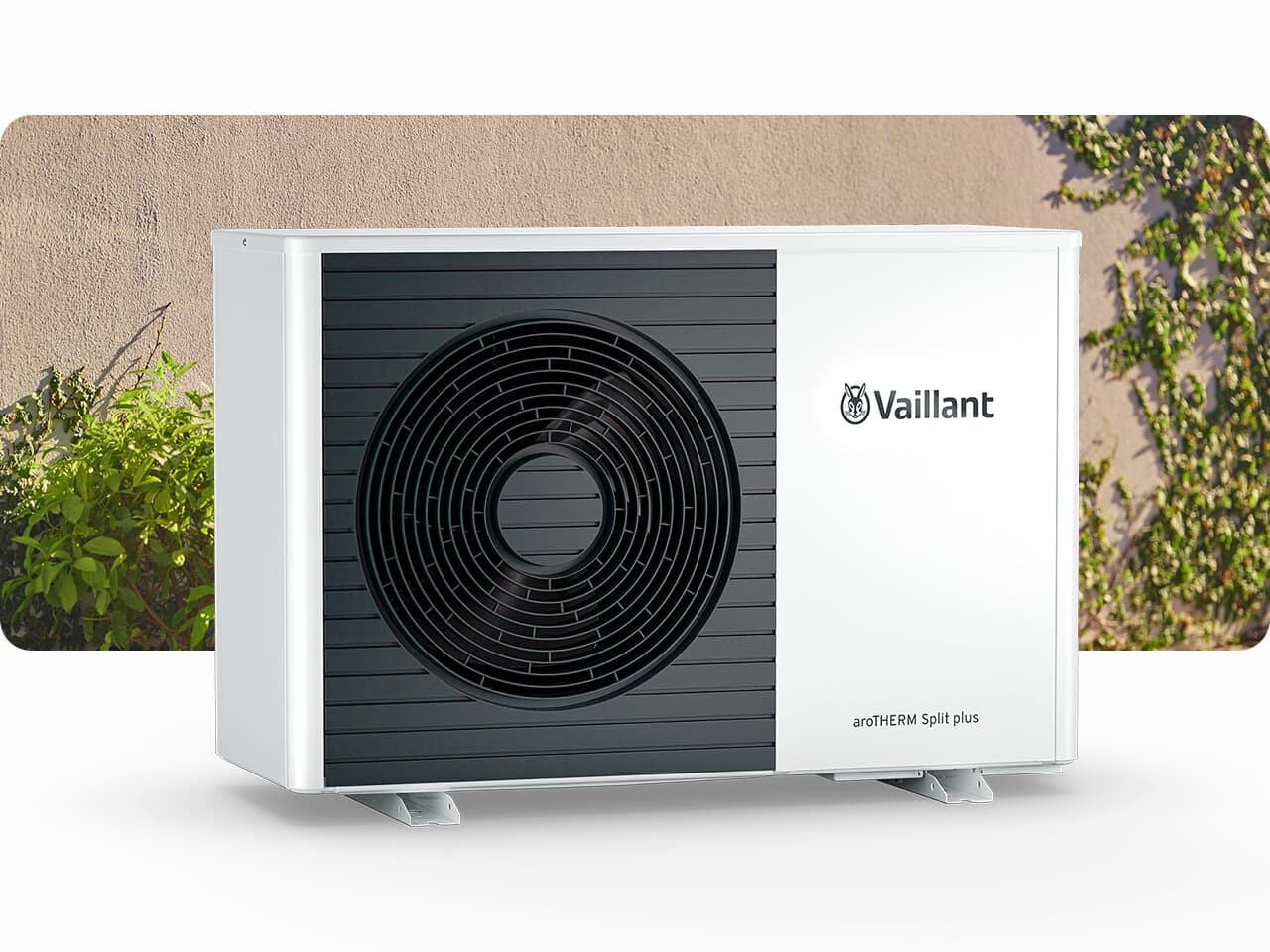
- 4/4Air-to-water heat pumparoTHERM Split plusA highly efficient split heating solution for one-family houses or energy modernisation projects.Get more details
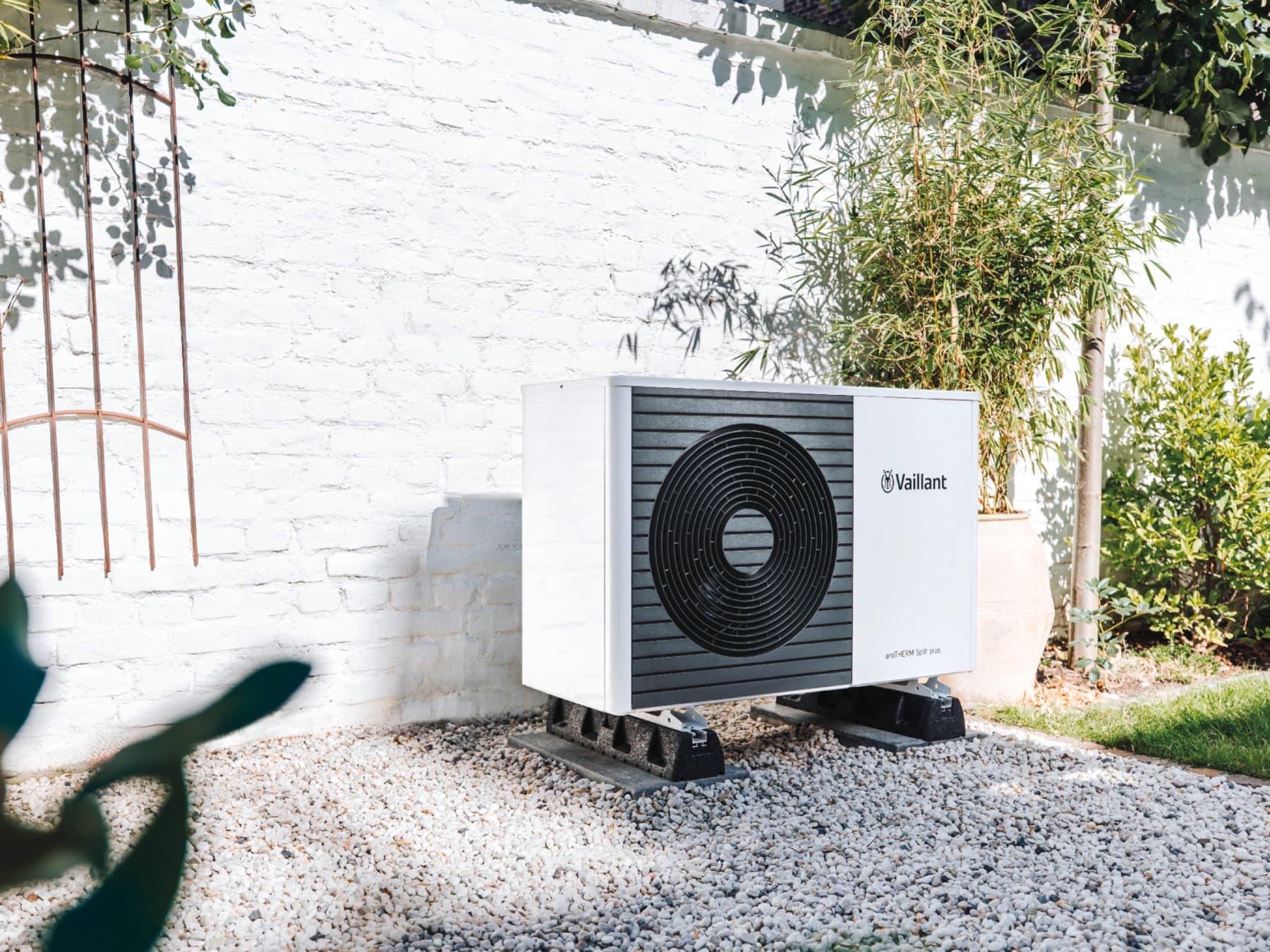
A highly efficient split heating solution for one-family houses or energy modernisation projects.
- Low running costs due to high efficiency
- Low running costs due to high efficiency
- High heating, cooling and hot water comfort
- Flexible installation
The aroTHERM Split plus reduces energy consumption with free environmental heat. With its output from 3 kW to 7 kW it is the ideal choice for newly built one-family houses or in energy modernisation projects. And with a distance of up to 40 metres between the indoor and the outdoor units, you are also flexible in choosing the installation place.