Monobloc or split heat pump: which system fits your home?

Find the ideal design for your needs
At a glance: what is the difference between the systems?
When you want to heat with an air source heat pump, you are faced with an important decision right at the start: Monobloc or split heat pump?
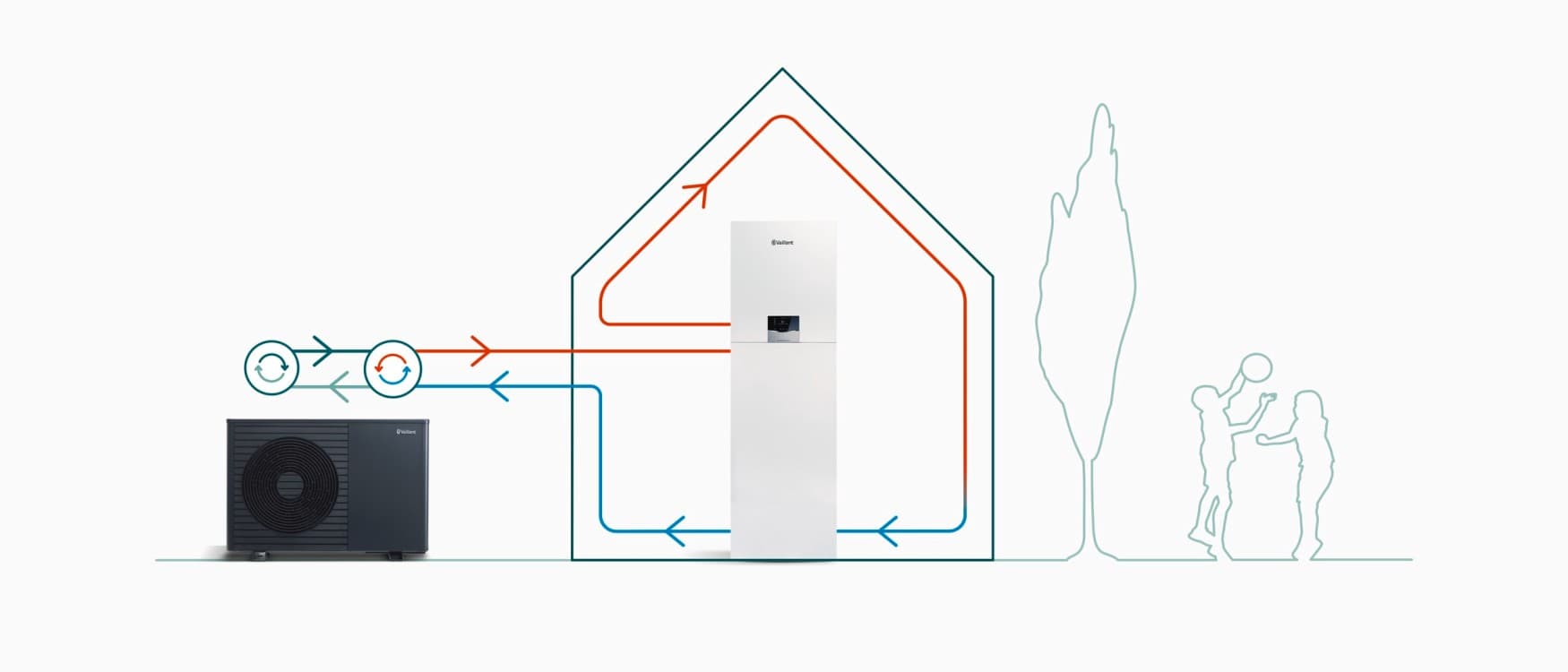
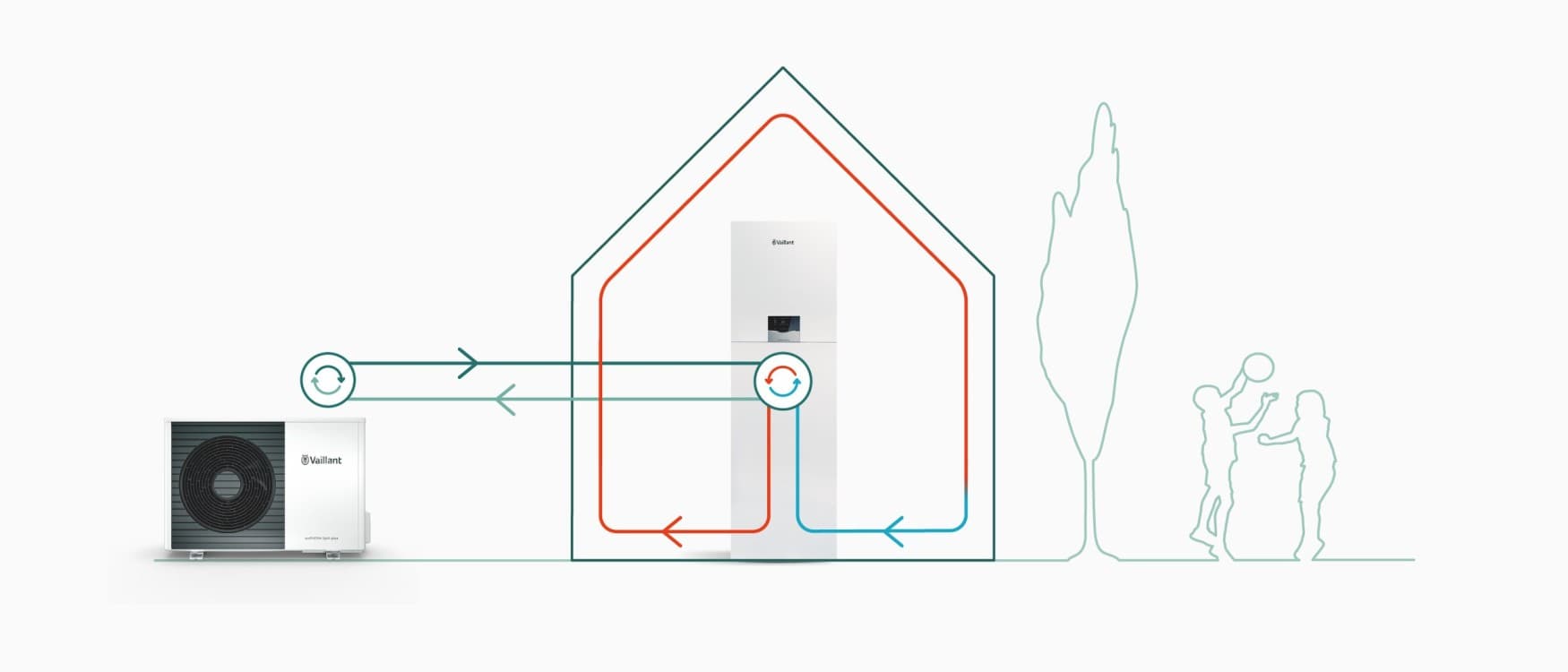
With a monobloc heat pump, most of the components are in one unit, whereas with a split heat pump they are distributed over two elements, which you can see in this animation:
Whether you choose a monobloc or split heat pump depends on the conditions of your house and your preferences. But generally speaking Monobloc heat pumps are ideal for those seeking simple installation and low maintenance.
Split heat pumps provide greater installation flexibility. However, they require more installation and maintenance effort. Both technologies are similar when it comes to efficiency, ensuring you get the best performance for your investment. Moreover, both construction designs are suitable for new building or modernisation projects. Let's look at both options in detail.
A monobloc heat pump
Advantages of a monobloc system at a glance.
- All-in-one unit.
All vital components are housed in one system, reducing the likelihood of faults and therefore ensuring reliability.
- Easier installation.
Designed for simplicity, our monobloc heat pump can be installed quicker. Your installer won’t need a refrigerant certificate, making the process even smoother.
- Space-saving.
A monobloc system can in certain use cases also work without an extensive indoor unit and therefore does not take up much space. This is the case for modernisation, hybrid systems or cascades.
- Lower maintenance effort.
Thanks to a compact refrigerant circuit in one block maintenance work is reduced.
When installing a monobloc heat pump, it is crucial to maintain appropriate spacing for the outdoor unit and comply with relevant regulations, including minimum distance requirements from walls and neighboring properties. Additionally, monobloc systems may pose a risk of freezing of the heat exchanger or external pipes. However, our accessories are designed to minimize this risk, ensuring reliable operation even in colder conditions. It's also important to note that these systems require larger wall openings in your home. Be sure to discuss these topics with your installer when preparing your quote.
Operating principle
All-in-one unit: understanding monobloc systems.
A monobloc heat pump combines all relevant components in a single unit which is responsible for the entire heat generation process: the evaporator, the compressor, the condenser and the expansion valve.
The appliance extracts heat from the outside air and transfers it to the water in the heating system. The refrigerant inside the heat pump absorbs energy from the outside air, causing it to evaporate into gas. The compressor then increases the pressure and thus the temperature of the refrigerant gas. The gas becomes liquid in the condensing heat exchanger and thereby transfers the heat energy to the water which circulates through the building's heating system and provides warmth.
A split heat pump
Advantages of a split system at a glance.
- Ideal flexibility.
With longer pipe lengths up to 40 mtrs between the indoor and outdoor units as well as a maximum height difference of 30 metres, it offers maximum flexibility. No need to keep safety distances due to refrigerants.
- No freezing.
There is no risk of freezing, as the refrigerant is used to connect the outdoor and indoor units. Therefore, no water or other fluids that could freeze are used in the outdoor unit.
- Good for the building envelope.
Smaller wall openings and less insulation of pipes are required, making it easier to integrate into existing structures without extensive modifications.
Considering an installation of a split heat pump, you should take into account that the split heat pump is more complex to install as the components are distributed across two appliances. Also, your installer needs a refrigerant certificate to install the system.
Operating principle
One system, two units - how a split system works.
In principle, the split heat pump works in exactly the same way as the monobloc variant. However, unlike a monobloc heat pump, a split heat pump divides the refrigerant circuit, and therefore the heat generation process, into two units.
The outdoor unit usually contains the evaporator and compressor, where the heat generation takes place. The indoor unit, on the other hand, is equipped with the condensing heat exchanger. The two units are connected by refrigerant pipes, which is why the installation must only be carried out by refrigerant specialists.
Operating principle
One system, two units - how a split system works.
In principle, the split heat pump works in exactly the same way as the monobloc variant. However, unlike a monobloc heat pump, a split heat pump divides the refrigerant circuit, and therefore the heat generation process, into two units.
The outdoor unit usually contains the evaporator and compressor, where the heat generation takes place. The indoor unit, on the other hand, is equipped with the condensing heat exchanger. The two units are connected by refrigerant pipes, which is why the installation must only be carried out by refrigerant specialists.

Comparison monobloc and split heat pump
Monobloc versus split heat pumps: which is right for you?
- Installation
- Noise
- Flexibility
- Refrigerant Certificate
- Maintenance
Monobloc Heat Pump
Easier and quicker installation with fewer parts to manage. However, a monobloc heat pump often is heavier with bigger dimensions. Also, larger wall openings are necessary, which might influence the visual aspect of your building.
Split Heat Pump
More complex installation process, requiring careful setup of two units -especially because of the handling of the refrigerant.
Product portfolio
Explore Vaillant's top seller heat pumps.
- 1/3Air-to-water heat pumparoTHERM plusOur most efficient air/water heat pump reduces operating costs.Get more details
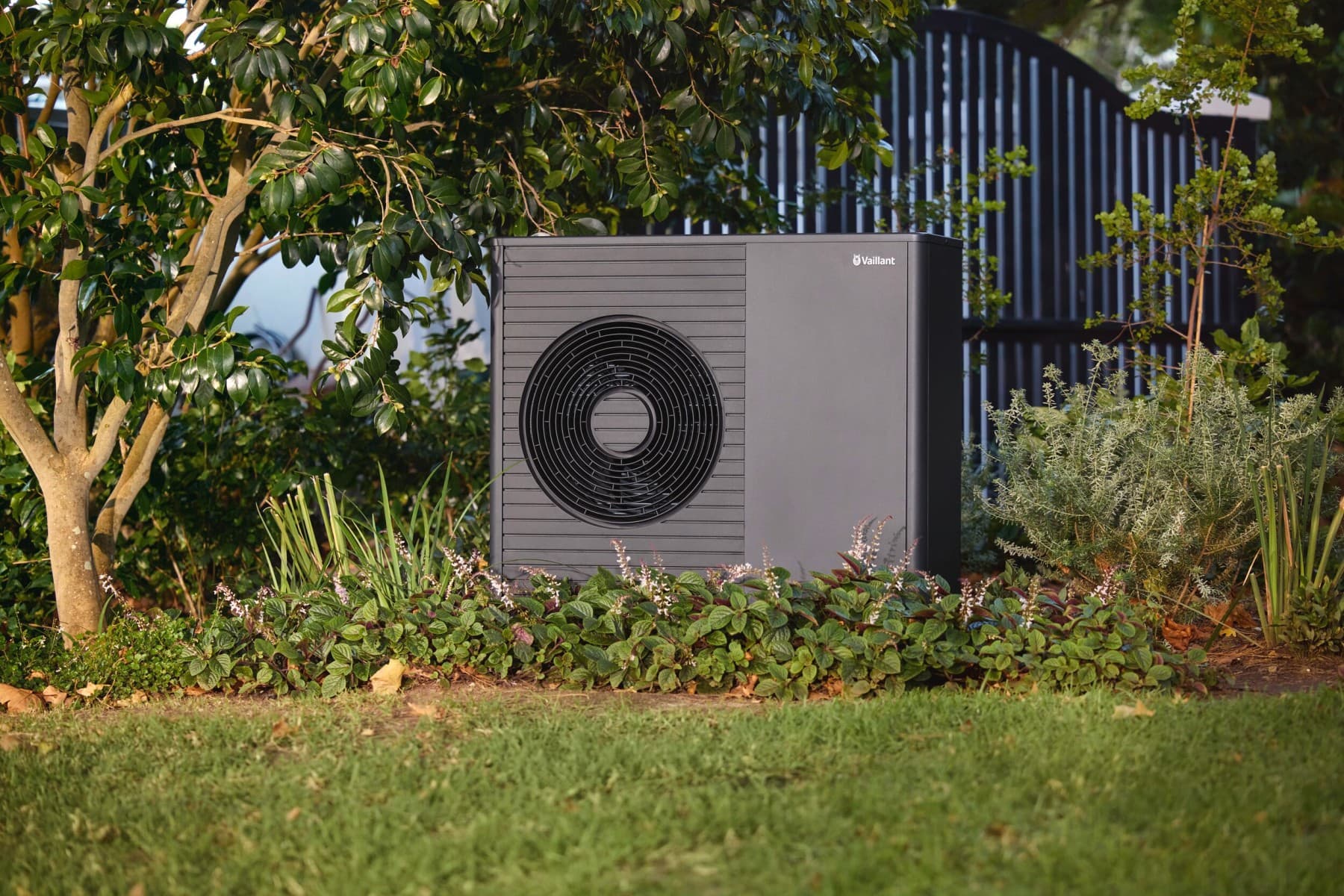
Efficiency in its most flexible form.
- Our most efficient air/water heat pump reduces operating costs.
- Our quietest air/water heat pump with 28 dB(A) for a peaceful neighbourhood
- Maximum freedom of positioning thanks to uniquely minimal protective zones.
- Elegant design in black grey
- Including free 5-year guarantee
The new standard: Our new aroTHERM plus heat pump always finds its place. This is because our safety concept, which is unique in the industry and minimises the necessary distances. Equipped with the natural refrigerant R290, it is our most efficient air-to-water heat pump and generates up to five parts heat* from one part electricity. Available in output sizes from 3 to 12 kW, it is ideal for one-family houses - even with existing radiators, of course.
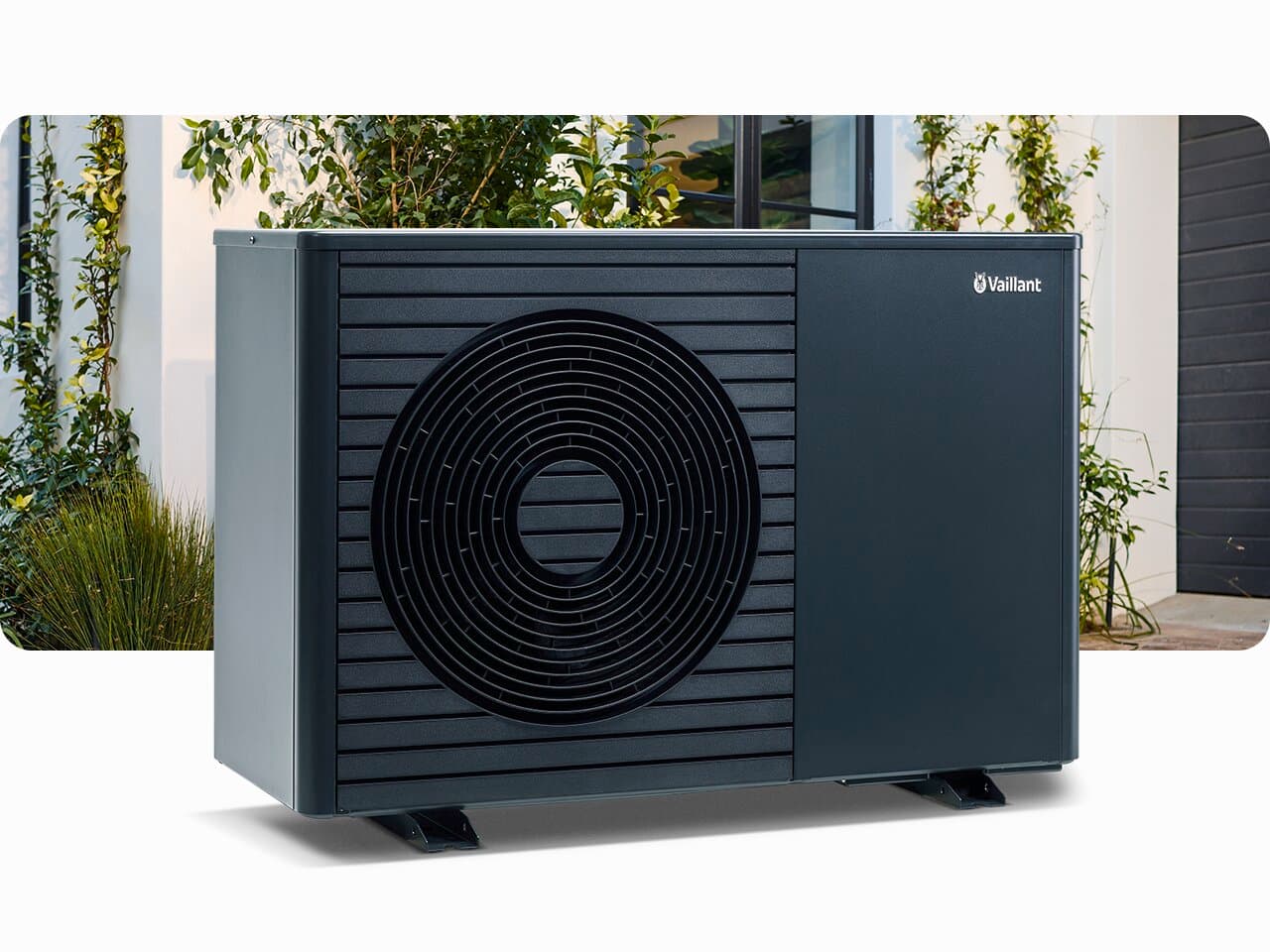
- 2/3Air-to-Water Heat PumparoTHERM proMinimum size for maximum comfort: the aroTHERM pro with an output of 5 to 11 kW is our space-saving heat pumpGet more details
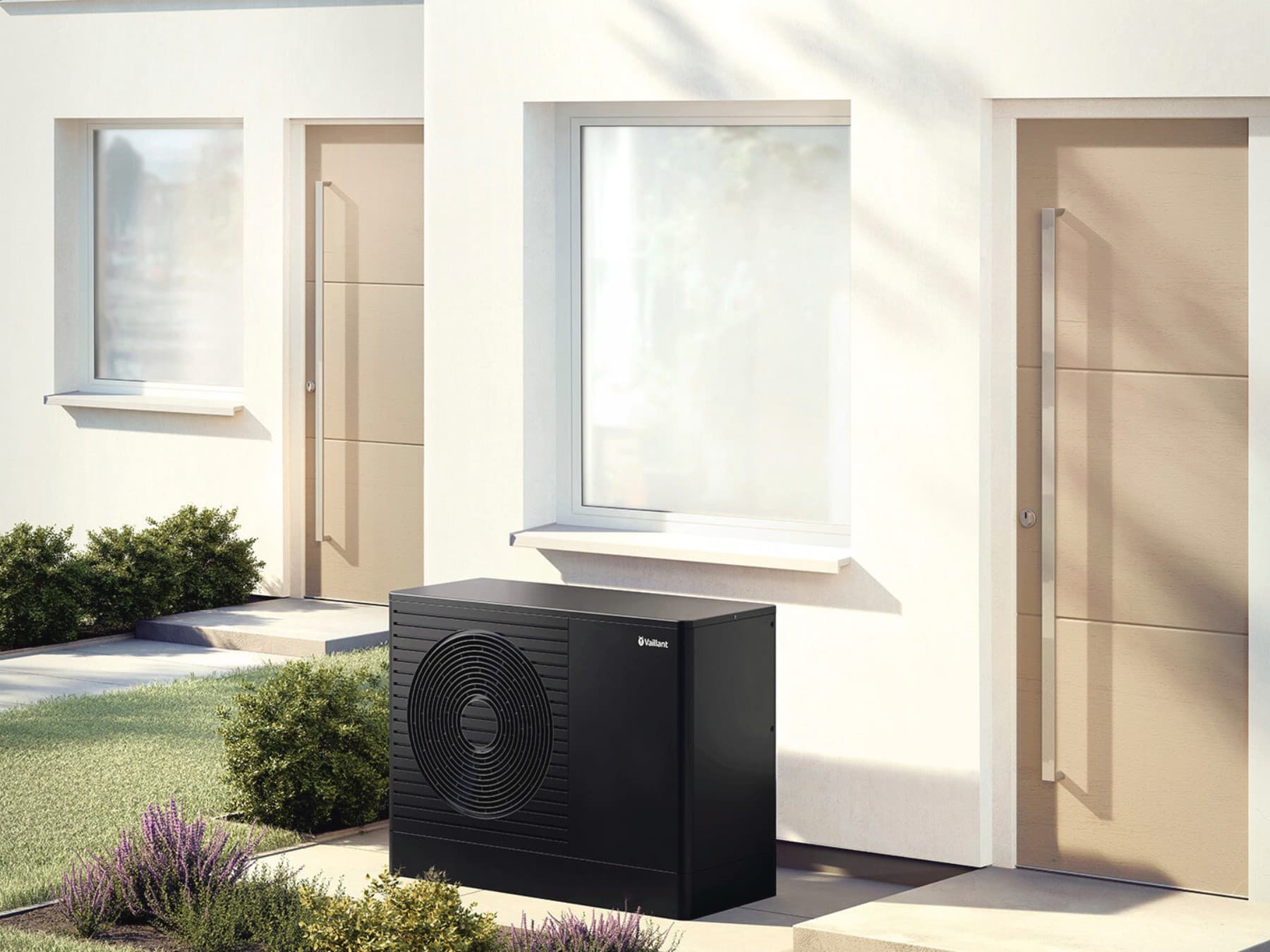
The space saver for outdoor installation
Minimum size for maximum comfort: the aroTHERM pro with an output of 5 to 11 kW is our space-saving heat pump. It is not only the ideal solution for new buildings. Due to its high flow temperatures of up to 70 °C, it is the ideal solution for modernising your heating system while keeping existing radiators. Thanks to our industry-unique safety concept to reduce protective zones, the heat pump can be placed almost anywhere. With ErP labels up to A+++ (D - A+++), it offers highly efficient heating and is also eligible for subsidies. Furthermore, its use of the natural refrigerant R290 makes it a future-proof choice.
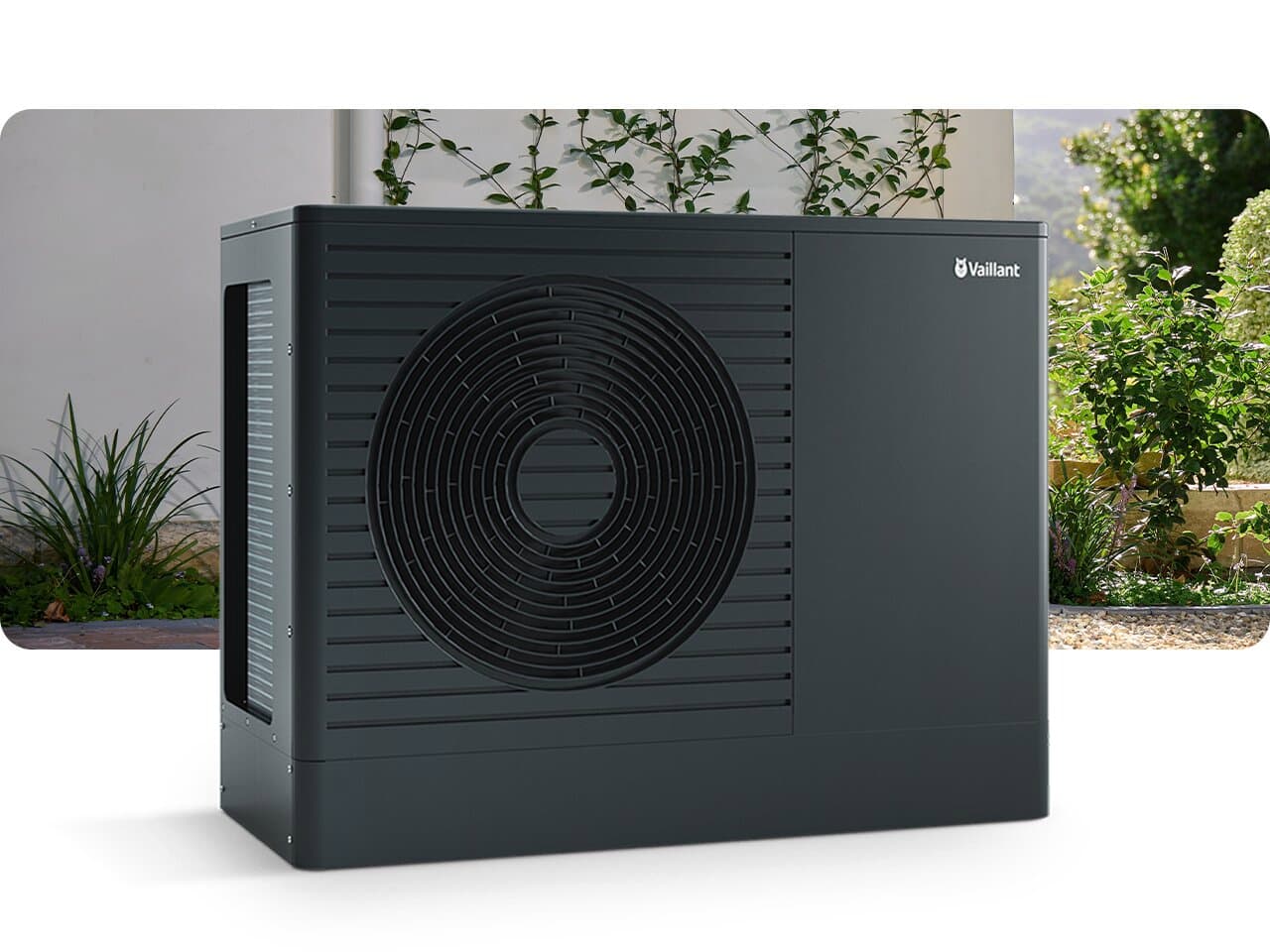
- 3/3Air-to-Water Heat PumparoTHERM SplitA split heating solution with up to 12 kW output for larger single-family houses or multi-family houses.Get more details
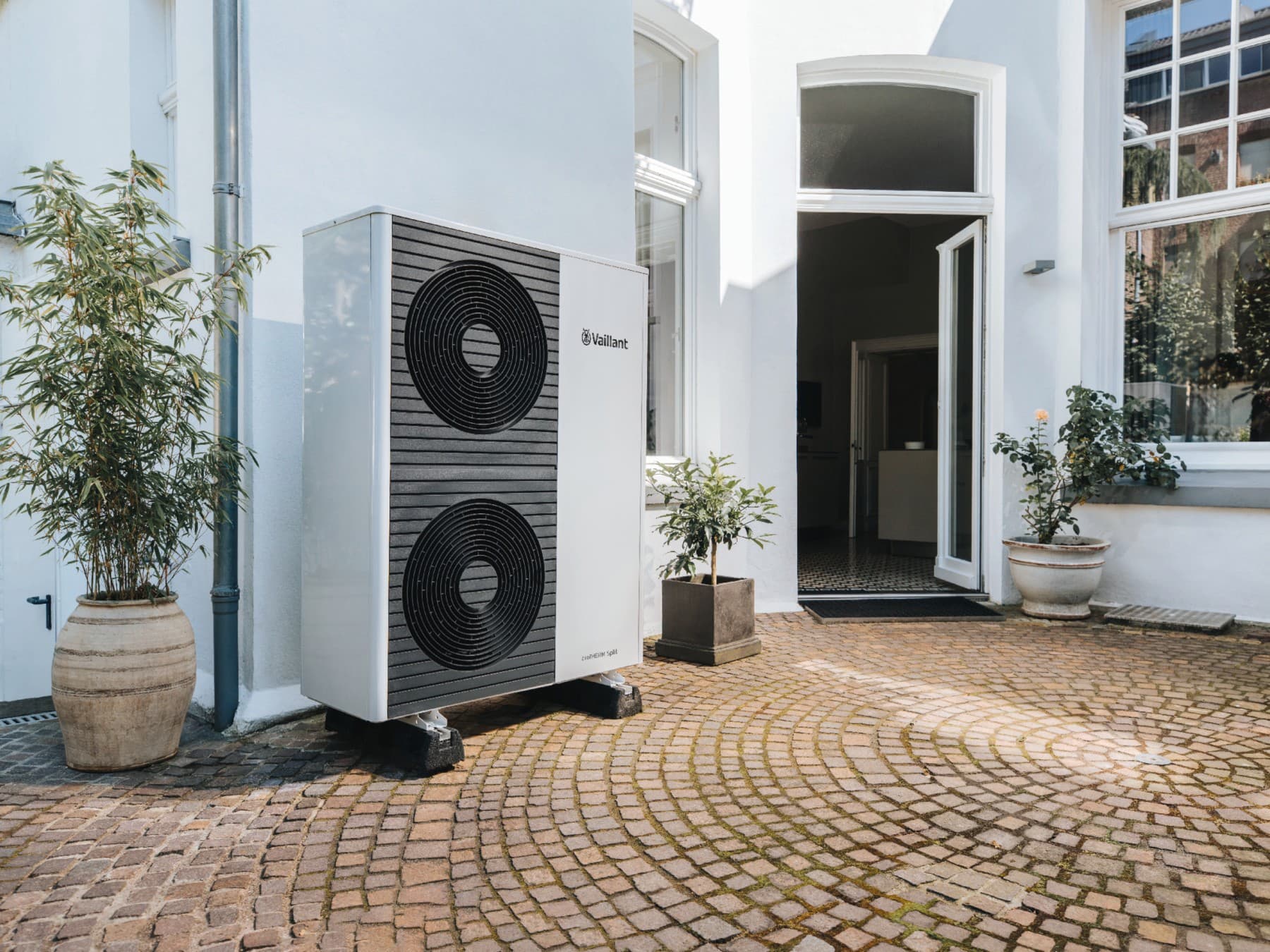
A split heating solution with up to 12 kW output for larger single-family houses or multi-family houses.
- Super quiet operation
- High energy efficiency at low operational costs
- Outstanding quality and durability
- Can even be installed up to 40m away from your property
The aroTHERM Split heat pump increases your energy efficiency by using free environmental heat as its main energy source. With its output of 10 and 12 kW it is a cost-efficient heating solution for larger single-family houses or multi-family houses.
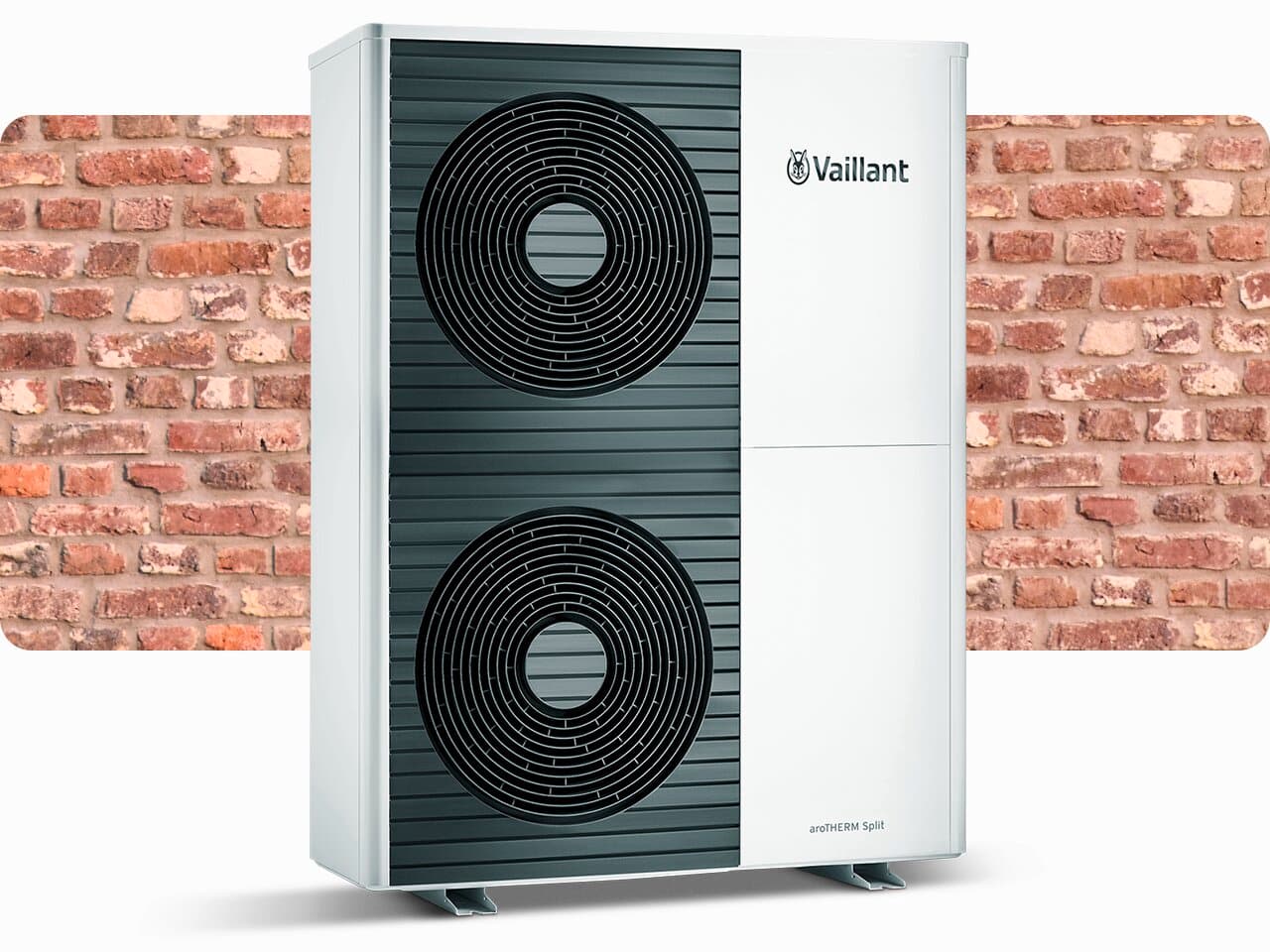

Our heat pump refrigerants: meeting future standards today.
Refrigerants are substances that efficiently transfer heat and are used in many everyday devices. They are essential for heat pumps, which use them to transfer heat from the environment into homes to provide heating and hot water. Vaillant was one of the pioneers in developing a heat pump which uses the natural and sustainable refrigerant R290: The monoblock heat pump .
The second alternative is our new split heat pump that runs on refrigerant R 32. This heat pump is known to be extremely efficient with an excellent ERP rating of A+++, low running costs and quiet operation.