Heat pump noise: quieter than you might think.

Heat pump noise level
Among the quietest on the market: the new age of Vaillant heat pumps.
The myth that heat pumps are very noisy has persisted for many years. The reason is that like almost every technical device, heat pumps cannot operate completely without noise. This especially affected air-source heat pumps. The outdoor unit takes in ambient air via fans which causes flow noise. Back in the mid twentieth centuries, when the heat pump technology was still in its early days, their operation was a real noise pollution.
Nowadays the technology, which we use for our heat pumps is so innovative, that heat pumps, including air-source heat pumps, are considered to be whisper- quiet. To ensure this, we test our heat pumps intensively towards always finding the lowest possible noise emission.
The result: Vaillant heat pumps are among the quietest heat pumps on the market!
Noise and their decibel values
How loud is quiet?
Everyone experiences sounds differently. Some people enjoy loud music for example, while others may find it annoying. We would like to give you some guidance regarding the volume of sound.
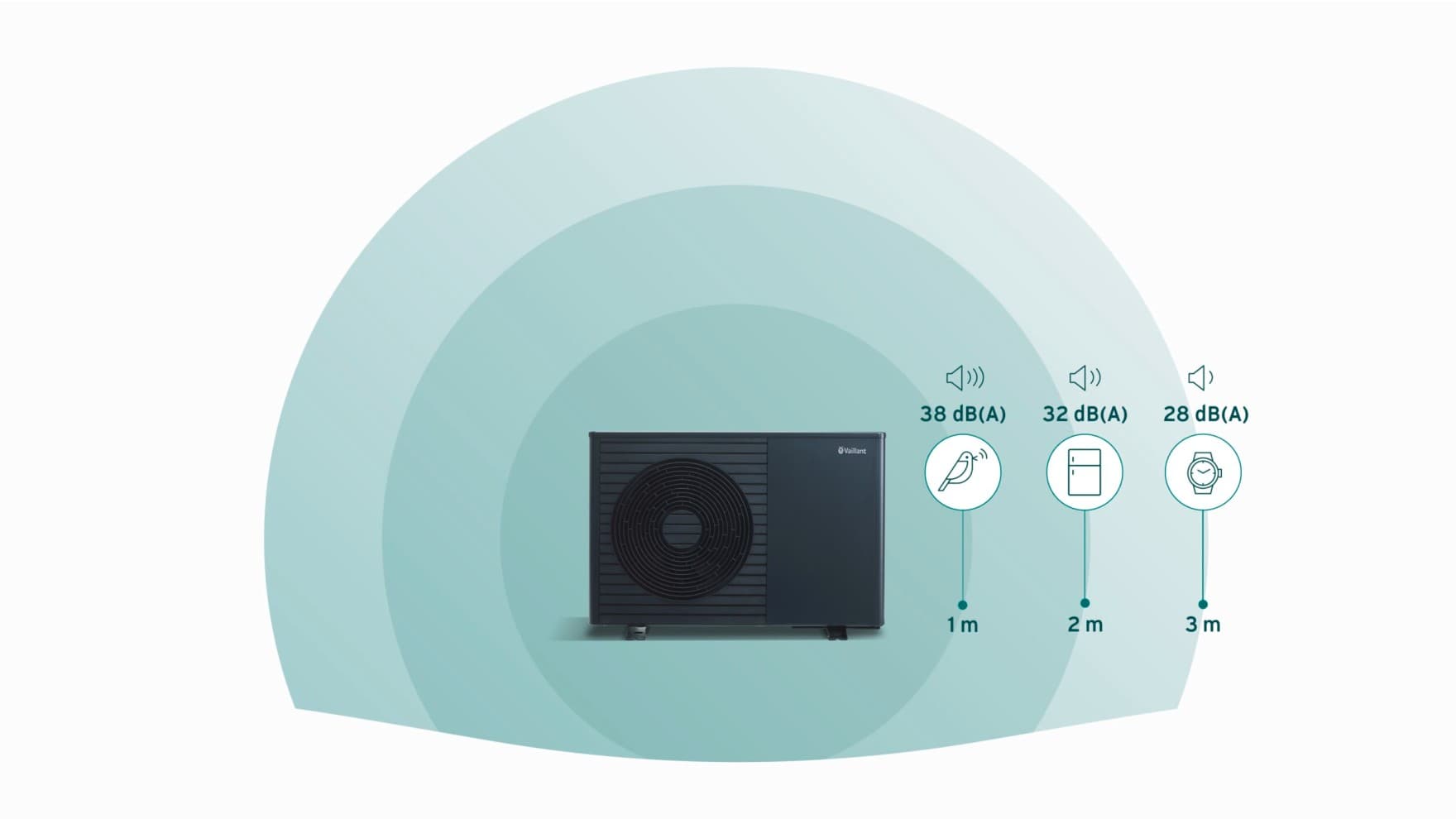
The sound pressure of the in night mode is only 46 dB(A) - about the same as a refrigerator. If the aroTHERM plus is placed at a distance of three metres, the sound pressure level is only 29 dB(A), which is equivalent to the ticking of a wristwatch. Therfore it can be installed even in densely built-up areas, such as terraced housing.
aroTHERM plus - so quiet, you'll think it's off.
- Heating
- Hot water
- Cooling

european noise directives
Noise regulations for heat pumps in Europe.
When considering a heat pump for your home or business, noise regulation is key. The European Union’s Ecodesign Directive sets clear noise limits for heating and cooling appliances, including heat pumps. The levels are measured in decibels (dB). The limits vary based on the type of heat pump and its purpose.
For the outdoor units of residential heat pumps, the maximum permissible sound power level (LwA) is 60-65 dB(A) for units with a nominal heating capacity of up to 12 kW. For commercial heat pumps, the noise limits can be higher, often reaching around 70 dB(A) or more, depending on the unit's capacity and intended application.
National regulations on heat pumps however often impose stricter limits than EU directives. Therefore it is wise to get information on local regulations.
Indoor and outdoor installation of a heat pump
Tips to reduce the noise of the heat pump to a whisper.
Depending on where you install the heat pump, outdoor or indoor, there are a few ways to reduce the noise to a minimum. We recommend to always consult a professional during your planning. This ensures your heat pump operates efficiently and quietly.
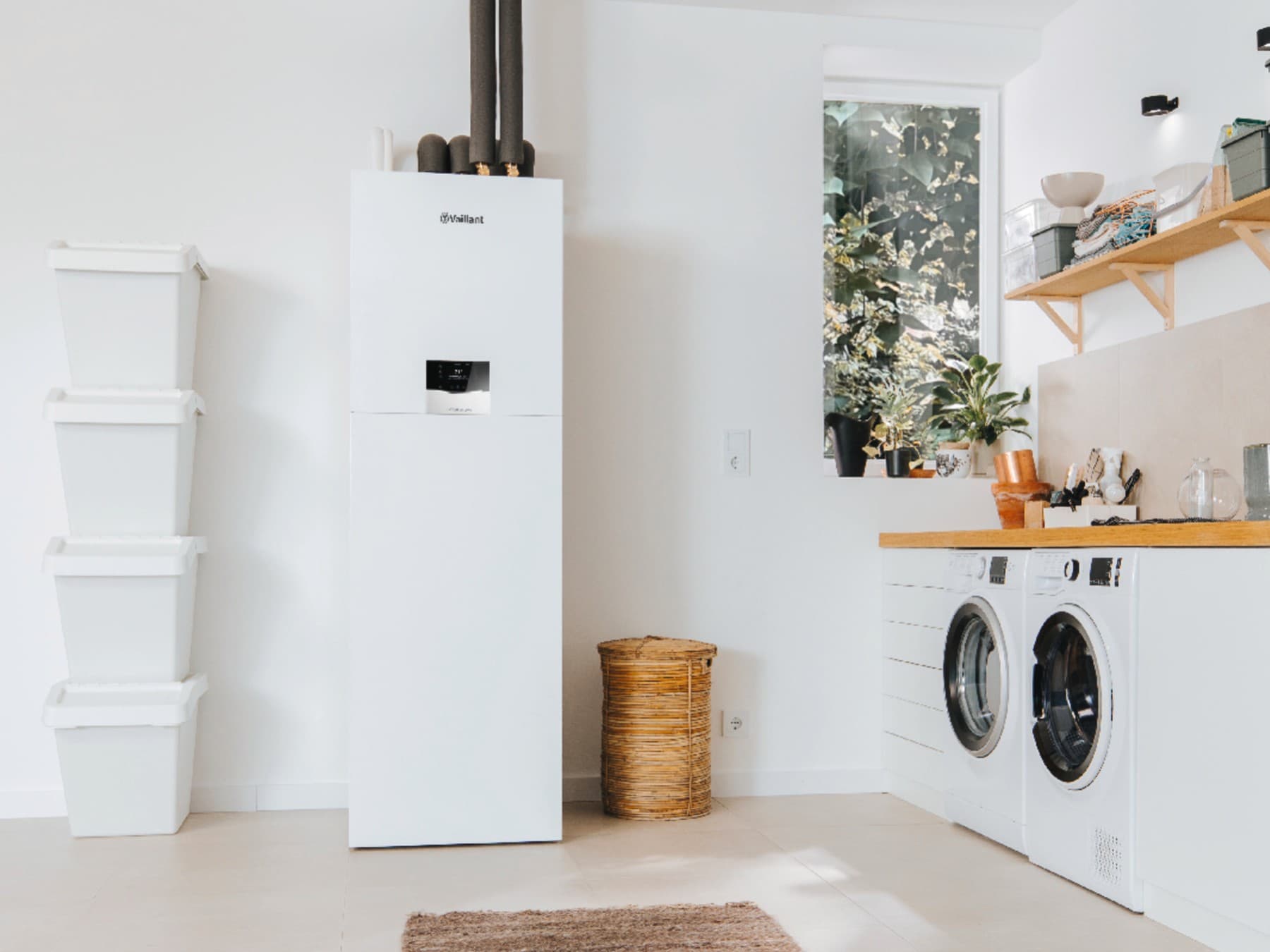
Indoor location.
While modern heat pumps are very quiet, a bit of noise is still part of the package. But don’t worry, you can easily keep it to a minimum! When planning and installing the heat pump, the installer should place your heat pump on a level surface and adding some soundproofing, like a concrete base with a sound-dampening rubber mat. Make sure the intake and exhaust vents aren’t directly under a bedroom window. You can also add soundproof doors to the room.
And here’s a smart tip: use the night mode. Storage systems and radiant heating, like buffer tanks and underfloor heating, help keep the building warm. This allows you to lower the heat pump’s output at night, reducing noise significantly. A hot water tank can also shift water heating to the early morning hours, ensuring your nights stay peaceful.
Read more on indoor location of a heat pump.

Outdoor location.
When installing a heat pump outdoors, keep these tips in mind for a peaceful experience: First, let the heat pump be placed at least three metres away from your neighbours' property to prevent noise complaints. Naturally, you also want to avoid being disturbed by noise, so avoid positioning the heat pump near windows, especially bedroom windows. Be cautious when installing it in wall niches or corners, as these can amplify noise like an echo.
Using sound barriers and hedges can further reduce noise. Strategically placing these elements around the heat pump can make a noticeable difference.
Additionally, also here take advantage of the heat pump’s night mode like recommended for indoor installation.
By following these steps, you can enjoy the benefits of your heat pump without the worry of noise disturbances, keeping both you and your neighbours happy.
Read more on outdoor location heat pumps.