All about our ground-source heat pumps.

All heat pumps collect ambient energy and convert it into heat. Ground-source models do this by tapping into the upper layers of soil, which store geothermal energy from solar radiation and rainwater. The relatively stable temperatures of the soil create ideal operating conditions for ground-source heat pumps: Providing more daily comfort and less dependence on fossils and public energy grids, while enabling ample savings on running costs and emissions.
Advantages of ground-source heat pumps
Ground-source heat pumps: a glance at benefits and drawbacks.
- Savings costs.
Ground-source heat pumps have the lowest electricity demand of all heat pump types thanks to steady soil temperatures. Using free geothermal energy also generates savings on operating costs.
- Enjoy the silence.
Our elaborate Sound Safe System keeps noise emission from heat pump operation at a minimum and thus enables flexible placement of the system. Since it doesn’t operate with an unit outside, there’s no noise emission outside your home.
Operating principle of a ground-source heat pump
How do ground-source heat pumps work?
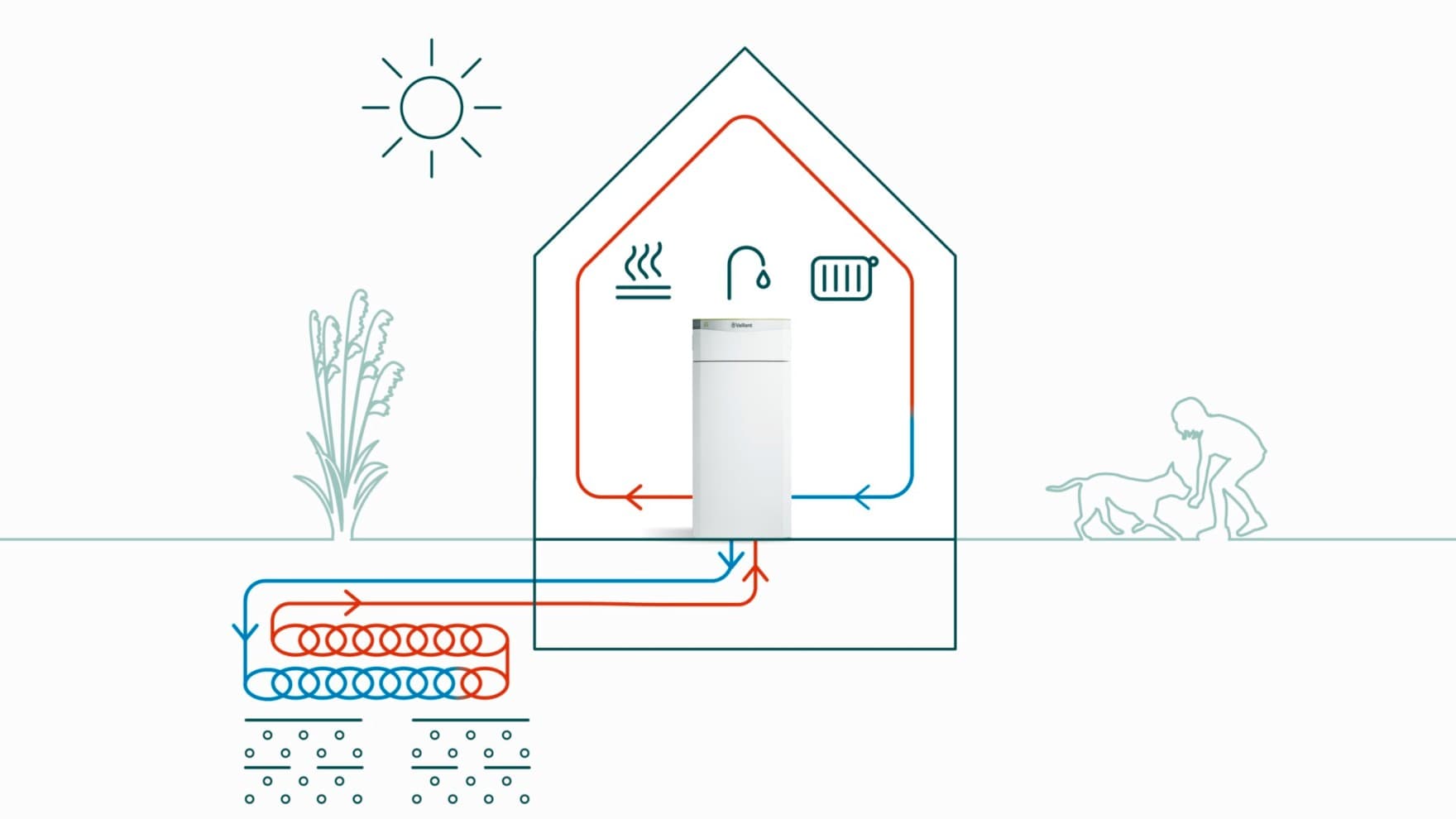
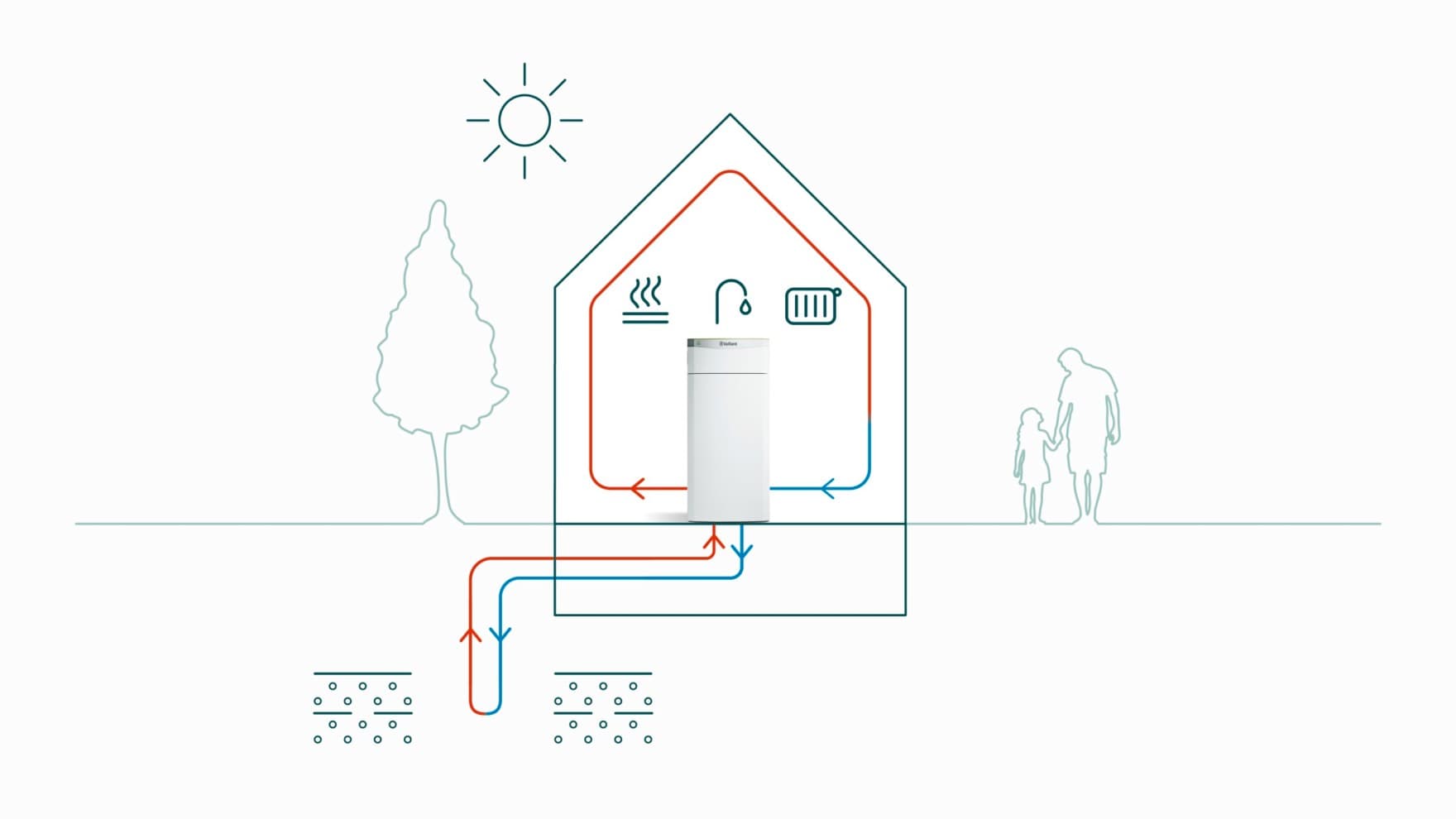
The ground-source heat pump is connected to a set of pipes with a very cold mix of water and an antifreeze in them – a so-called carrier fluid. This fluid is transported through the pipes to the ground and back to the heat pump. When passing this cycle, thermal energy in the ground heats the carrier fluid until its low boiling point causes it to evaporate.
Back in the heat pump, the resulting vapor is compressed to heat up even more. Ultimately, a heat exchanger transfers this heat to the heating system which then passes it on to your home.
In summer the heating process works vice versa, too: Simply maintain a cool indoor climate by reversing the heat exchanger’s function to cool with your heat pump. Heat from inside your home can be discharged through the circuit into the ground and therefore passively cool your home!
Different ground-source heat pumps
Types of geothermal energy extraction.
- Ground collectors
- Geothermal heat baskets
- Ring trench collectors
- Geothermal probes
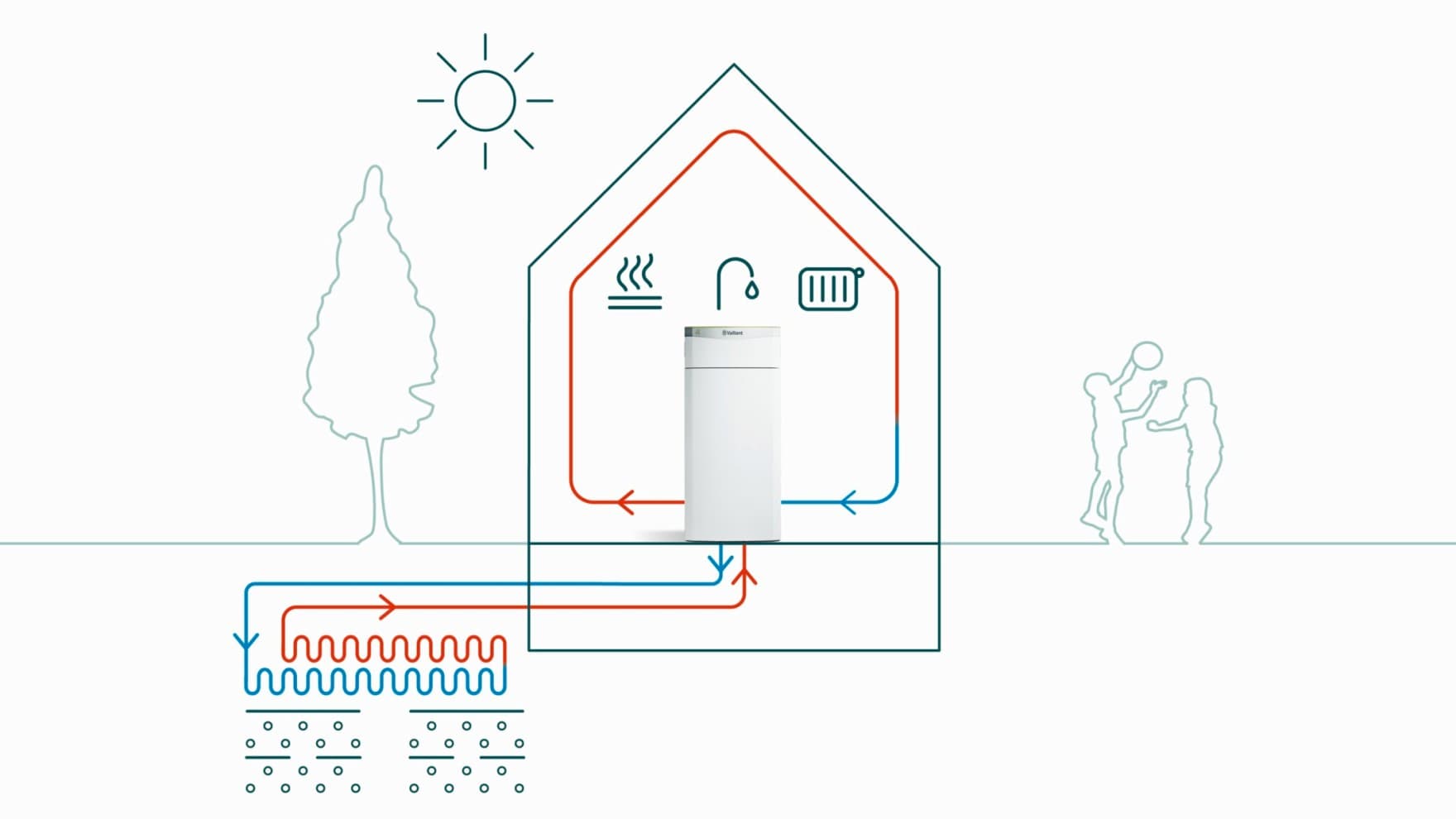
Ground collectors consist of a horizontal pipe system that is laid flat in the ground to a depth of around 1.5 m below the frost line. Ground collectors consist of a horizontal pipe system that is laid flat in the ground to a depth of around 1.5 m below the frost line. They require a large area, which makes them less suitable for smaller plots. As a rule of thumb, the area for the installation of ground collectors must be about twice as large as the living space of the house.
In addition, the heating requirement and the nature of the ground also influence the size of the required area. It is important that the area for the ground collectors is not built on or paved over, as otherwise the sun will not be able to heat the entire surface of the ground. However, it is possible to plant bushes, shrubs or trees with shallow roots.
The installation of ground collectors is simpler and cheaper than geothermal probes, geothermal baskets and ring trenches, which is why they are often used in new development areas with sufficient space. Another major advantage of ground collectors is that no permits are required.
Suitability check
The right choice for your home?
- Sufficient property area.
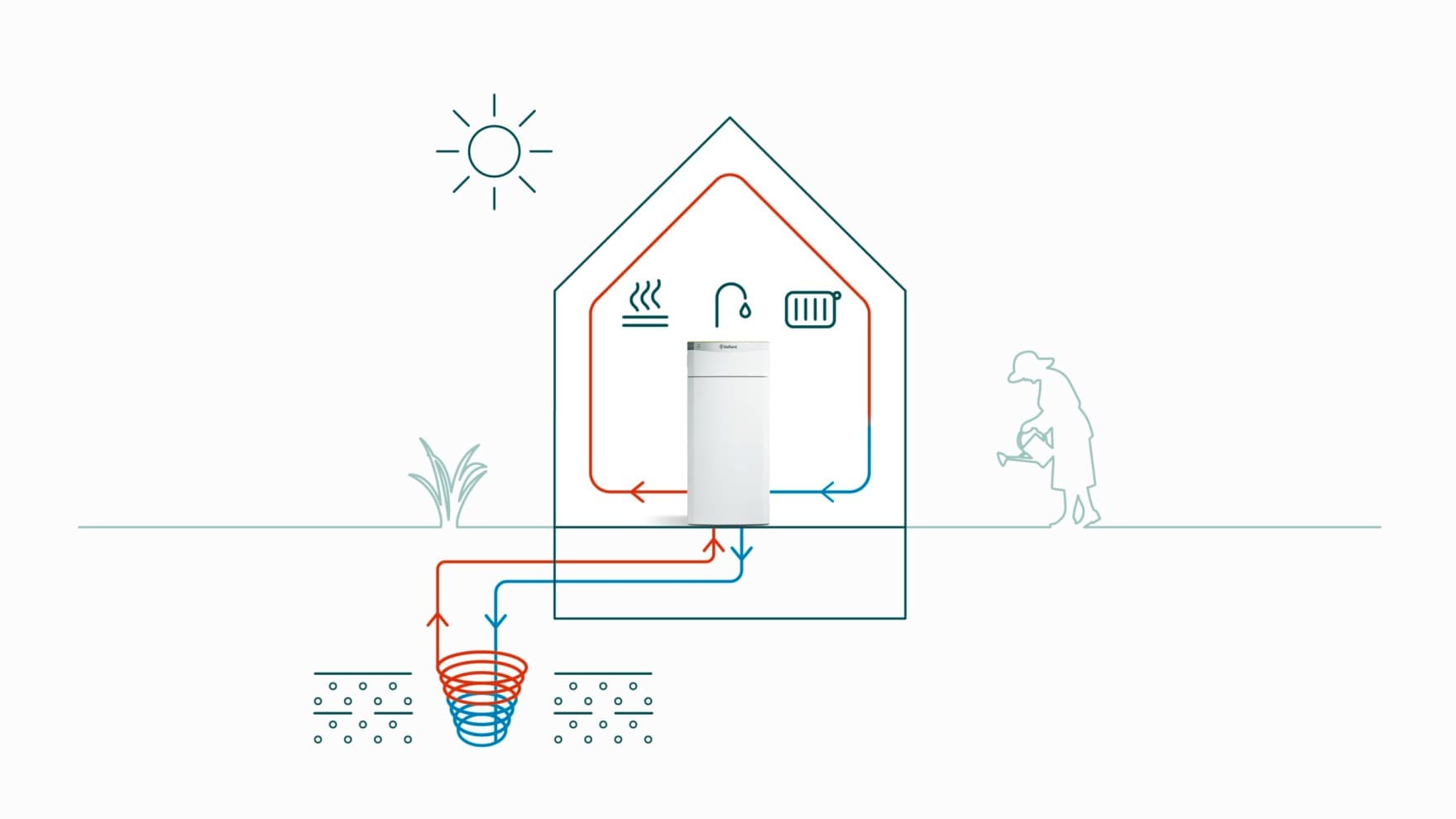
You don’t need a huge garden to install a ground-source heat pump system. A vertical system doesn’t require more space than is needed to operate the necessary digging machinery in your garden.
- Effective insulation.
All heat pumps operate more efficiently at lower flow temperatures and therefore need a sufficient heat distribution in the building. Therefore, a well-insulated building is mandatory to retain sufficient heat.
Please be aware: The more gritty or sandy the soil, the less efficient the heat pump can operate. Therefore, ground conditions play a major role and increased excavation or drilling work for installation are needed. This raises development effort and costs.

System expansions
We build the perfect system around your ground-source heat pump.
- Solar thermalRead more
Easily meet increases in heat demand via solar thermal energy with heat from solar radiation.
- VentilationRead more
Reduce heat loss and costs via fresh air by ventilation to support your heating system’s performance.
- System controlsRead more
Monitoring and control your heating system to save costs and flexibly set the room temperature.