What is a split heat pump?

Split design heat pumps provide homeowners with an efficient and versatile heating and cooling solution. In comparison to the monobloc heat pump, the heat generation process is separated into two units. This design offers greater installation flexibility and it is an excellent choice for both new builds and modernisation projects. Below, we highlight key considerations for choosing a split heat pump for your home.
Operating principle
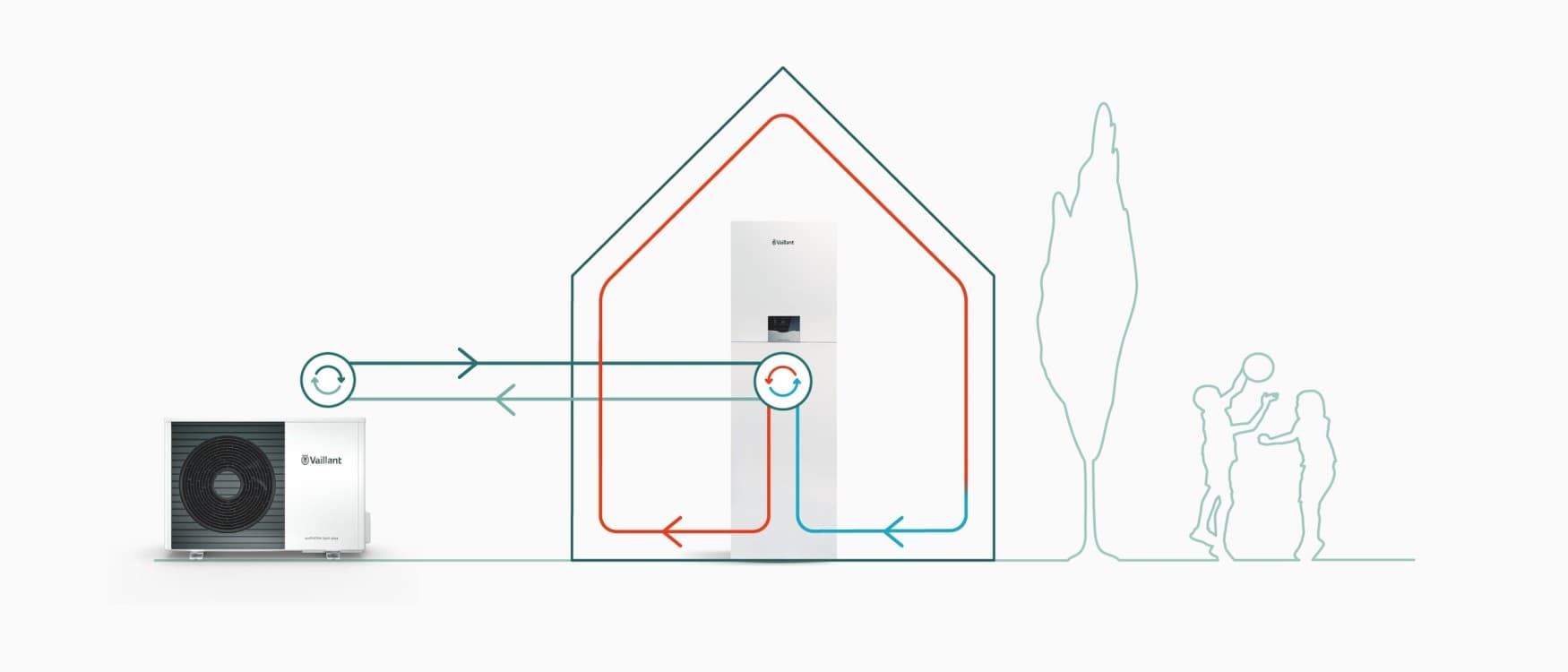
One system, two units - how a split system works.
A split heat pump system consists of two main units: outdoor and indoor. The outdoor unit uses a refrigerant to absorb heat from the air, which is then compressed to raise its temperature. This heated refrigerant is transported through pipes to the indoor unit, where a heat exchanger releases the warmth into your home. Professional installation ensures the refrigerant and heat exchanger work safely and effectively together.
Advantages and disadvantages
Advantages of a split system at a glance.
- Ideal flexibility.
Achieve ultimate adaptability with up to 40-metre pipe lengths and a 30-metre height variation between units. No need to worry about safety distances with refrigerants.
- No freezing.
No risk of freezing, as refrigerant is used to connect the outdoor and indoor units. Therefore, no water or other fluids that could freeze are used in the outdoor unit.
- Good for the building envelope.
Smaller pipe diameters and less insulation are required, leading to smaller wall openings and making it easier to integrate into existing structures without extensive modifications.
Considering an installation of a split heat pump, you should take into account that the split heat pump is more complex to install as the components are distributed across two appliances. Also, your installer needs a refrigerant certificate to install the system.
Comparison of split and monobloc heat pump
Which heat pump is better: a split or a monobloc heat pump?
- Installation
- Noise
- Flexibility
- Refrigerant Certificate
- Maintenance
Monobloc heat pump
Easier and quicker installation with fewer parts to manage. However, a monobloc heat pump often is heavier with bigger dimensions. Also, larger wall openings are necessary, which might influence the visual aspect of your building.
Split heat pump
The installation process itself goes quick, however the commissioning is more elaborate due to the setup of two units -especially because of the handling of the refrigerant.
Split heat pump checklist
To sum up: when is a split heat pump a good choice?
- Increased flexibilityWhen space or noise constraints need to be considered in your home, a split heat pump likely offers more options. This can be a plus in densely built-up areas.
- Hybrid system readyOur heat pumps seamlessly integrate into hybrid systems for enhanced efficiency. It can be combined with photovoltaic systems or existing gas heating systems, making it a sustainable and efficient solution for renovation projects.
- Wide power rangeOur split heat pumps offer a power range from 5 to 12 kW, meeting a variety of energy and hot water needs.
- No freezing riskThe indoor unit eliminates the risk of freezing for the heat exchanger and pipes, ensuring consistent performance even in colder climates.
Efficient heating solutions for modern homes
Imagine your home with a heat pump from Vaillant.
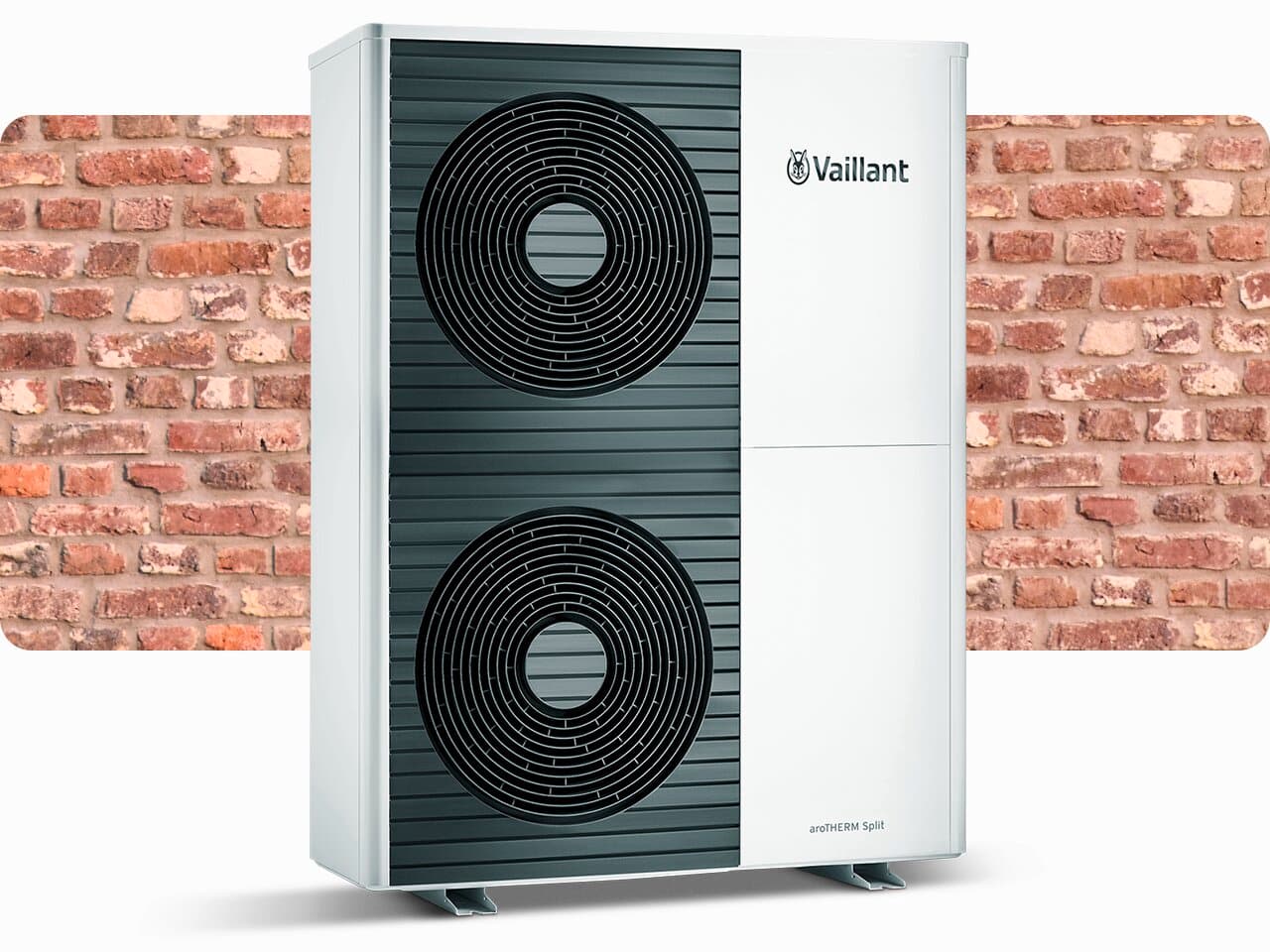
- 1/4Air-to-Water Heat PumparoTHERM SplitA split heating solution with up to 12 kW output for larger single-family houses or multi-family houses.Get more details
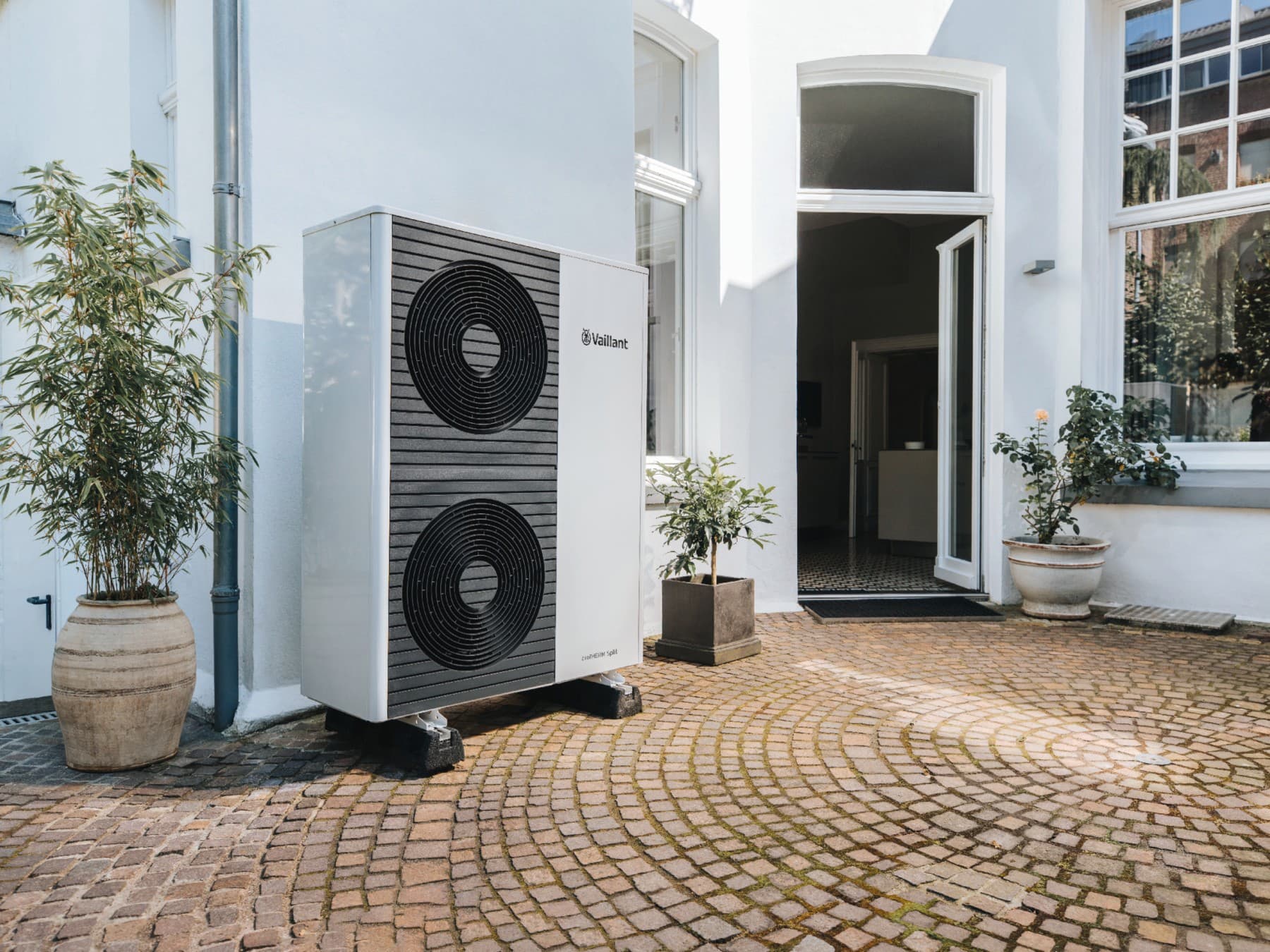
A split heating solution with up to 12 kW output for larger single-family houses or multi-family houses.
- Super quiet operation
- High energy efficiency at low operational costs
- Outstanding quality and durability
- Can even be installed up to 40m away from your property
The aroTHERM Split heat pump increases your energy efficiency by using free environmental heat as its main energy source. With its output of 10 and 12 kW it is a cost-efficient heating solution for larger single-family houses or multi-family houses.
- 2/4Air-to-water heat pumparoTHERM Split plusA highly efficient split heating solution for one-family houses or energy modernisation projects.Get more details
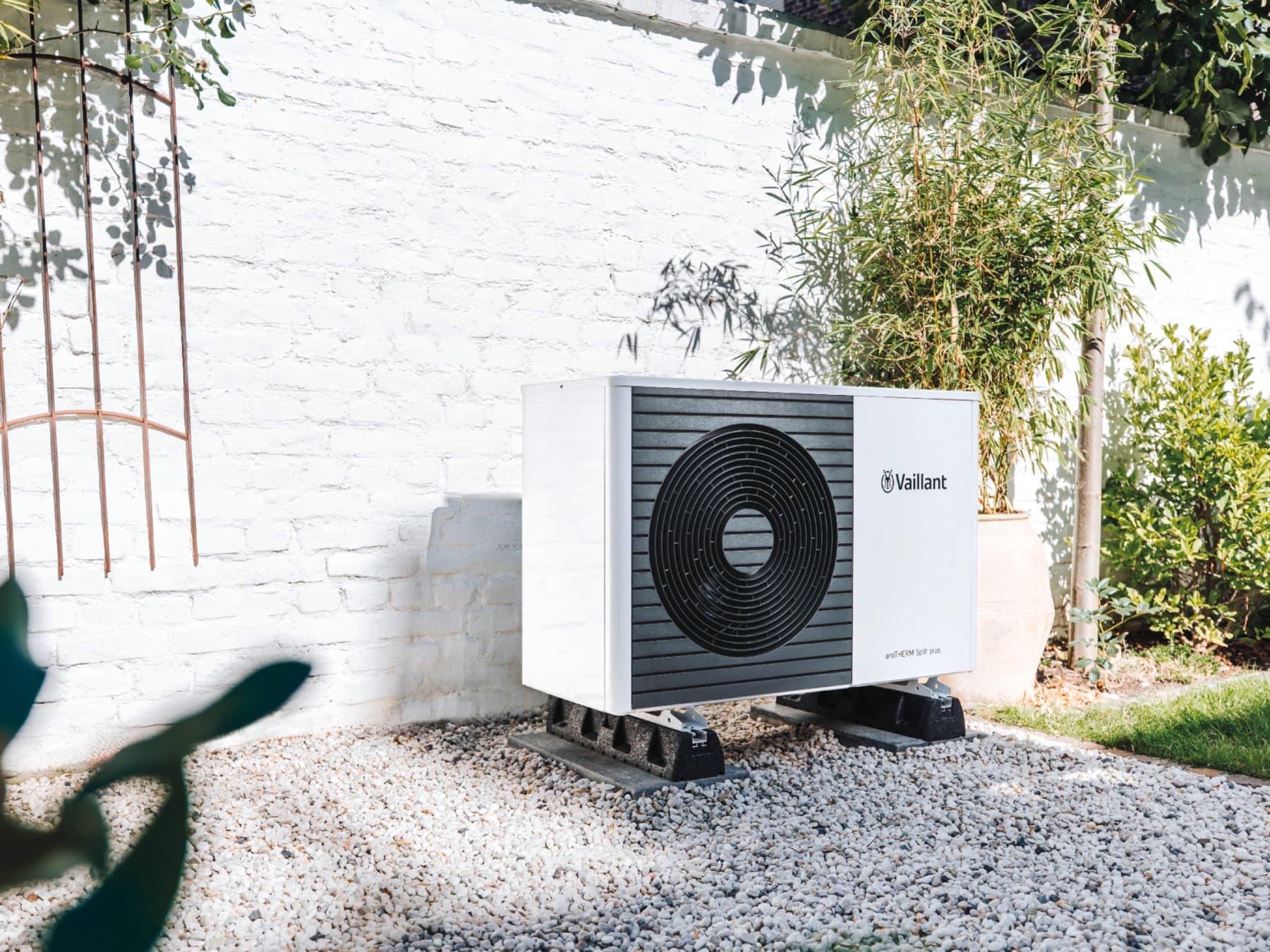
A highly efficient split heating solution for one-family houses or energy modernisation projects.
- Low running costs due to high efficiency
- Low running costs due to high efficiency
- High heating, cooling and hot water comfort
- Flexible installation
The aroTHERM Split plus reduces energy consumption with free environmental heat. With its output from 3 kW to 7 kW it is the ideal choice for newly built one-family houses or in energy modernisation projects. And with a distance of up to 40 metres between the indoor and the outdoor units, you are also flexible in choosing the installation place.
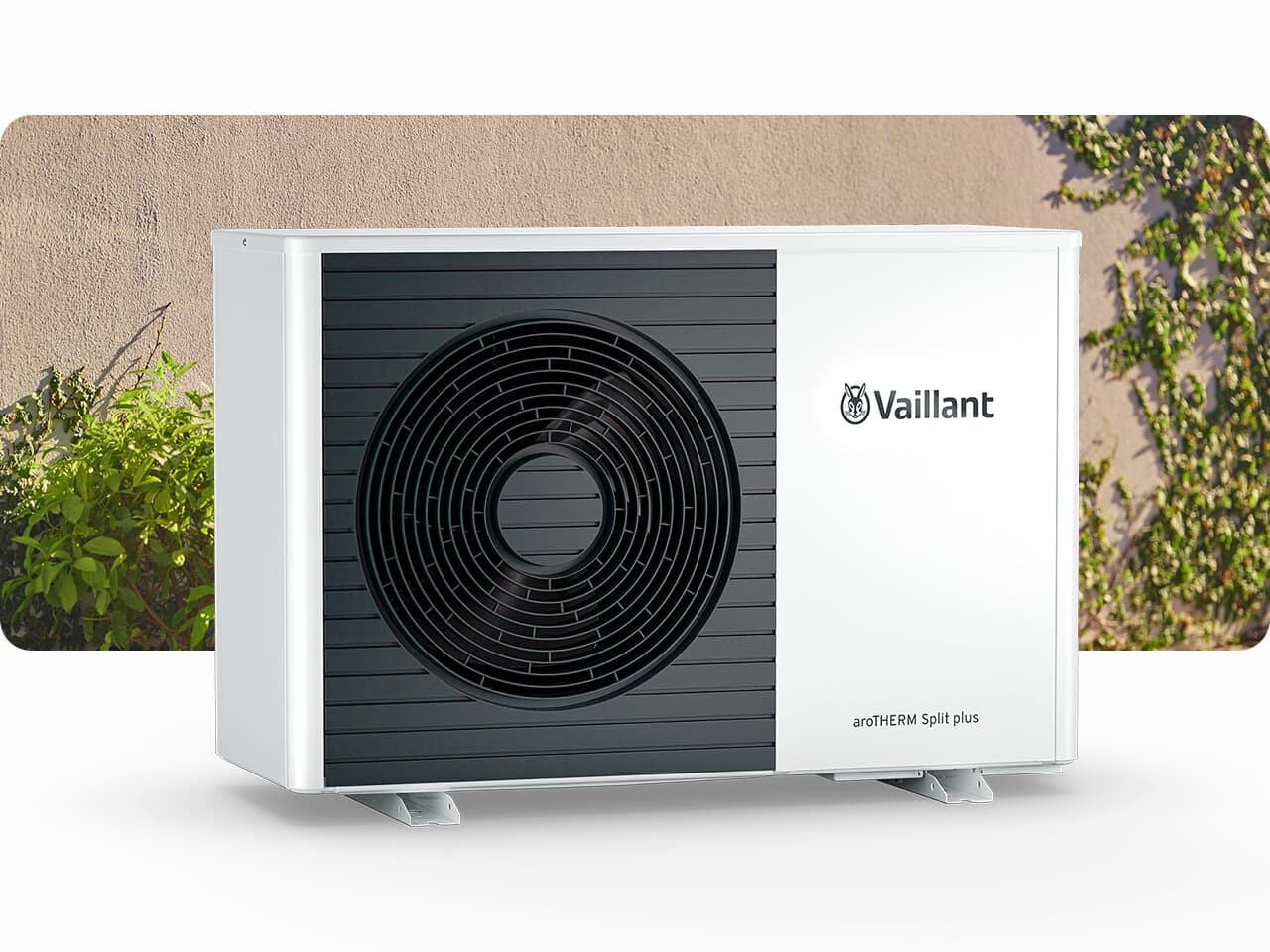
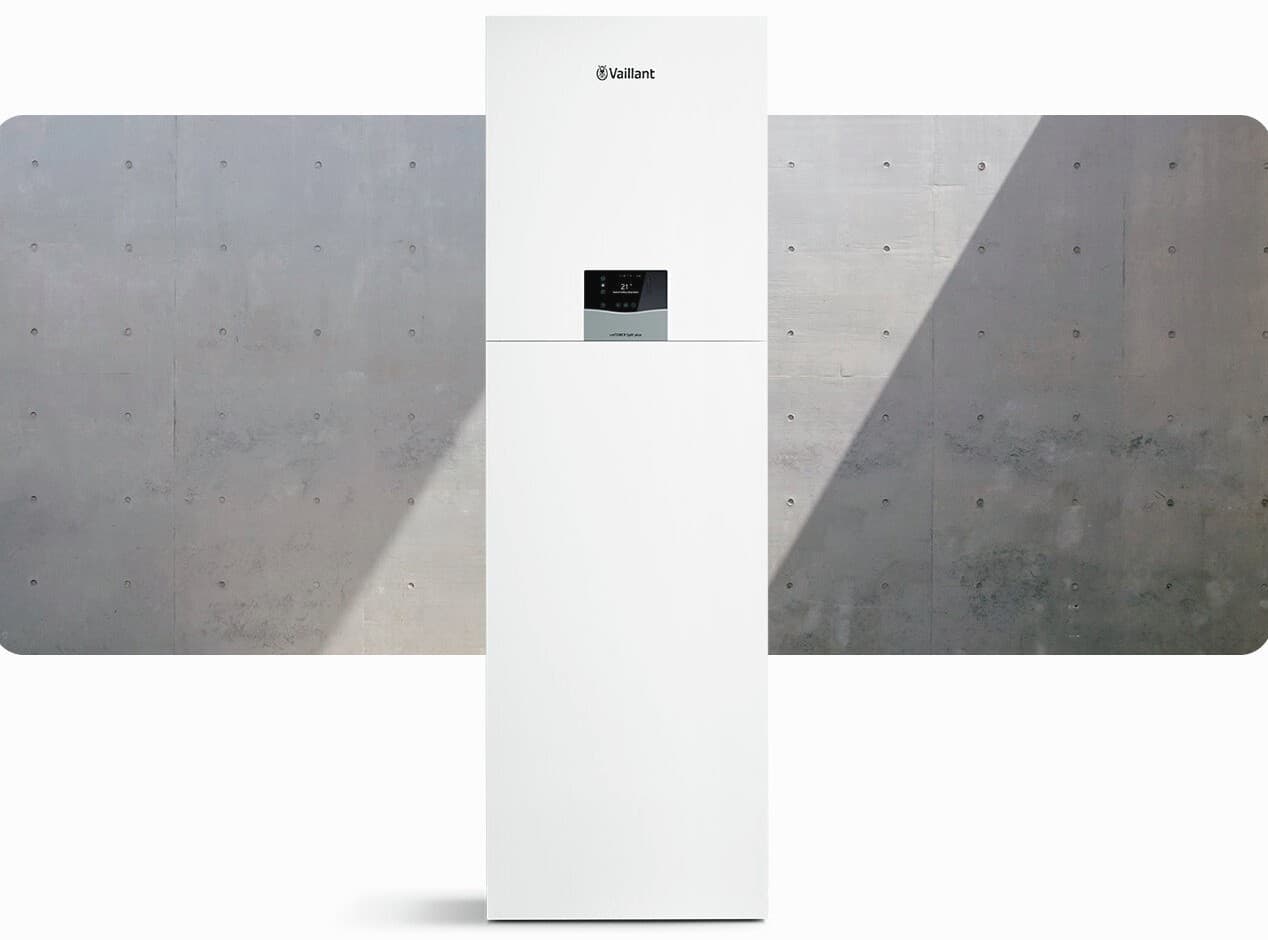
- 3/4Hydraulic Tower for Air-to-Water Heat PumpuniTOWERThe uniTOWER delivers strong hot water performance in a compact footprint, roughly the size of a large fridge.Get more details
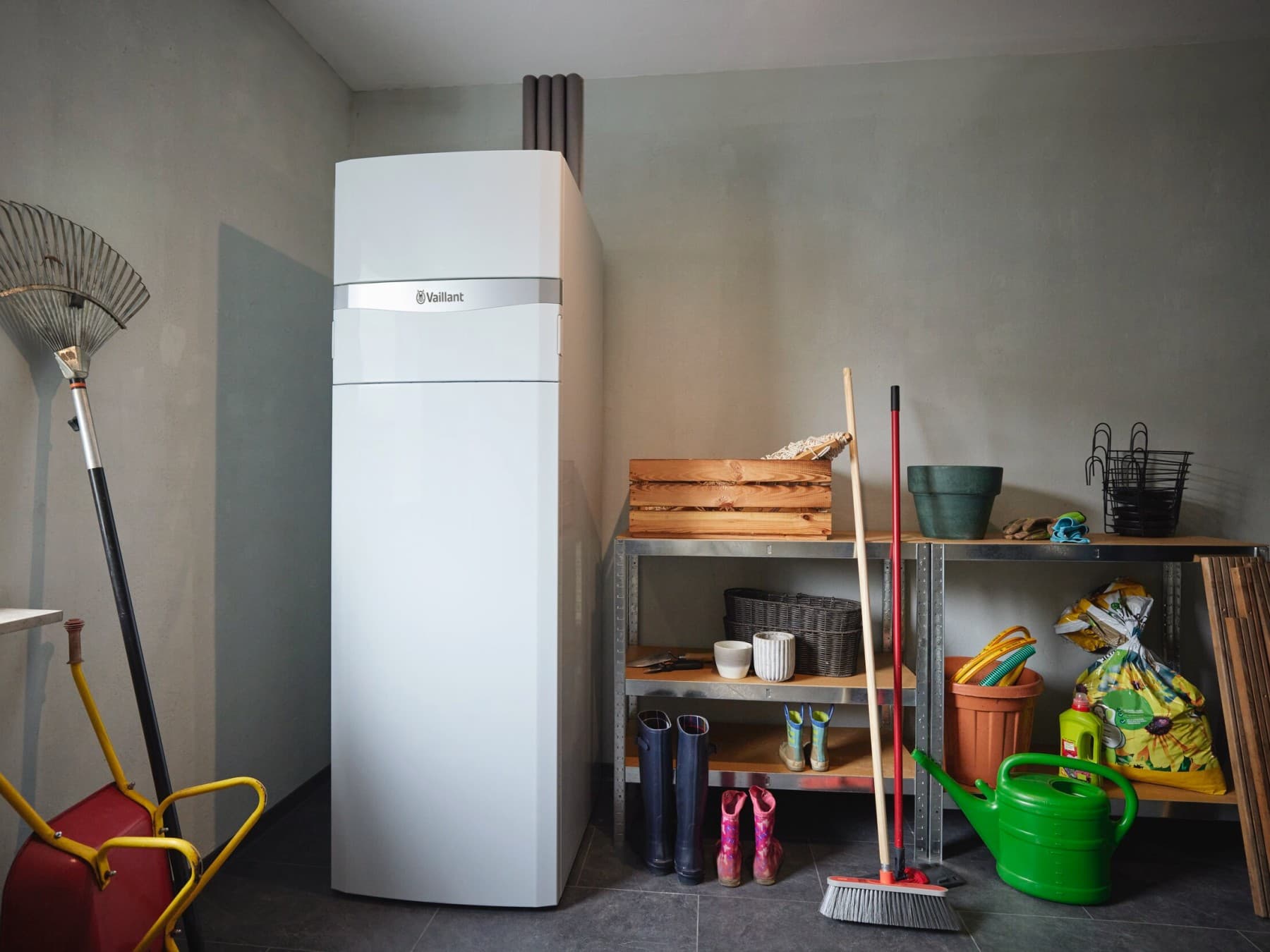
uniTOWER - Hydraulic Tower for Air-to-Water Heat Pump
- Flexible system design with easy installation, even in challenging spaces
- Reliable hot water comfort with fast availability when needed
- All-in-one compact design that blends seamlessly even in kitchen cabinets
- Manage your heating wherever you are with the myVaillant app
The uniTOWER delivers strong hot water performance in a compact footprint, roughly the size of a large fridge. All essential components are integrated into one unit, saving space and fitting naturally into modern living areas. The 190-litre cylinder provides reliable hot water for everyday use, with enough capacity for longer showers and high flow rates. The Split Mounting Concept makes installation easier, even in narrow staircases and tight spaces. Optional smart control via the myVaillant app adds convenient control for everyday comfort.
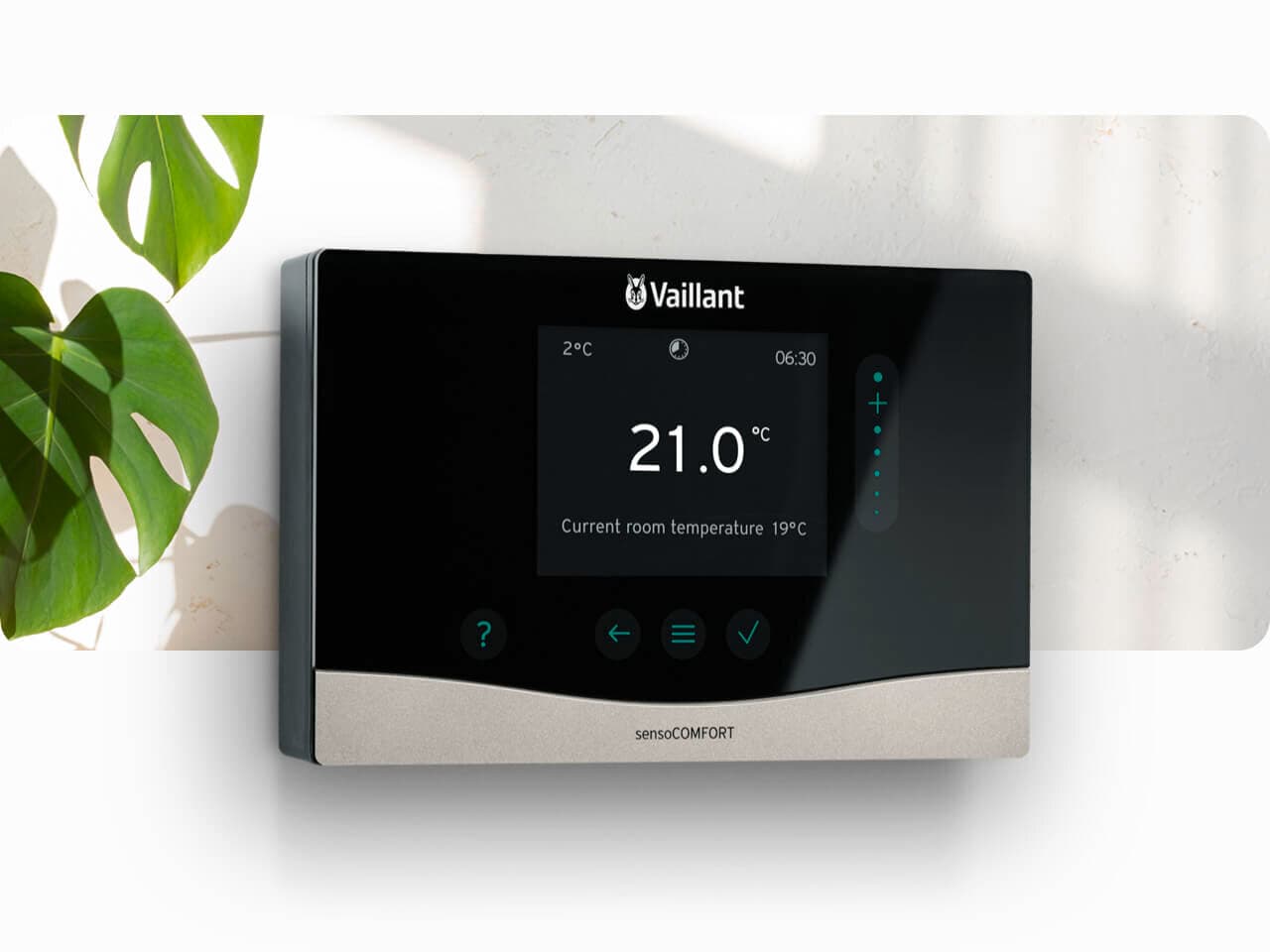
- 4/4Weather-Compensated ControlsensoCOMFORTOur most refined control, ready for the most advanced systems.Get more details
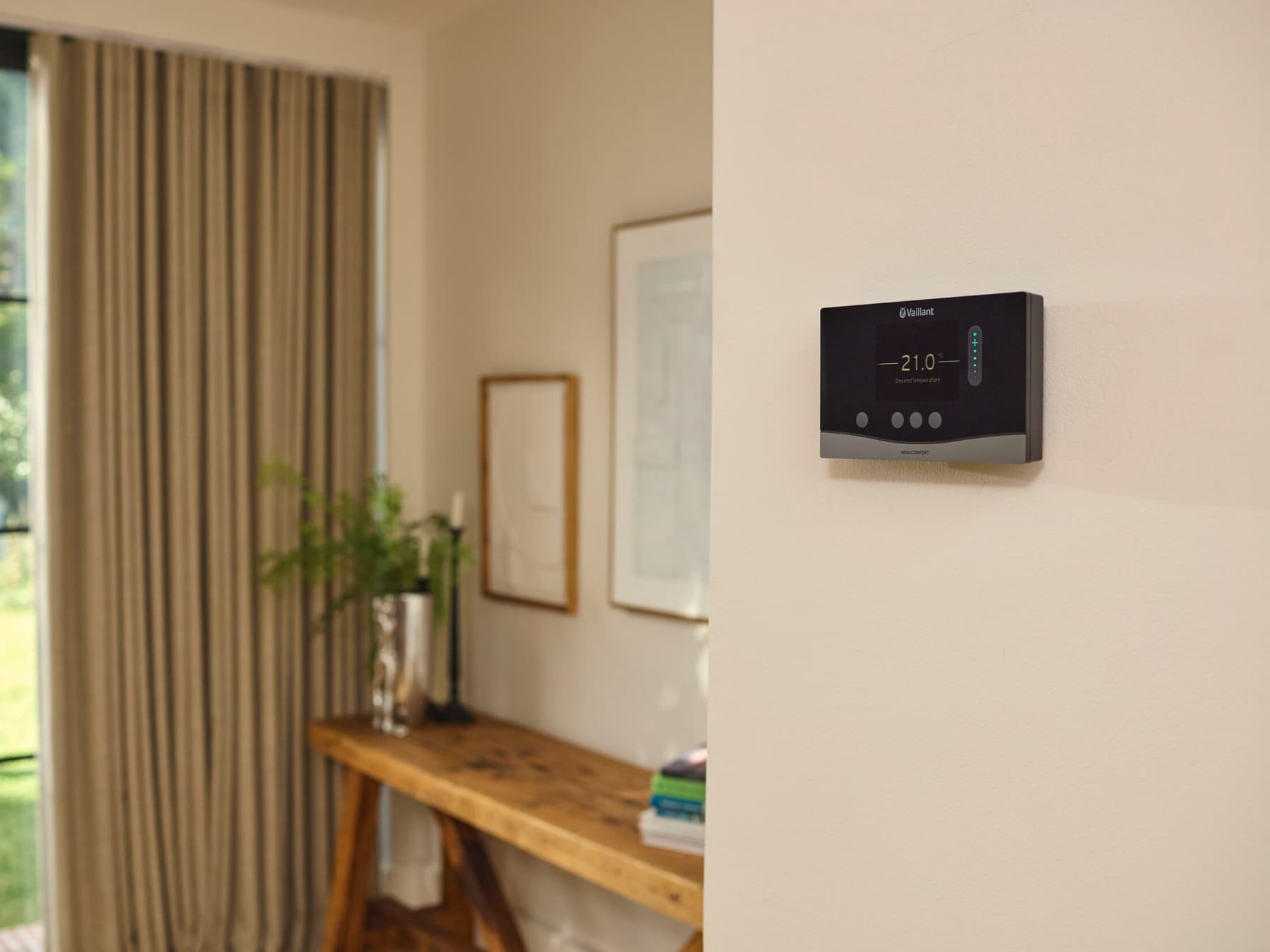
Our most refined control, ready for the most advanced systems.
- Easy handling of the whole heating system for perfect individual comfort
- Ready for smart home integration with different voice assistants
- Effortless integration of renewables from heat pumps to ventilation
- Full control over complex systems with our sensoCOMFORT
- Modern control design perfectly blends into today's living spaces
The best thing about our ever more advanced heating systems? Their increasingly simple handling – with sensoCOMFORT: Our most elaborate weather-compensating system control for easy management of up to 9 heating circuits, hot water production, photovoltaics, solar thermal and ventilation.
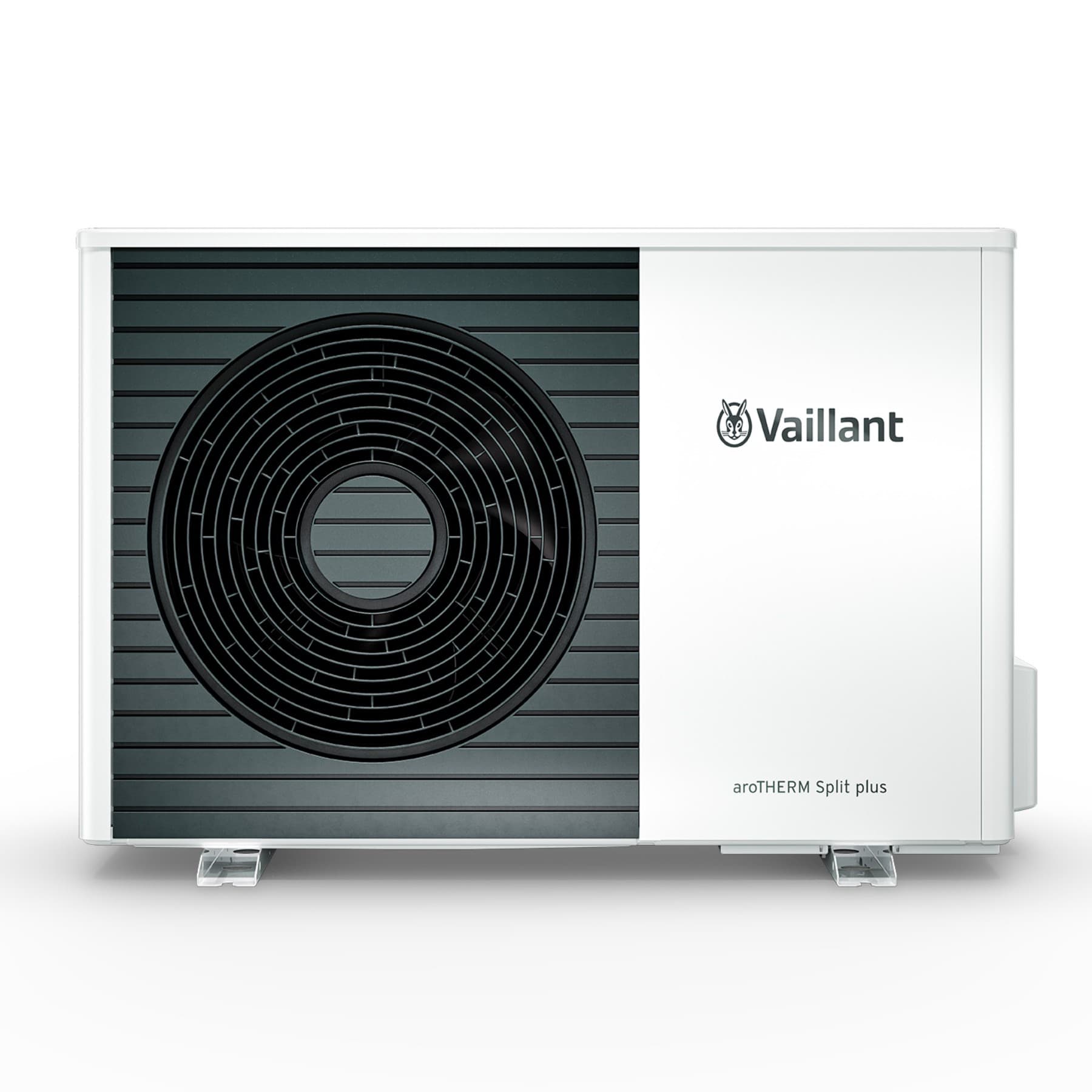
Need some inspiration? Check out our high runner, the aroTHERM Split plus.
Powered by the innovative R32 refrigerant, our latest split heat pump offers a range of benefits. With its low running costs and quiet operation, it ensures maximum efficiency and comfort. R32 has a GWP of 675 and is therefore much more sustainable than its predecessor. The new aroTHERM Split plus convinces with an increased energy efficiency value ETAs of 203%, thus achieving A+++* ErP label for all models.


Cooling with a split appliance - How it works.
The underlying principle is clever but simple. Basically, the heat pump works in a similar way to heating, just in reverse: Warm air is extracted from inside your home and is discharged into the environment. There are two ways to use a heat pump for cooling: with underfloor heating or with a fan coil unit. At Vaillant, you have both options: we offer split heat pump such as our aroTHERM Split plus, which are ready for reversed operation as well as fan coil units such as our aroVAIR pro appliance.
One thing to be aware of: It isn’t possible to cool with a heat pump if you only have conventional radiators in your home – this is because radiators provide insufficient surface area.