
Underfloor heating: function, advantages and disadvantages.

Your way to more comfort
Underfloor heating for Contemporary living.
You might not be an expert on surface heating, but you've surely heard of underfloor heating, right? It's gaining momentum! This energy-efficient way to warm your home is now the top choice for new builds, often replacing traditional radiators. And guess what? It's becoming popular in older homes too, especially as more people switch to modern heat pumps.
So, why the buzz? Underfloor heating uses less energy by evenly warming your room from the floor up. Many find this gentle warmth far more comfortable than the hot and cold spots from radiators. Plus, it's versatile – it can even lightly cool rooms on warmer days!
Curious to learn more? We've gathered all the essential details on how underfloor heating works and how you can integrate it into your older home with ease.
Advantages of underfloor heating
Why underfloor heating makes a lot of sense.
- Even heat distribution.
In contrast to exposed radiators, underfloor heating is a surface heating system that heats the room evenly.
- Efficient heat storage.
Underfloor heating systems are suitable for storing heat due to their long pipe lengths, especially if they are laid in screed. This can increase the effectiveness of the heating system.
- Low flow temperature.
Underfloor heating also works particularly efficiently with a low flow temperature in contrast to radiators.
- Ideal room climate.
Dust is reduced, which is particularly healthy for allergy sufferers and asthmatics. The dry, warm air on the floor is also the enemy of mites and fungi.
Why underfloor heating is your secret to energy savings.
Unlike radiators, it spreads warmth across a large area, letting the heating water's flow temperature drop from 60°C or 65°C to just 35°C or lower. This lower temperature is ideal for heat pumps, boosting their efficiency. Plus, underfloor heating is a smart choice because its radiant heat feels cosier than the convection heat from radiators. This means you can lower the room temperature by 2-3 °C, saving around 10-12 % of primary energy. During summer, underfloor heating can even aid in passive cooling when paired with a suitable heat pump, reducing the room temperature by up to 3°C and making air conditioning almost unnecessary.
How it works
How does underfloor heating work?
The basic principle of underfloor heating has ancient roots: the Romans heated their homes and thermal baths by channelling hot air through passages beneath tiles, using a cellar fire. This was known as the hypocaust heating system.
Today, most underfloor heating systems are water-based, offering efficient and widespread warmth. Electric systems are typically reserved for small areas, like bathrooms, due to their higher operating costs. In water-based systems, warm water – usually heated by a heat pump – circulates through coil pipes in the screed. This warmth is transferred to the floor and then gently released into the room air, creating a cosy and inviting atmosphere.
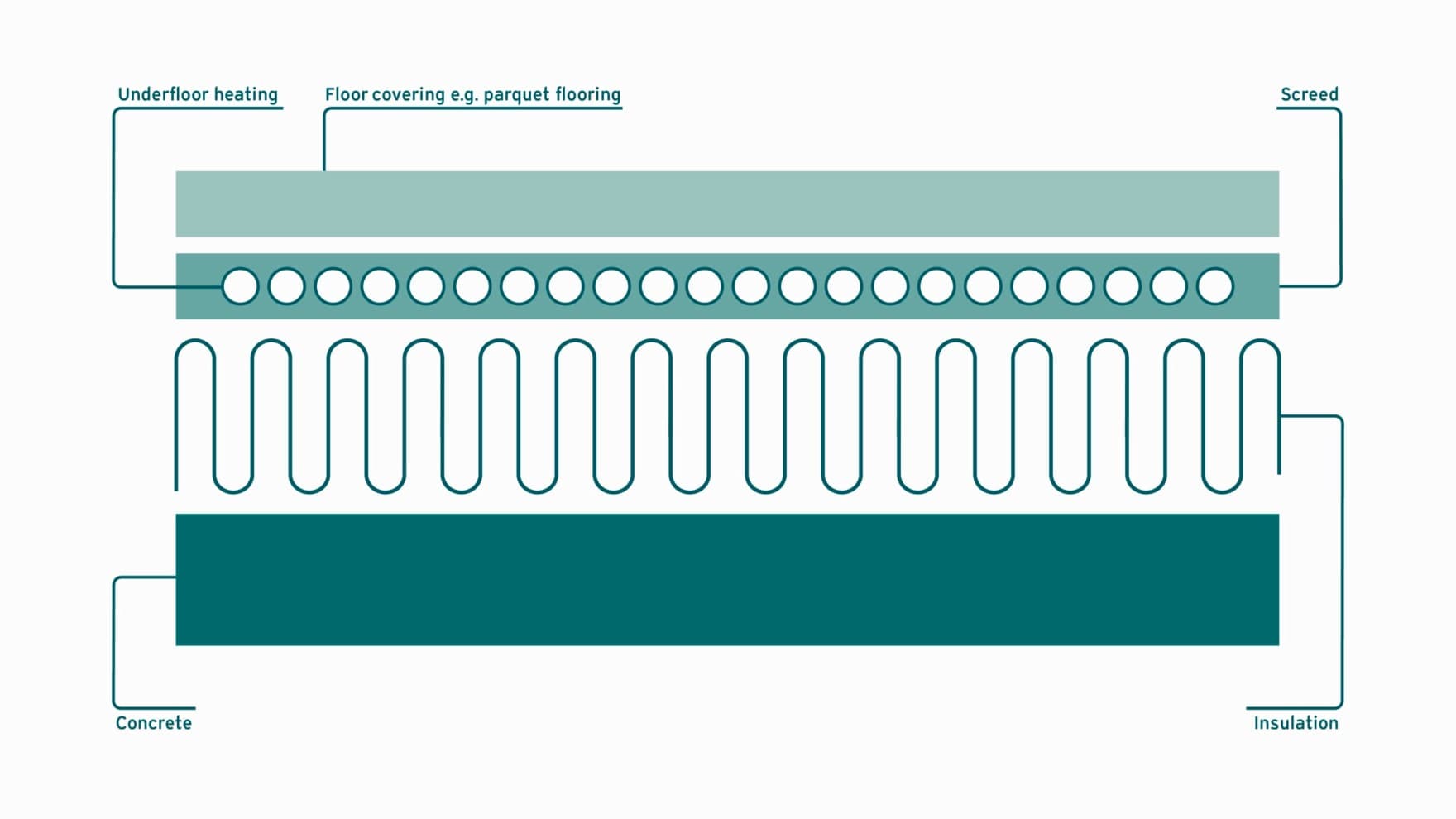
In contrast to radiators, this happens evenly throughout the room and without air turbulence - an advantage that is particularly appreciated by allergy sufferers. In order to ensure this uniformity, the specialist installer usually develops a laying pattern customised to the room before installation. The heating coils are then laid slightly closer to the windows, for example, than in the rest of the room. The underfloor heating therefore emits more heat here to compensate for the typical drop in cold air at the outer walls.
The so-called transfer rooms pose a challenge in this context. These are usually the hallway of a house or flat where the heating circuits from the individual rooms converge at the heating circuit manifold. As a result, more heat may be introduced than is actually necessary. For this reason, more insulation should be installed between the heating coils and the floor covering.

Elements of underfloor heating.
The pipes used in underfloor heating are made of strong, bendable plastic. A big improvement is that they are now "diffusion-tight." This special design stops air from getting into the pipes, preventing clogs and keeping your heating system working perfectly.
How is an underfloor heating controlled?
Underfloor heating is controlled room by room, often with a thermostat on the wall. Because it warms the floor first, there's a slight delay before you feel temperature changes, unlike radiators. To handle this "slow" heating, many people now use smart controls you can program or even adjust with an app.
Which floor coverings are suitable for underfloor heating?
Most floorings, like tiles, carpet, and laminate, work great with underfloor heating. For wood, stick to stable types like oak, walnut, or bamboo. Avoid beech or maple parquet, as gaps might appear. Always check with a pro for wood floors.
The right laying types
What types of laying are there?
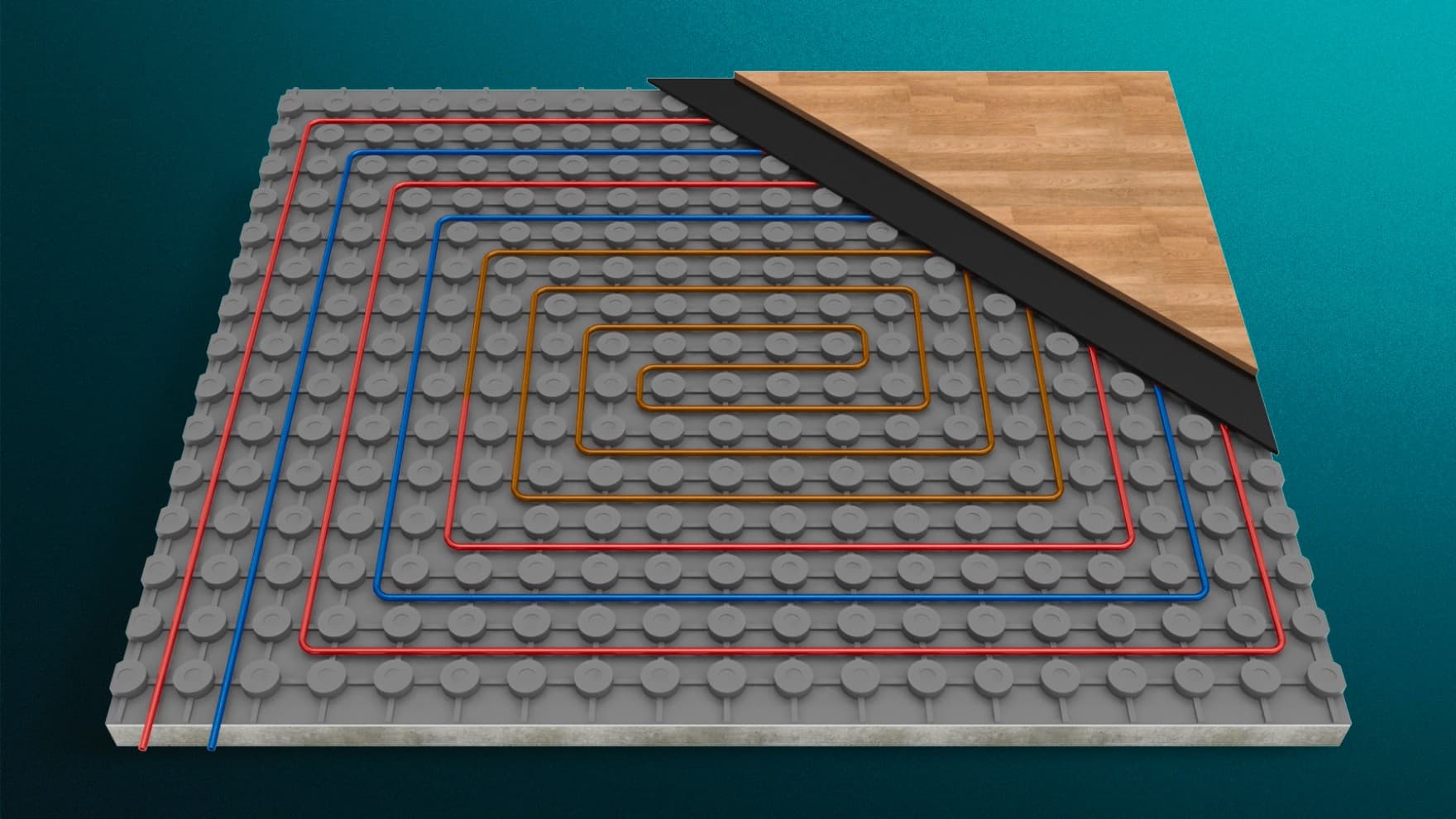
- Meandering
- Bifilar
- Modular
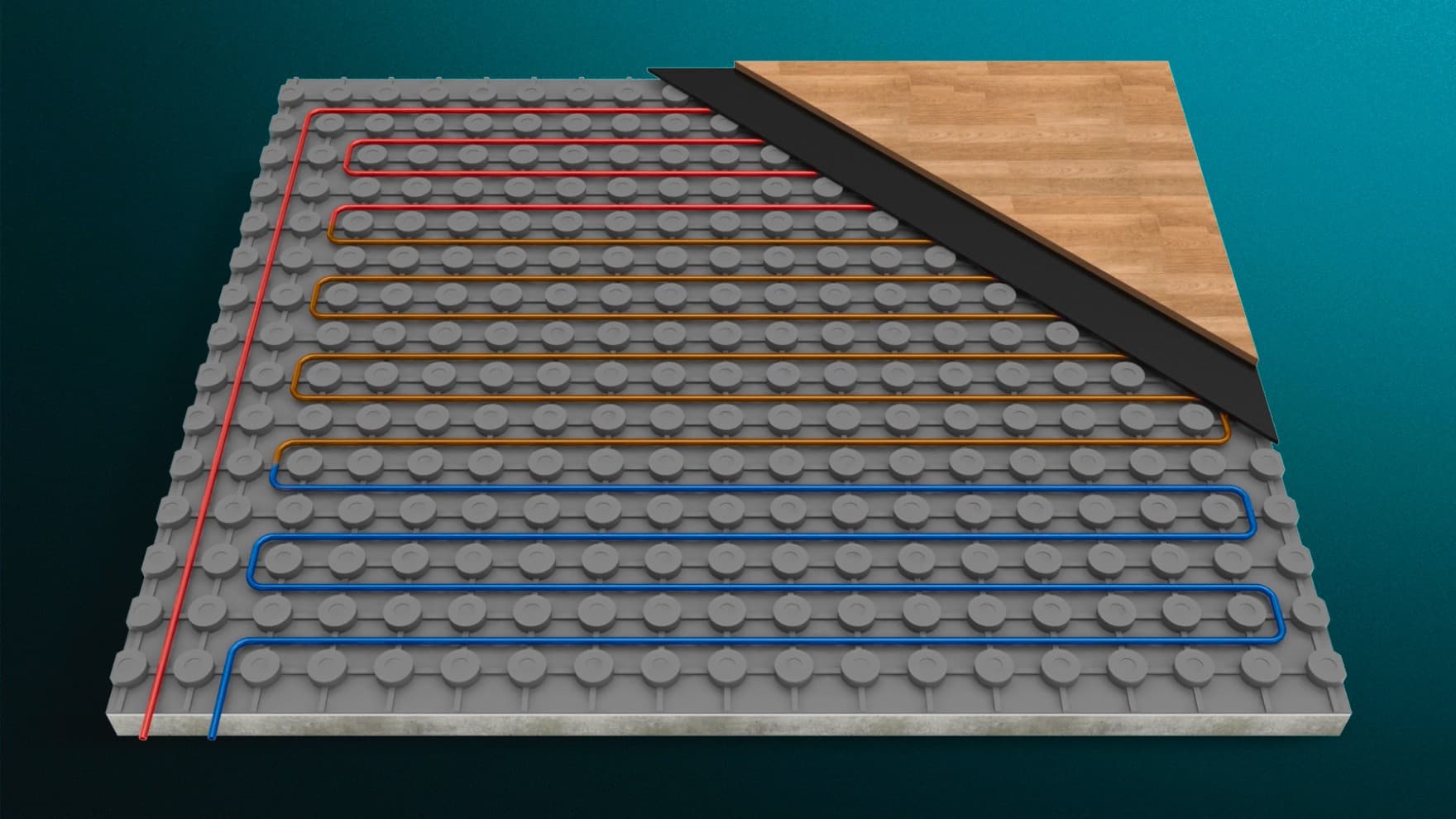
The meander/snake shape
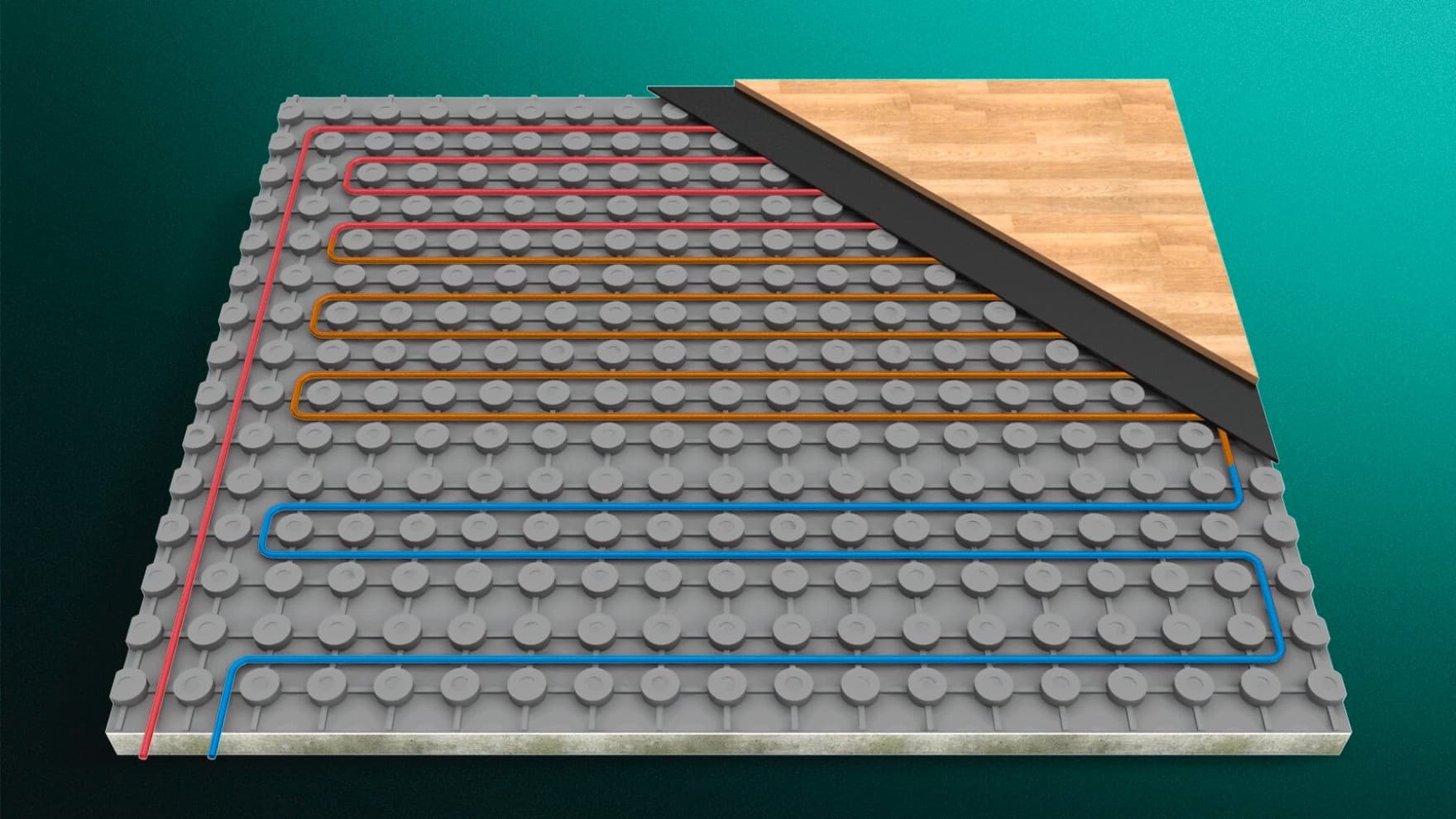
With this method, the installer starts on one side of the room and lays the heating pipe back and forth in parallel lines, making smooth 180-degree turns at each end.
One of the great things about this pattern is its simplicity and efficiency for certain spaces. While the warmth might be slightly less intense as the pipe gets further from where the hot water enters, this is actually an advantage for smaller rooms or cozy areas like bedrooms. In these spaces, you often prefer a more subtle warmth, making the meander pattern a perfect fit for delivering just the right amount of comfortable heat without overheating.
Can underfloor heating be retrofitted during my home renovations?
Home renovations oftentimes involve the installation of a new heating system, e.g. an air-water heat pump. In this context the heat distribution of the house is usually scrutinised.
The aim is to become more efficient. One option is to replace the existing radiators with panel heating systems, which are a lot bigger and are able to run on lower flow temperatures. The more sophisticated solution is space heating like underfloor heating. However, depending on the age and therefore the construction of the house, there are two main challenges that need to be overcome for such a switch:
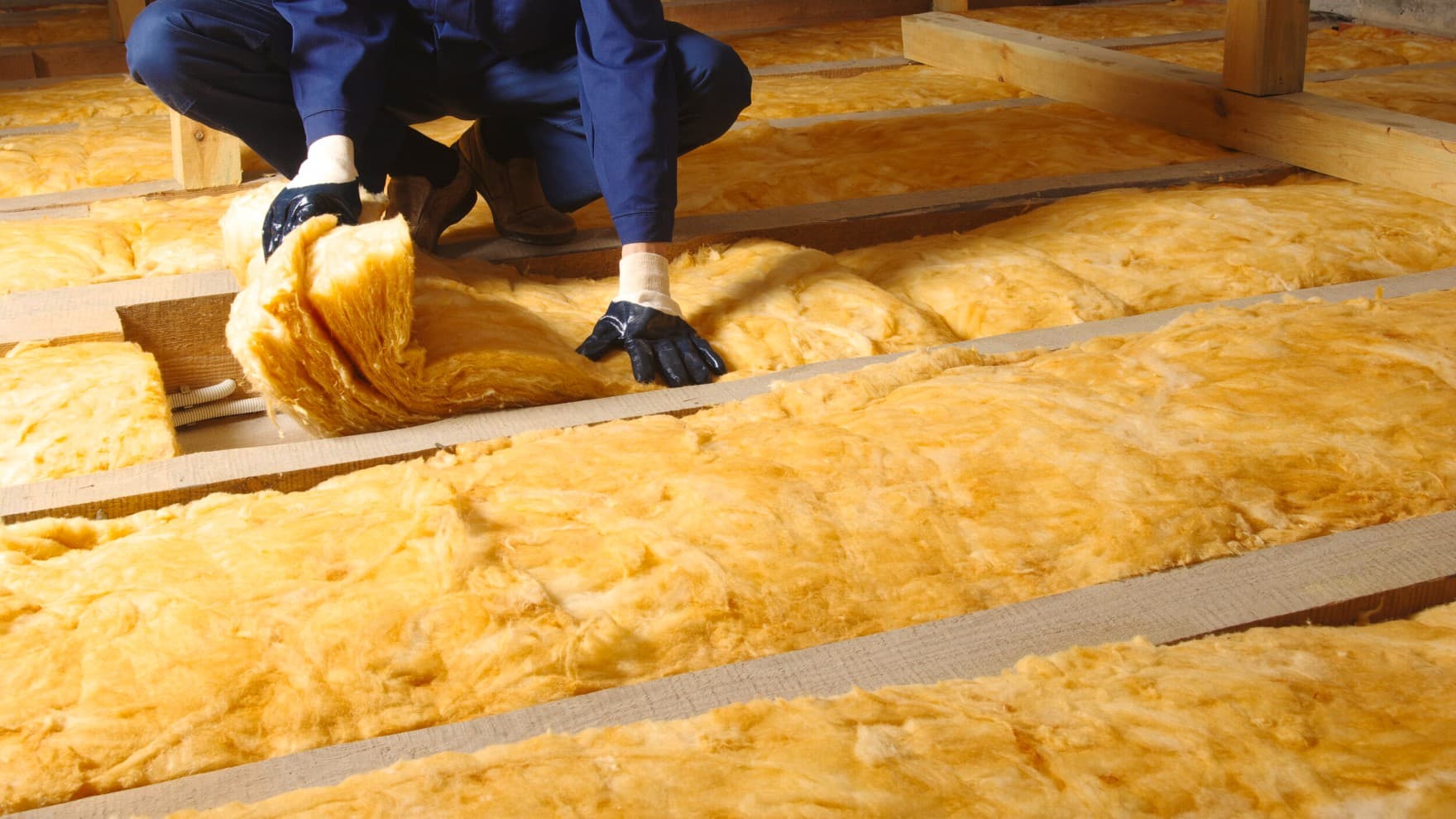
- A new screed around 7 to 10 centimetres high would have to be poured in order to install underfloor heating. This could be difficult in old buildings with low ceilings.
- The load-bearing capacity of the ceilings is not sufficient for underfloor heating as a screed construction, as it is between 40 and 60 kg/m². This is often too much for wooden beam ceilings in old buildings. However, there are now also a variety of solutions specifically developed for older buildings to install underfloor heating in existing structures with low installation heights and minimal floor loading.
Learn more about the installation of underfloor heating here.
Can underfloor heating and radiators be combined?
The more extensively an old building is renovated, the easier it is to retrofit underfloor heating. However, if the old heat distribution via radiators is to be retained and only one additional room, such as the newly converted loft, needs to be heated, a combination of radiators and underfloor heating is possible.
- In small rooms, the underfloor heating circuit can simply be connected to the existing heating connection with a return temperature limiter. This reduces the high flow temperature of 60 or 65 °C to around 35 °C to prevent the floor from overheating.
- In larger rooms, a new underfloor heating circuit with its own pump group should be installed instead of just branching off a small heating circuit. In this way, the existing heating circuit can continue to be operated at high temperatures while the underfloor heating operates at lower temperatures. The pumps provide the required volume flows, which would otherwise not be possible if the low-temperature heating circuit were extended.


Why combine underfloor heating with a heat pump?
The high heat output of underfloor heating with relatively low flow temperatures makes it the perfect partner for a heat pump. This synergy is key because heat pumps operate most efficiently at around 35 °C – precisely the temperature typically needed for underfloor heating systems.
What's more, in the warmer months, this dynamic duo can also subtly cool your home by a few degrees, adding year-round comfort.