Perfect your home's cosy feel with hydraulic balancing.

What hydraulic balancing means
Bring your home into balance - for comfort and savings.
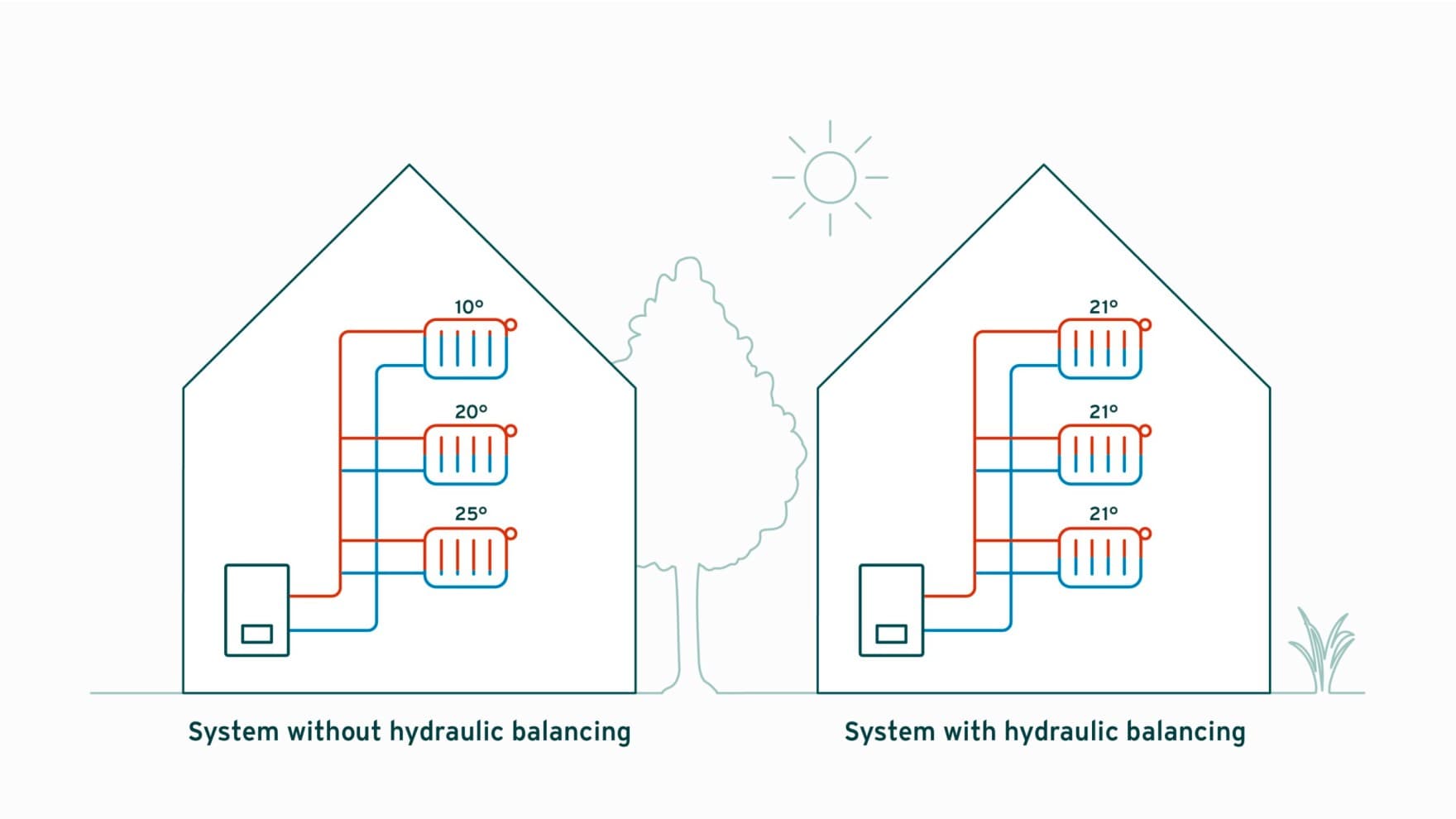
Balancing radiators is about creating harmony in your home’s heating system. Before you can achieve this balance, it’s essential to understand how heat flows throughout your house. Picture your boiler as the heart of your heating system, pumping warm water through a diverting valve, sending it in two directions: one path leads to provide hot water for showers and taps, while the other path delivers warmth to your radiators, ensuring every corner of your home is cosy. Most houses have radiators in every room, connected to the boiler via flow and return pipes in one heating circuit.
As shown on the left side of the graphic below, this shared flow and return can lead to uneven heating of the radiators due to incorrectly regualted pressure ratios. Balancing radiators involves adjusting the valves to equalise water flow, ensuring each radiator heats up consistently. If you notice cold spots, uneven temperatures across radiators, or longer times to reach desired warmth in individual rooms, it might be time to balance your system. This adjustment not only enhances comfort and energy efficiency, but it also unlocks a range of other valuable benefits.
Advantages of balancing radiators
Create a feel-good atmosphere in every corner.
- Boost energy efficiency and save costs.
Balancing radiators optimises heat flow, ensuring each radiator gets the right warmth. This cuts energy waste and lowers bills by up to 15%, giving you a cost-effective heating solution.
- Elevate comfort in every room.
Consistent warmth is achieved by eliminating chilly corners and overheated spots. This adjustment ensures perfect comfort throughout the home, providing a balanced environment regardless of the season.
- Enjoy a quieter home environment.
Proper balancing reduces noise from water flow, creating a peaceful atmosphere. Say goodbye to gurgling or rattling sounds, enjoying a serene and undisturbed home environment.
- Prolong your system's life.
Balancing prevents strain on your heating system, reducing wear and tear. This adjustment means fewer repairs and extends the lifespan of your equipment, saving you time and money.
How to balance radiators
Balancing act: when your radiators need professional care.
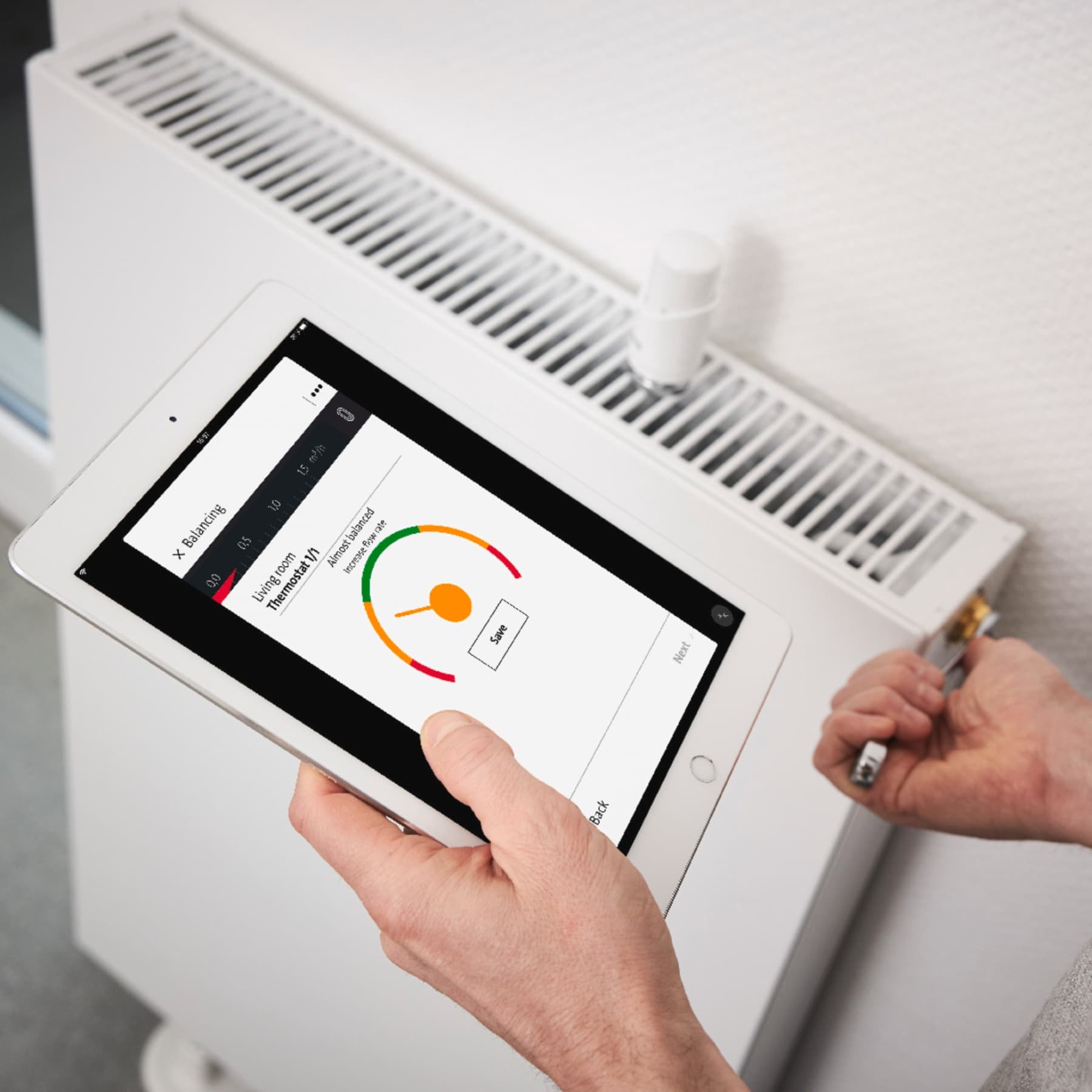
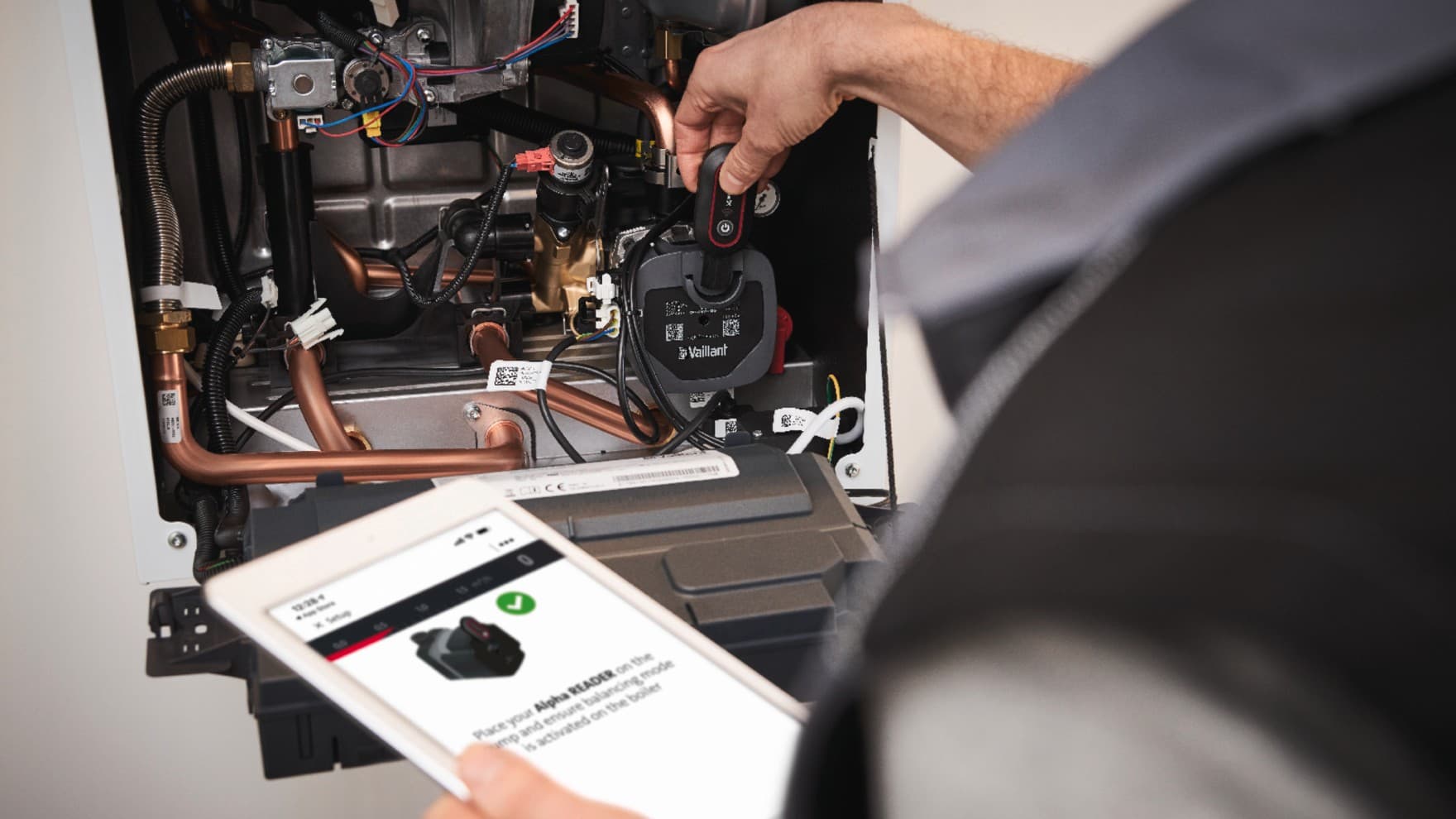
Hydraulic balancing is a precise process best handled by skilled professionals. It begins with assessing your heating system's performance. The installer evaluates room sizes and surfaces like walls, ceilings, windows, and doors to determine the heating load needed for each space. This data helps compare the heating load to the radiators' capacity and their distance from the heating pump. With this information, the installer adjusts thermostatic and lockshield valves, ensuring each radiator receives the correct amount of heat. They calibrate radiator temperatures, aligning the heating water flow with the pump's capacity and heat generator settings. This prevents rooms from being over or under-supplied with warmth. The process covers the entire system, including pipes, valves, and pumps. By addressing oversized pumps and excessive flow temperatures, hydraulic balancing optimises heat distribution, reduces energy wastage, and lowers heating costs.
Though intricate, it's efficient - a single-family home typically requires about 4.5 hours for data collection and calculations, with each radiator adjusted in about 5 minutes. This ensures your system operates at peak efficiency.

Hydraulic balancing vs. bleeding radiators
Understand the difference for efficient heating.
- Bleeding radiators
- Balancing radiators
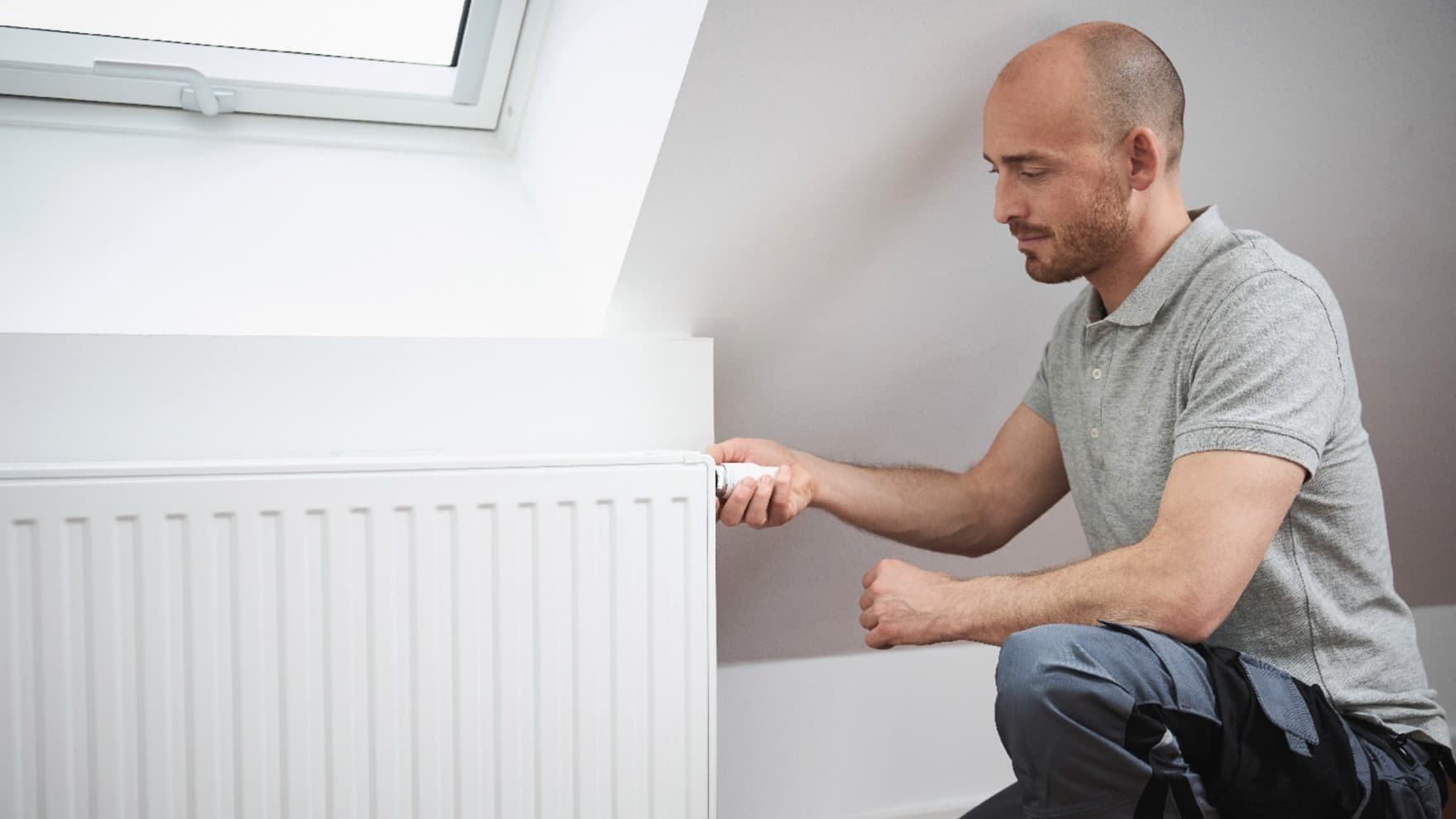
Bleeding your radiators is essential when you notice cold spots or incomplete heating. If your radiators rattle, make excessive noise, or have cold patches at the top, it's a clear sign that air is trapped inside, interrupting the circulation of heating water. This trapped air usually gathers at the highest point, near the bleeder valve, causing the radiators to only warm up partially despite open valves. Bleeding involves releasing this trapped air using a radiator key, and it's a task you can easily manage yourself. It's advisable to bleed your radiators not only when issues arise or after replacing radiators but also as a preventive measure in October or November before the heating season begins. This ensures optimal performance and warmth throughout the colder months.
Cost and savings of professional balancing
Smart investment for lasting savings.
Hydraulic balancing is an essential service that optimises your heating system's efficiency.
As a professional service, costs are estimated individually by companies, tailored to the unique characteristics of your system. Several factors play a significant role in determining these costs. These include the number of radiators and thermostat valves, the size of the building, and the age and condition of both your heating system and its components. For a typical single-family home, you can expect less costs than in older systems, when retrofitting adjustable thermostatic valves is required, or when replacing an outdated or oversized heating pump becomes necessary. Such replacements are crucial as they prevent excessive energy consumption and ensure optimal performance.