A guide to radiator bleeding: Silence the gurgle, boost the heat.

When it's time to bleed your radiators
Gurgles, glugs, and gone cold: that's all in the past.
When the chill of the heating season arrives, you expect your radiator to warm up your room quickly and efficiently. But sometimes, instead of cosy warmth, you encounter gurgling noises and only partial heating. This common issue is often caused by air trapped in the heating system, preventing your radiator from distributing heat effectively. While your heating system works hard, the radiator fails to deliver warmth, wasting energy. The solution is simple: bleeding your radiator at the start of the heating season. This quick fix can save energy and ensure your home stays comfortably warm. Ready to tackle this task? We'll guide you through bleeding your radiator in just seven easy steps.
Advantages of bleeding your radiators
A quick win for warmth and savings.
- Save on energy costs.
Bleeding radiators regularly ensures your heating system runs efficiently. By removing trapped air, you reduce energy consumption and cut down on heating costs.
- Boost heating efficiency.
Air reduces the effectiveness of heat distribution. Bleeding radiators allows water to flow freely, ensuring even warmth throughout your home.
- Enjoy quieter days and nights.
Air in your radiators can cause annoying gurgling noises. Regular bleeding eliminates these disturbances, letting you enjoy peaceful, undisturbed days and nights.
- Protect the environment and your heating system.
Efficient heating systems use less energy, reducing your carbon footprint. Regular radiator bleeding contributes to a greener, more sustainable future and also protects your heating system.
Step-by-step guide
How to get the job done easily.
The tools you need:
- Radiator key: to open the bleeding valves of your radiators
- Bucket: to catch dripping water
- Cloth: to wipe water –you never know
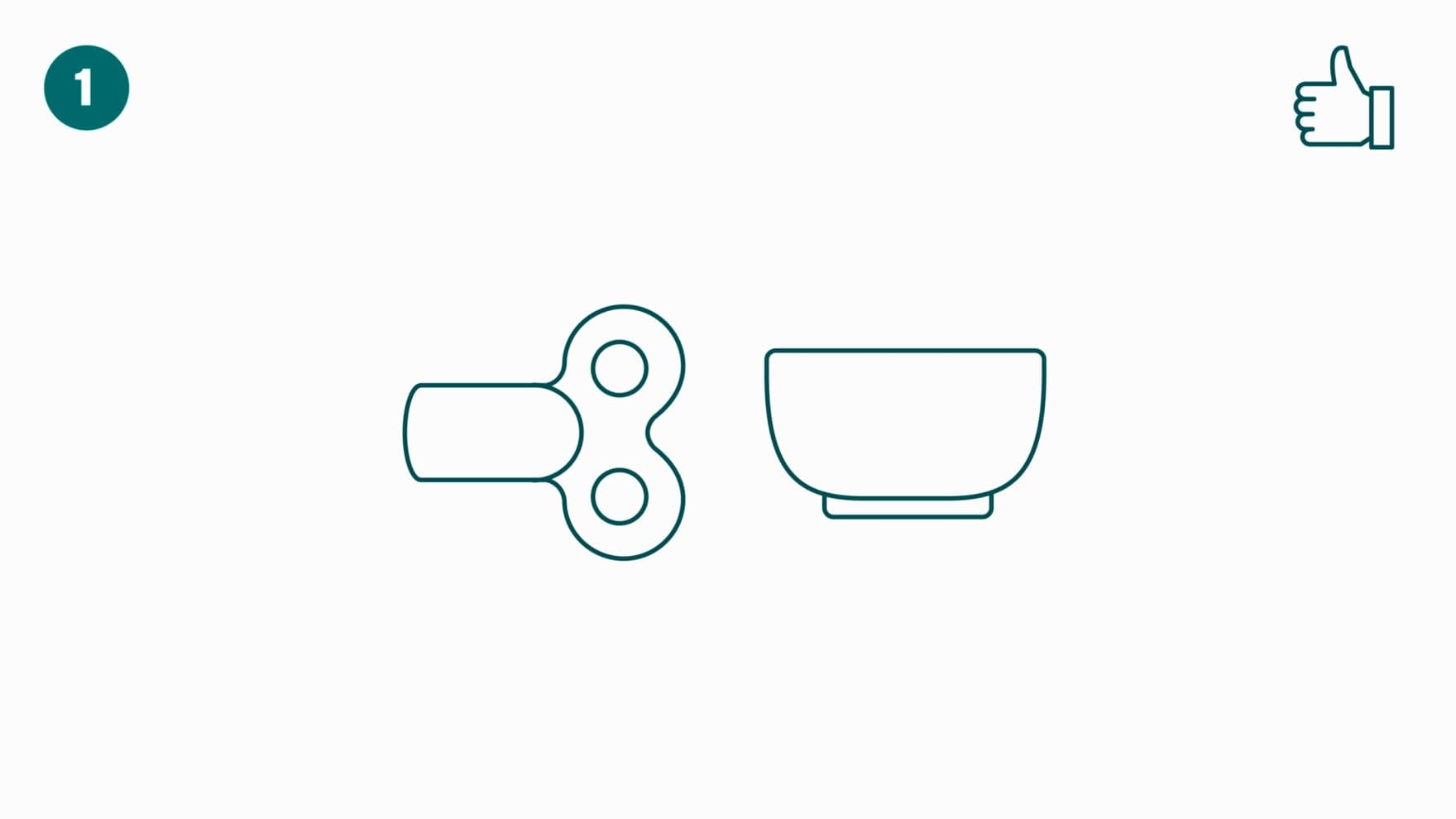
Step 1: Prepare bucket, cloth and key.
Before you bleed your radiator, place the bucket under the valve and have your cloth ready to protect your wall against splashes. Put the radiator key into the valve, which is usually on the opposite side of the thermostat.
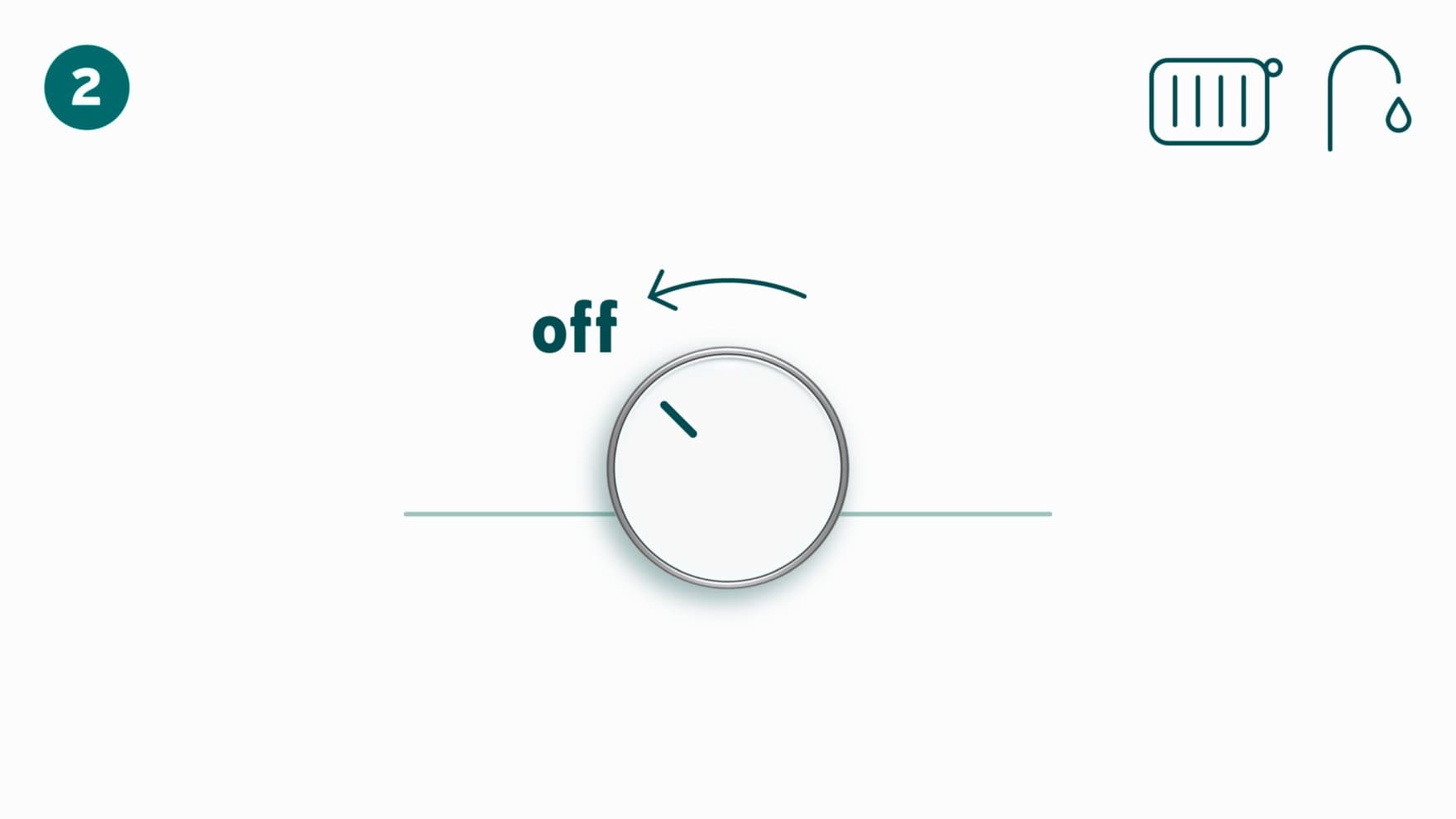
Step 2: Switch off your heating.
Stop the water circulation by turning off your heating system. You don't want hot water running through the pipes when you're busy with your radiator. In addition, turn the thermostatic valves on the radiators all the way up.
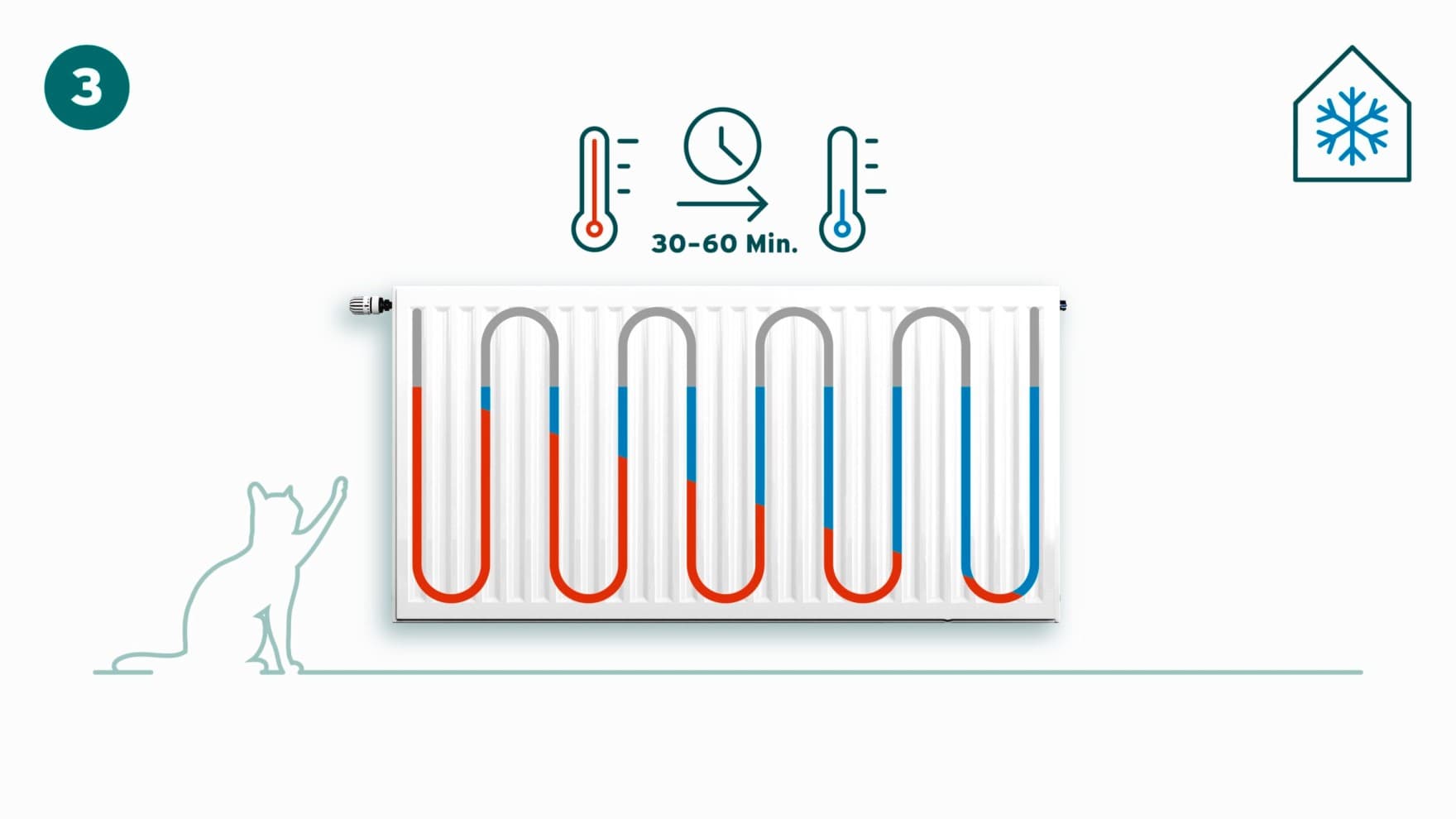
Step 3: Let your radiators cool down.
Caution: hot! After you have turned off your heating, wait about an hour. This protects you from burns in case hot water or steam escapes the radiator during bleeding.
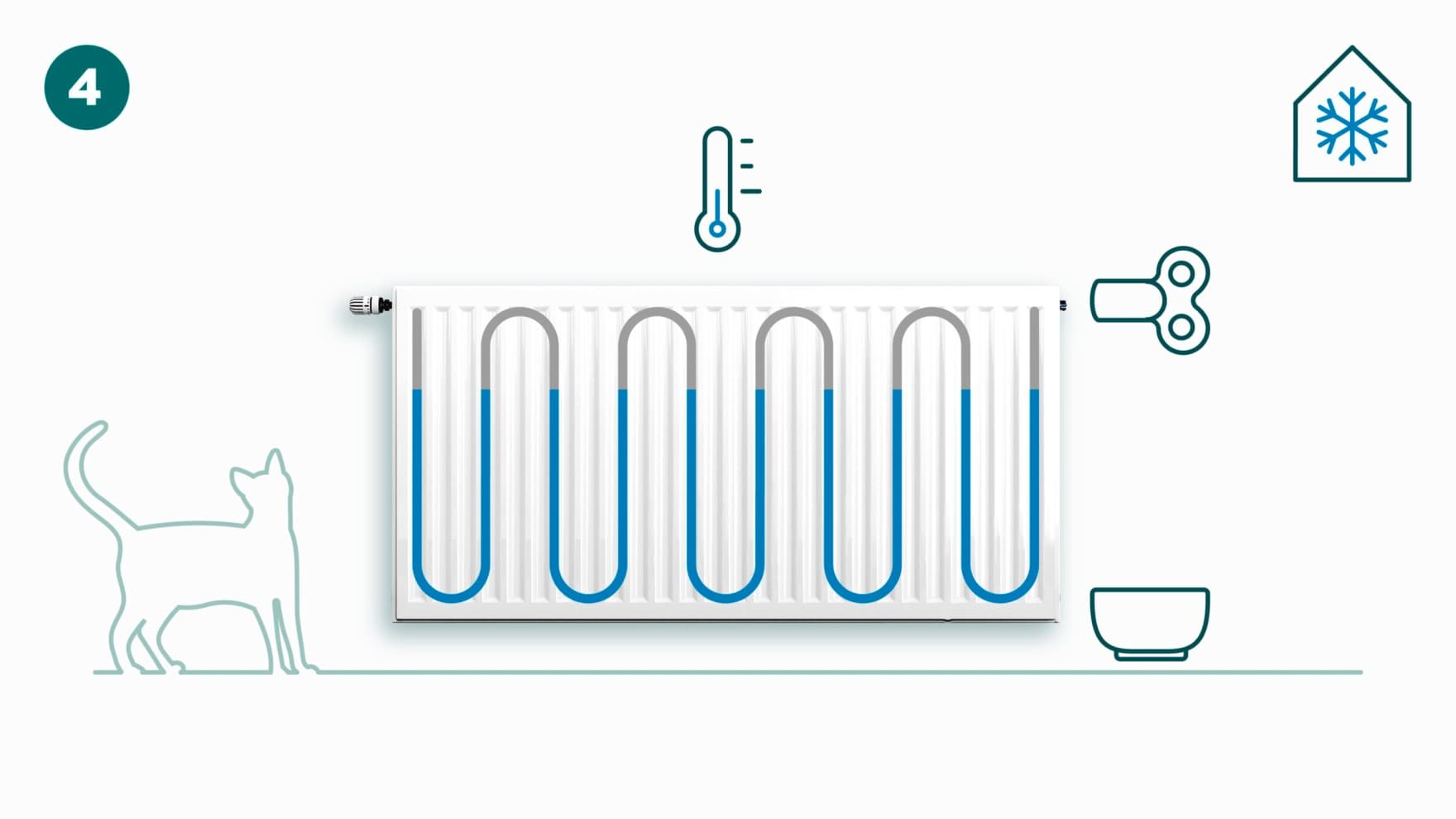
Step 4: Place the radiator key in the radiator valve.
The valve is usually at the upper side of the radiator. It looks like a small, round hole with a little square inside. Hold the cloth against the wall to protect it from spray water. Place the bucket directly underneath the valve.
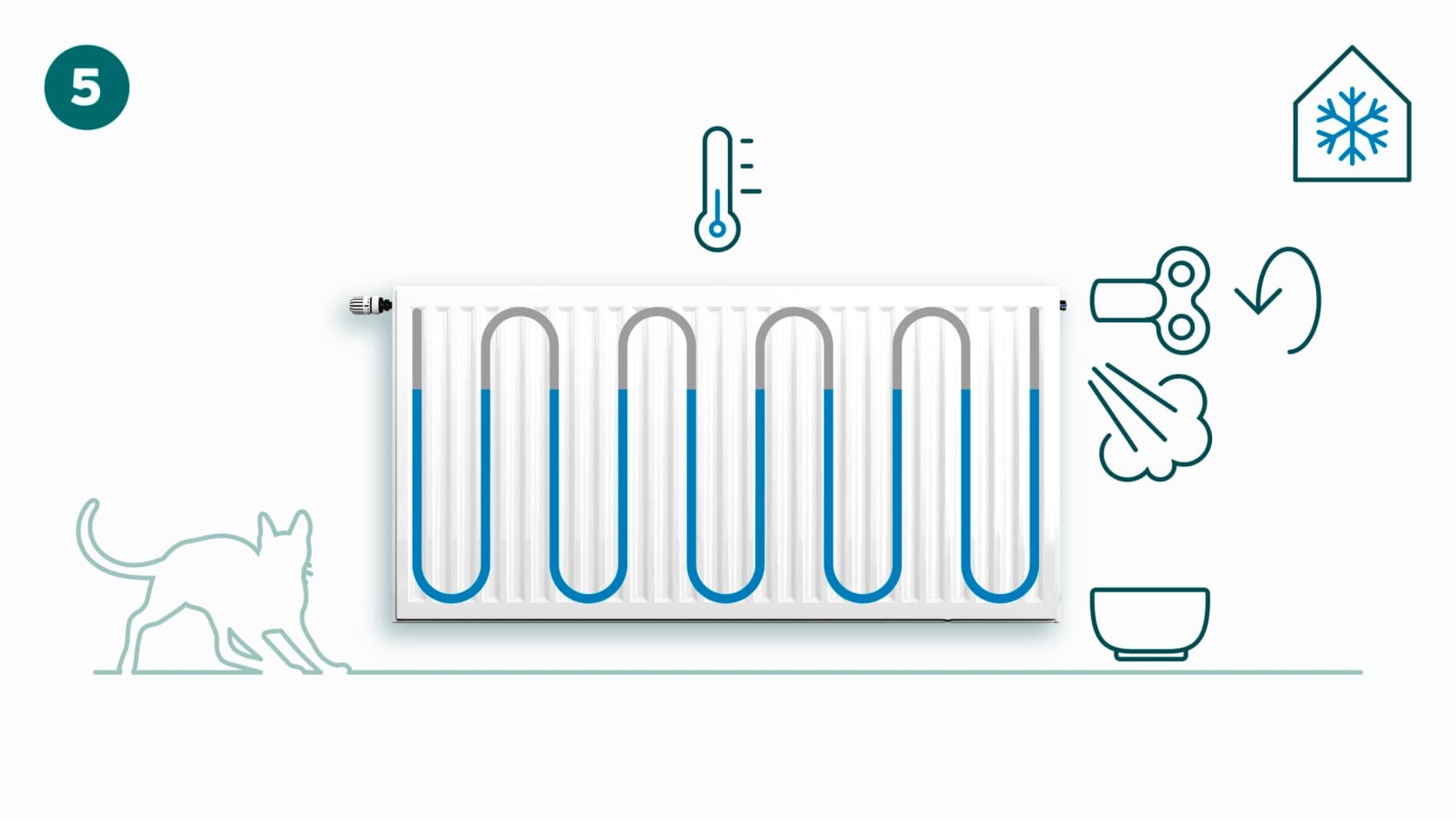
Step 5: Open the valve carefully.
Slowly turn the radiator key anti-clockwise. A quarter to half a turn should be sufficient. You will hear a hissing noise as soon as air drops out of the radiator. Be careful not to open the valve more than suggested. This will limit the amount of water leaking from the radiator.
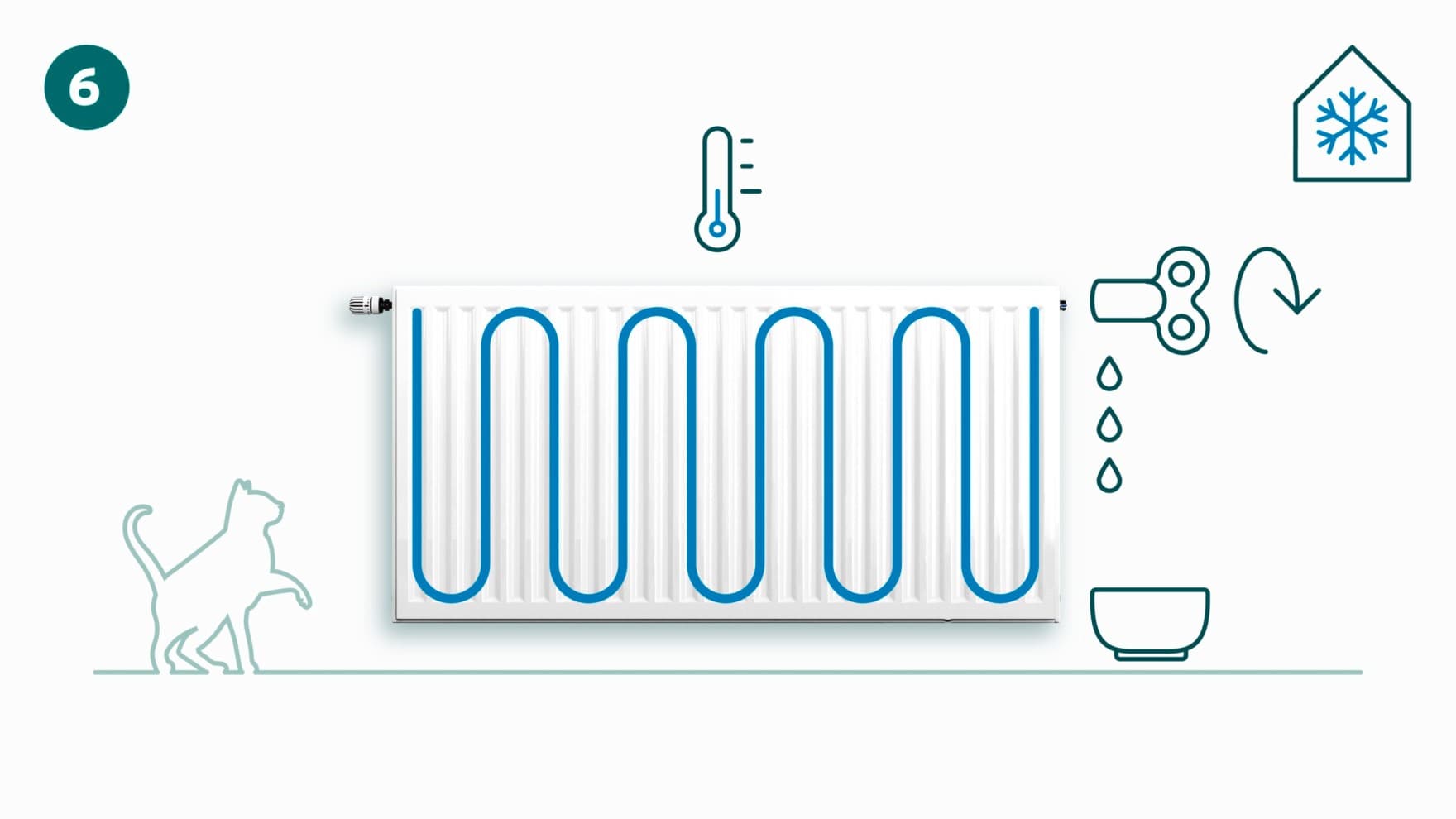
Step 6: Close the radiator valve.
Let some of the heating water run out before your turn the radiator key clockwise to close the valve. Don't close the valve too tight, otherwise you might damage it.
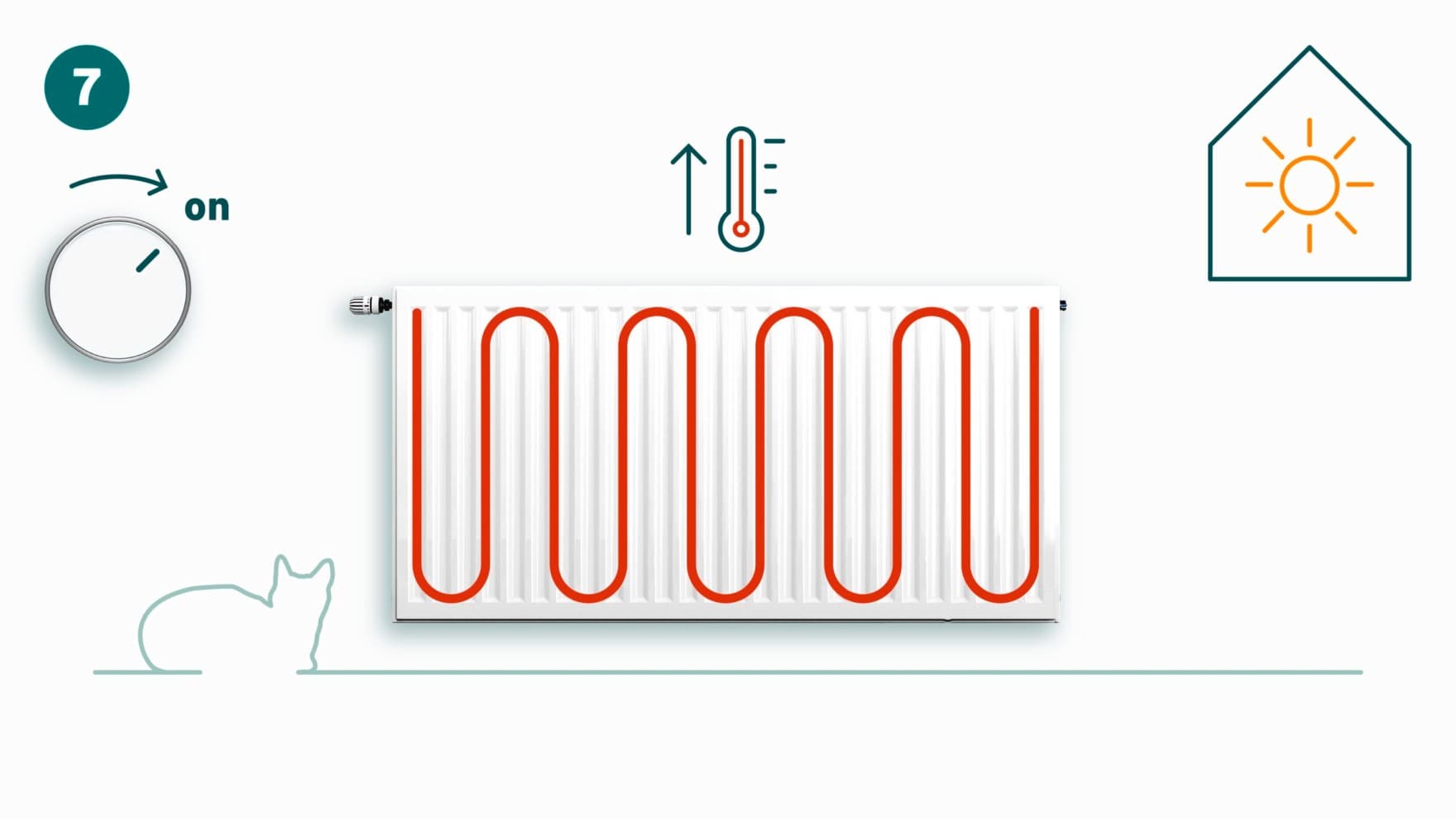
Step 7: Turn your heating system back on.
After bleeding all your radiators it is time to bring your system back online. After one hour, check that all radiators warm up evenly.
Vaillant tip: steps to follow after bleeding your radiators.
After bleeding your radiators, it's vital to check the water pressure using the manometer gauge. Bleeding often results in water loss, which can lower the system's pressure. If the pressure is low, simply refill the heating water. Next, run your heating system for an hour and inspect the radiator furthest from the boiler. This ensures that no air remains trapped. If no air escapes, you've successfully completed the process.
Beyond bleeding radiators
Problem still not solved? Discover your next steps.
If bleeding your radiator hasn't solved the issue, there are still steps you can take. Sometimes, the problem is simpler than it appears. One common cause is the small metal pin on the thermostatic valve, which regulates water flow. If this pin is calcified or stuck, it can prevent water from flowing into the radiator. You can often resolve this issue with a bit of DIY know-how and some simple tricks.
Should you encounter low water pressure, it's wise to contact your landlord before hiring an installer. As a tenant, you have the right to bleed radiators, but your landlord is responsible for maintaining the heating system and covering the costs.
If none of these measures still don't work, it might be time to consider modernising your heating system. In this case upgrading to a heat pump could be a smart move. Not only do heat pumps reduce heating costs, but they also use free environmental energy, making them more efficient than traditional gas systems.