Find the closest installer partner near you


All boilers, like other heating systems, need stable pressure to work effectively. The pressure gauge on your boiler should generally read between 1 and 1.5 bar. If the boiler pressure is low, you might experience uneven heating or a complete loss of hot water.
There are many reasons why a boiler may lose pressure. It could be that there is a small leak in your system, or natural wear and tear has caused the pressure to drop. Similarly, after system maintenance or repairs, pressure might not be correctly adjusted, leading to a drop.
Before you repressurise, always check your user guide or manual for direct instructions dependent on the model you have. Next, check your boiler’s pressure gauge. Start by turning off the boiler and allowing it to cool. Locate the pressure gauge, typically on the front or underside of the boiler. If the needle reads below 1 bar, the boiler pressure is low, and it’s time to take action.
Disclaimer: we recommend to do it the safest way, which is to not do it yourself but have an expert do it for you. Find your nearest here.
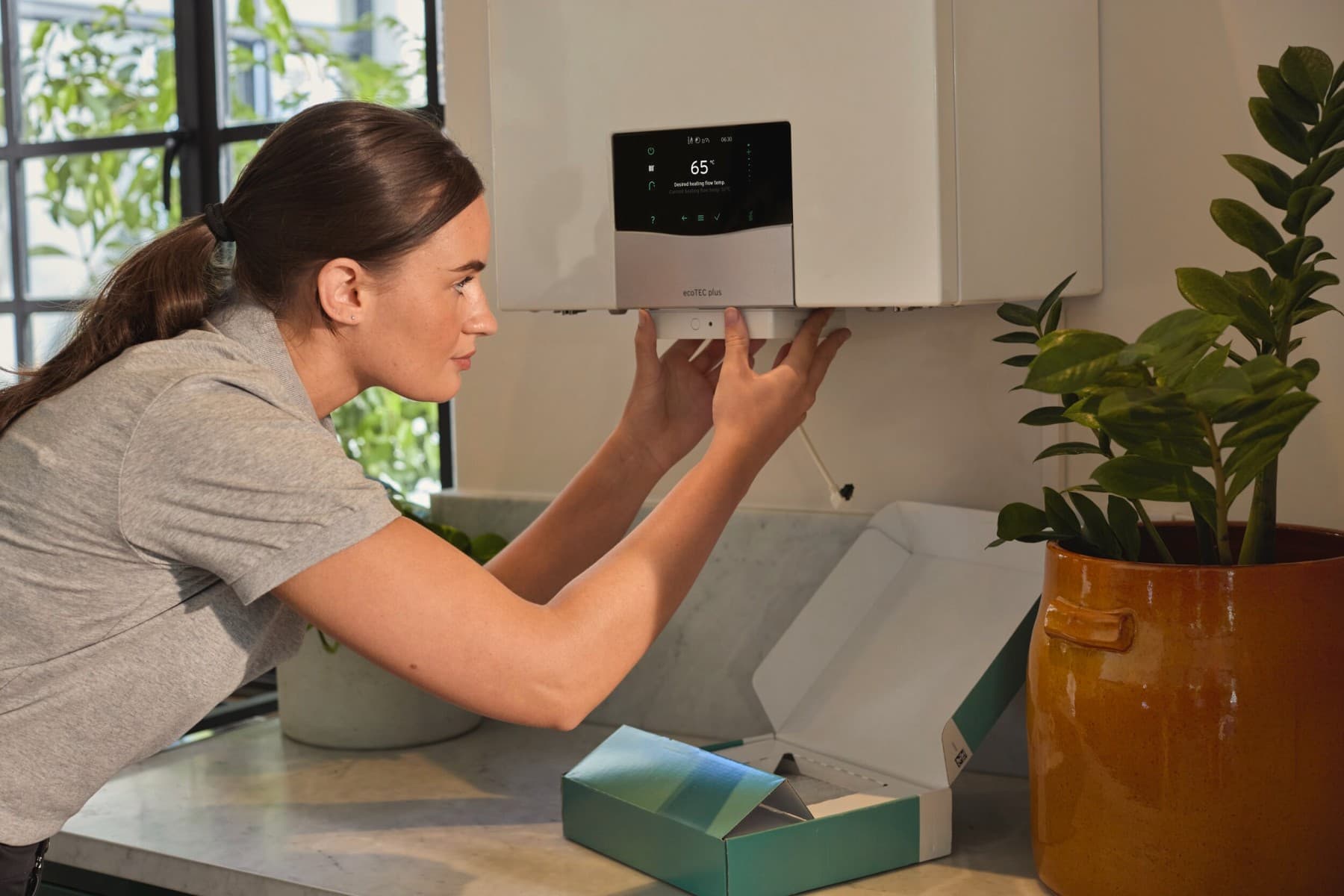
If you want to do it yourself, ensure the boiler is off and cooled to prevent burns. Verify the system isn't circulating water when opening valves to avoid repressurising issues. The filling loop, a flexible hose or lever (often black or silver), connects two valves under your Vaillant boiler. It adds water to increase pressure. Check the manual if the filling loop is hidden behind a panel.
Slowly turn both valves (or lever) on either side of the filling loop counterclockwise. You’ll begin to hear water flowing into the system. As the water enters, the pressure inside the boiler will increase. Carefully watch the pressure gauge as the needle rises. Turn the valves slowly to avoid letting too much water in at once.
Keep valves open until the pressure gauge reads between 1 and 1.5 bar, which is ideal for most Vaillant boilers. Avoid pressure above 2.5 bar to prevent damage. If it exceeds, consider bleeding radiators. If the gauge jumps quickly, stop and check the system, indicating potential valve or pressure issues.
Once the pressure reaches the ideal range (between 1 and 1.5 bar), turn both valves or levers clockwise to shut them off. This will stop the water flow and prevent further changes to the boiler pressure. Make sure the valves are securely closed to avoid leaks or drops in pressure later on. Double-check the valves to ensure they’re fully closed. Even a small leak can cause the pressure to drop again.
If your Vaillant boiler has a detachable filling loop, carefully remove it once the pressure is at the correct level. This prevents accidental adjustments to the pressure and keeps the loop from getting damaged.
After you’ve completed the repressurising process, check the pressure gauge one more time to ensure that it’s still within the optimal range of 1 to 1.5 bar. Turn the boiler back on and allow it to fully reheat. This will ensure that the pressure remains steady while the system is running. After you repressurise your Vaillant boiler, turn it on and check that it’s heating evenly throughout your home and that the pressure gauge remains stable.
Keep in mind: even if you feel comfortable with doing these steps yourself, our extensive support network of installer partners and customer service are just one call away to be super safe.
Our trusted Vaillant Partners are heating system experts. We’ll connect you with the right one near you.
Turning the valves too quickly can lead to overfilling. Adding water gradually gives you better control of the pressure.
After repressurising, inspect the filling loop and valves for any signs of leaks. If you see water dripping, tighten the valves or call a professional.
Repressurising shouldn’t be a frequent task. If your boiler pressure keeps dropping, there may be a system leak, faulty components, or other underlying issues. In this case, a professional inspection is recommended.