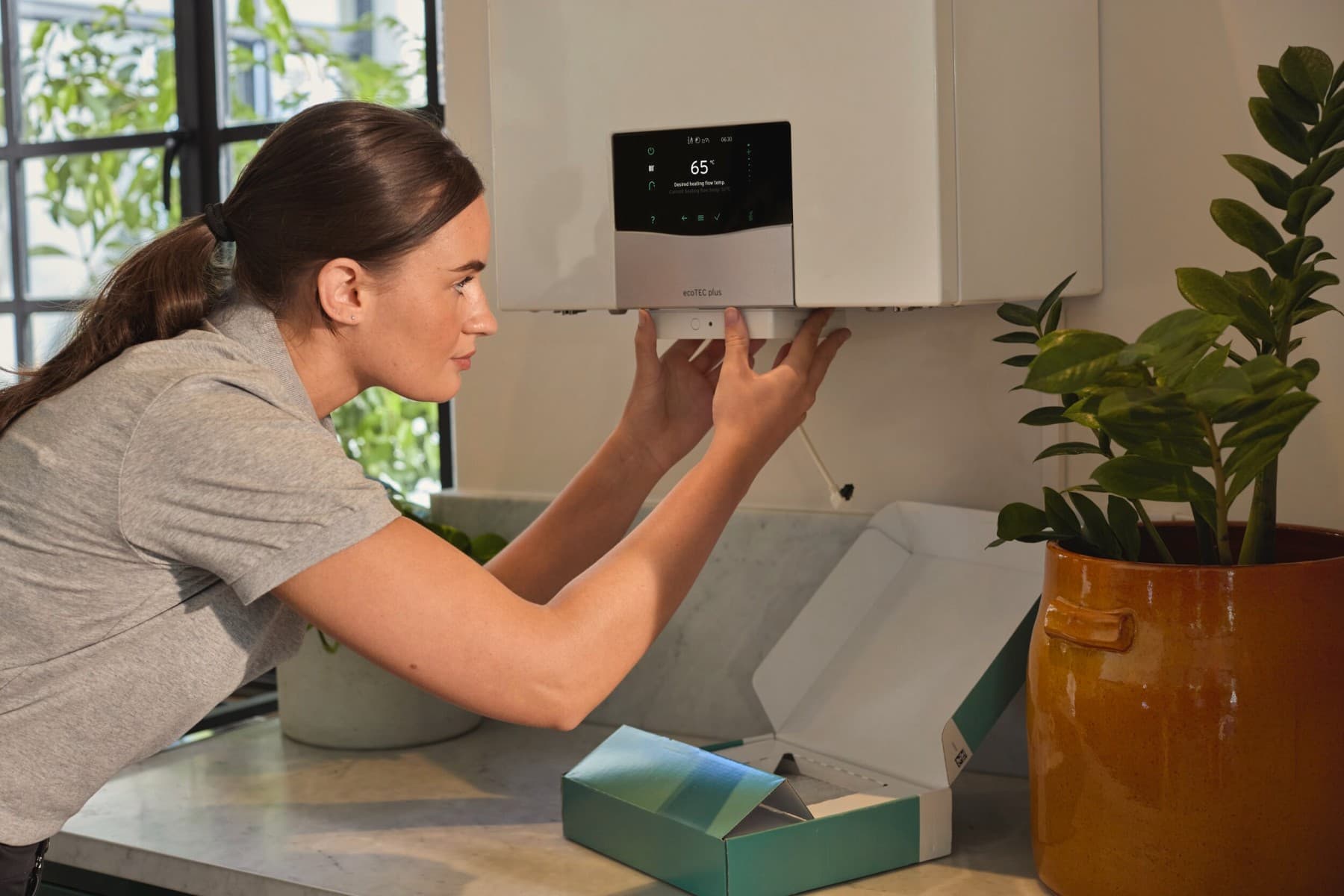
If your device displays an error code, it definitely requires professional assistance. Contact an installer immediately, and they will advise you on the necessary steps. Below is an overview of possible error codes.
The cylinder temperature sensor has short-circuited.
Possible cause:
Fault in the electrical connection for the cylinder temperature sensor
Cylinder temperature sensor defective
How to fix it:
This is a case for an expert. Don’t try to solve it yourself as it can be dangerous.
To solve it find your nearest installer here. They can solve your issue quickly.
The safety cut-out (SCO) interrupts the gas valve control. The gas valve was closed because the temperature of the flow or return temperature sensor has exceeded the maximum limit.
Possible cause:
Insufficient/no water in the product.
Fault in the electrical connection for the flow temperature sensor
Fault in the electrical connection for the return temperature sensor
Flow temperature sensor defective
Return temperature sensor defective
The pump is defective.
3-port diverter valve defective or blocked
Water pressure sensor defective Volume flow sensor defective
Black discharge via the ignition cable, ignition plug or ignition electrode
How to fix it:
This is a case for an expert. Don’t try to solve it yourself as it can be dangerous.
To solve it find your trsuted installer here. They can solve your issue quickly.
No/insufficient water in the product or the water pressure is too low.
Possible cause:
Insufficient/no water in the product.
Fault in the electrical connection for the water pressure sensor
Cable for the pump/for the water pressure sensor is loose/not connected/defective
Water pressure sensor defective
Pump operation interrupted
Solenoid valve for the automatic filling device defectiveInternal expansion vessel defective
Internal expansion vessel defective
How to fix it:
This is a case for an expert. Don’t try to solve it yourself as it can be dangerous.
To solve it find your trsuted installer here. They can solve your issue quickly.
The temperature spread between the flow/return is too great.
Possible cause:
Air in the product
Fault in the electrical connection for the flow temperature sensor
Fault in the electrical connection for the return temperature sensor
Flow temperature sensor defective
Return temperature sensor defective
Pump blocked
Pump runs with insufficient output
3-port diverter valve defective or blocked
Internal expansion vessel defective
How to fix it:
This is a case for an expert. Don’t try to solve it yourself as it can be dangerous.
To solve it find your trsuted installer here. They can solve your issue quickly.
The flue gas temperature is too high.
Possible cause:
Wiring harness defective
If present: Flue gas temperature monitor has triggered
How to fix it:
This is a case for an expert. Don’t try to solve it yourself as it can be dangerous.
To solve it find your trsuted installer here. They can solve your issue quickly.
A flame signal has been detected while the burner is off.
Possible cause:
Gas solenoid valve not leaktight
PCB defective
How to fix it:
This is a case for an expert. Don’t try to solve it yourself as it can be dangerous.
To solve it find your trsuted installer here. They can solve your issue quickly.
The flame signal was not detected during the ignition phase.
Possible cause:
Hard ignition takes place
Gas isolator cock closed
Gas connection pressure too low
Air in the gas supply (e.g. during initial start-up)
Incorrect gas type set
Gas valve assembly offset incorrectly stored in D.052 und ggf. D.182
Air intake pipe blocked
Ignition failed
Gas flow pressure too low
Control electrode comes into contact with the burner
Ignition electrode defective
Burner defective
Condensate pump (if fitted) defective
Gas valve assembly defective/incorrect spare part gas valve assembly
Interruption in the wiring harness
Earthing defective
Ionisation flow interrupted
Fault in the flue gas route caused by recirculation or flue gas blockage
Ignition transformer not connected
Defective ignition transformer
PCB defective
Condensate in the combustion chamber due to a blocked condensate discharge
How to fix it:
This is a case for an expert. Don’t try to solve it yourself as it can be dangerous.
To solve it find your trsuted installer here. They can solve your issue quickly.
The ignition following a flame loss during operation was unsuccessful.
Possible cause:
The gas supply is interrupted
Fault in the flue gas route caused by recirculation or flue gas blockage
Earthing defective
Air intake pipe blocked
Ignition misfire
Condensate pump (if fitted) defective
Control electrode comes into contact with the burner
Burner defective
Interruption in the wiring harness
Ignition electrode defective
Gas valve assembly defective/incorrect spare part gas valve assembly
Condensate in the combustion chamber due to a blocked condensate discharge
How to fix it:
This is a case for an expert. Don’t try to solve it yourself as it can be dangerous.
To solve it find your trsuted installer here. They can solve your issue quickly.
The ASIC or µControl does not run in the defined times.
Possible cause:
Fault in the electrical connection for the gas valve assembly
PCB defective
How to fix it:
This is a case for an expert. Don’t try to solve it yourself as it can be dangerous.
To solve it find your trsuted installer here. They can solve your issue quickly.
The flame switch-off was detected after a delay.
Possible cause:
Gas valve defective
PCB defective
Ignition electrode defective
How to fix it:
This is a case for an expert. Don’t try to solve it yourself as it can be dangerous.
To solve it find your trsuted installer here. They can solve your issue quickly.
The pressure change is too low when the heating pump is started up.
Possible cause:
Water pressure sensor defective
Internal heating pump defective
System pressure too low Internal expansion vessel defective
Insufficient/no water in the product.
Air in the product
Open circuit in wiring harness (LIN cable)
Interruption in the wiring harness
How to fix it:
This is a case for an expert. Don’t try to solve it yourself as it can be dangerous.
To solve it find your trsuted installer here. They can solve your issue quickly.
How to handle common boiler fault codes
Play it safe: call an expert.
Should you notice any unusual noises, smells, or error messages from your appliance, we strongly advise against attempting to repair it yourself. Instead, contact a qualified installer as soon as possible, ideally the expert who installed the heating system. This will ensure they are fully familiar with the technology.
Let our experts see faults before you even notice them with a regular service
Regular servicing of your heating system increases efficiency and reduces energy consumption – resulting in long-term cost savings. Annual maintenance is recommended. This helps to identify and address wear and tear early, preventing breakdowns during the winter and increasing reliability. Qualified technicians inspect burners, heat exchangers, filters, pumps, and safety features, enabling the early detection of potential hazards such as carbon monoxide. Furthermore, regular maintenance extends the system's lifespan and is often a prerequisite for warranty claims. Ideally, the heating system should be serviced before the heating season to ensure safe, reliable, and efficient operation.
Advantages of a regular service at a glance.
Of course, you can simply book your service appointment when you need it. But a missed fault code can cause equipment breakdowns in the long run and result in unnecessary costs. With regular service, you avoid failures.
Saving money.
Regular checks for efficient heating and energy reduction directly lower your energy costs. Also resulting in a longer lifespan of your boiler.
Individual comfort.
The service technician adjusts your heating system perfectly to your needs during every service. By that, you can always enjoy the ideal room and water temperature.
Safety first.
Agree on a one-year service interval with your installer to guarantee the best care for your heating. And if the worst should happen and your heating system breaks down during the winter, you can rely on a technician who knows your heating for many years.
Favourite Service.
Discuss the available service options with your local installer. They will provide you with a customized quote and advise you on which service package will protect you from high costs due to a heating system failure.
Enjoy the comfort of always being on the safe side.
myVaillant offers a range of useful functions to control and monitor your heating system – conveniently via your smartphone. For example, you can detect faults in your heating system at an early stage and prevent them from occurring in the first place.
Advantages of myVaillant at a glance.
There are a number of benefits for using myVaillant, especially when it comes to boiler fault codes:
Effective & simple.
Early error code recognition on your smartphone enables quick diagnosis and problem solving.
Safe & reliable.
Detect potential problems early with the Health Check feature.
Proactive & cost-saving.
Always keep an eye on your heating performance and optimise energy efficiency.
Smart & easy.
Benefit from the user-friendly and intuitive app even without technical knowledge.
Manage your heating with myVaillant in three steps.
1/3
1/3
1
Registration
Contact your local installer to install a myVaillant connect pack**.
**Only works with post 2006 eBUS equipped appliances. Please check the compatibility with your installer.
2/3
2
Establish connection
Have your myVaillant connect installed and connect your Vaillant heating system to your WiFi.
3/3
3
App installation
Download myVaillant app, register and activate your smart home subscription.
Ready to optimise your heating system with the myVaillant app?
This page contains a selection of the most common error codes. We update this regularly. Always contact an installer if an error message appears..
With a regular service you prevent many faults in your heating system. Because experts keep an eye on your device, make sure the settings are correct and contact you proactively when maintenance is due. In this way, your heating system runs efficiently and safely in the long term. In addition, you can use the myVaillant app to conveniently view and optimise all the functions and data of your heating system on your smartphone at any time.
The code F20 means: "The safety cut-out (SCO) interrupts the gas valve control. The gas valve was closed because the temperature of the flow or return temperature sensor has exceeded the maximum limit." To solve the issue please check our recommendation in the official overview list at the top of this page.
The code F22 means: "No/insufficient water in the product or the water pressure is too low." To solve the issue please check our recommendation in the official overview list at the top of this page.
The code F25 means: "The flue gas temperature is too high." To solve the issue please check our recommendation in the official overview list at the top of this page.
The code F28 means: "The flame signal was not detected during the ignition phase." To solve the issue please check our recommendation in the official overview list at the top of this page.
The code F29 means: "The ignition following a flame loss during operation was unsuccessful." To solve the issue please check our recommendation in the official overview list at the top of this page.
The code F75 means: "The pressure change is too low when the heating pump is started up." To solve the issue please check our recommendation in the official overview list at the top of this page.