Installing a new underfloor heating system.

How it works
Why modern underfloor heating is changing home comfort.
Underfloor heating belongs to the so-called surface heating systems: Unlike radiators, which are mounted on the wall or free-standing, underfloor heating works with the entire floor surface. Due to the large heating surface, the flow temperature of the heating water can be lower than with conventional radiators, which makes it ideal for energy sources such as heat pumps and solar thermal energy. The hot water pipes laid under the heating screed heat evenly and transfers the warmth to the floor covering.
Advantages
What makes underfloor heating so great?
- Gentle and well-dosed warmth.
Underfloor heating is a surface heating system and therefore, heats every room evenly. Your floor heating can even be used for refreshing in hot summer, when connected to reversible heat-pump.
- Tested and reliable.
Benefit from a heating system that has been established for more than 50 years and is constantly being improved, and which you can rely on at all times.
- Aesthetics.
There are no longer any visible radiators, the room can be aesthetically designed in a more holistic way, since the walls and window fronts are free.
- Indoor climate.
A good room climate is promoted, dust turbulence is reduced, which is healthier especially for allergy sufferers and asthmatics. The dry warm air on the floor is also the enemy of mites and fungi.
Types of underfloor heating
Different types of underfloor heating.
- Water-led underfloor heating
- Electric underfloor heating
The operating principle of underfloor heating with water is straightforward: pipes are laid out under the floor covering in which water circulates. The water radiates heat into the room via the pipes and the floor, thus ensuring a comfortable temperature. Of course, it is also possible to refresh a room with the water-powered underfloor heating if a heat pump is connected. However, the cooling capacity of water-driven underfloor heating is limited to avoid moisture.
- Individual room temperature as needed
- Low operating costs
- Both heating and cooling (to a certain degree) possible
- Almost no maintenance required (the first service is due after 10 years)
Three different ways to install underfloor heating systems.
For years, underfloor heating offered two choices: wet or dry installation. Wet installation recesses pipes into fresh screed, while dry installation places pipes on top, covered by boards. Recently, a third method emerged for existing buildings, milling grooves into dry screed for pipe placement. Suitability varies, so it makes sense to consult your installer first. Electric systems can be installed as mats or foils on wet screed or adhered to dry screed.
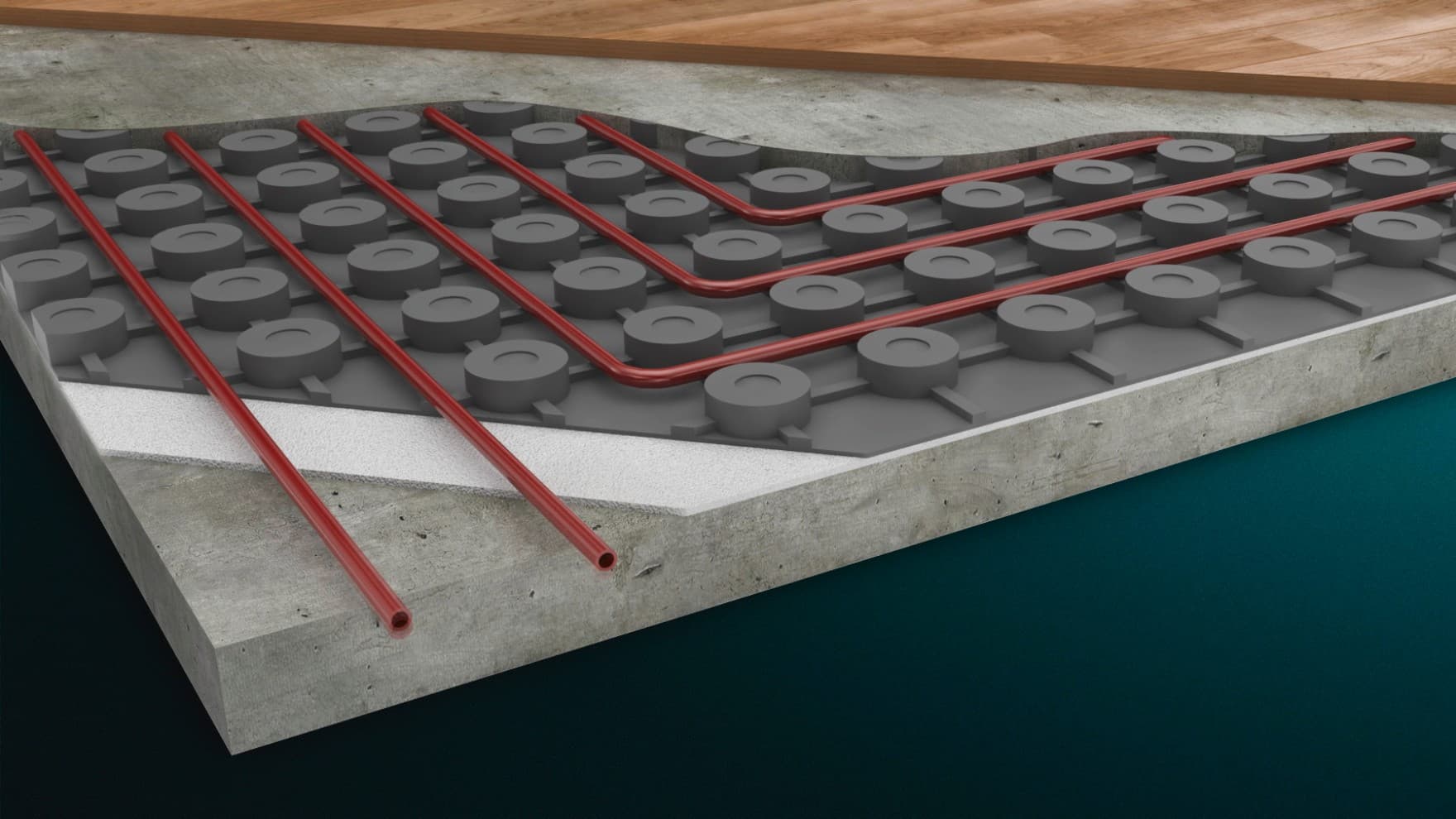
Installation in a wet system.
This method is suitable for new buildings or if you want or need to do a complete floor renovation in an existing building. Firstly, an insulating insulation layer is applied to the bare floor, on which the water-bearing heating pipes are attached. Then the screed is poured. Once the screed has dried, the desired floor covering, such as laminate, carpet, parquet, etc., can be laid.
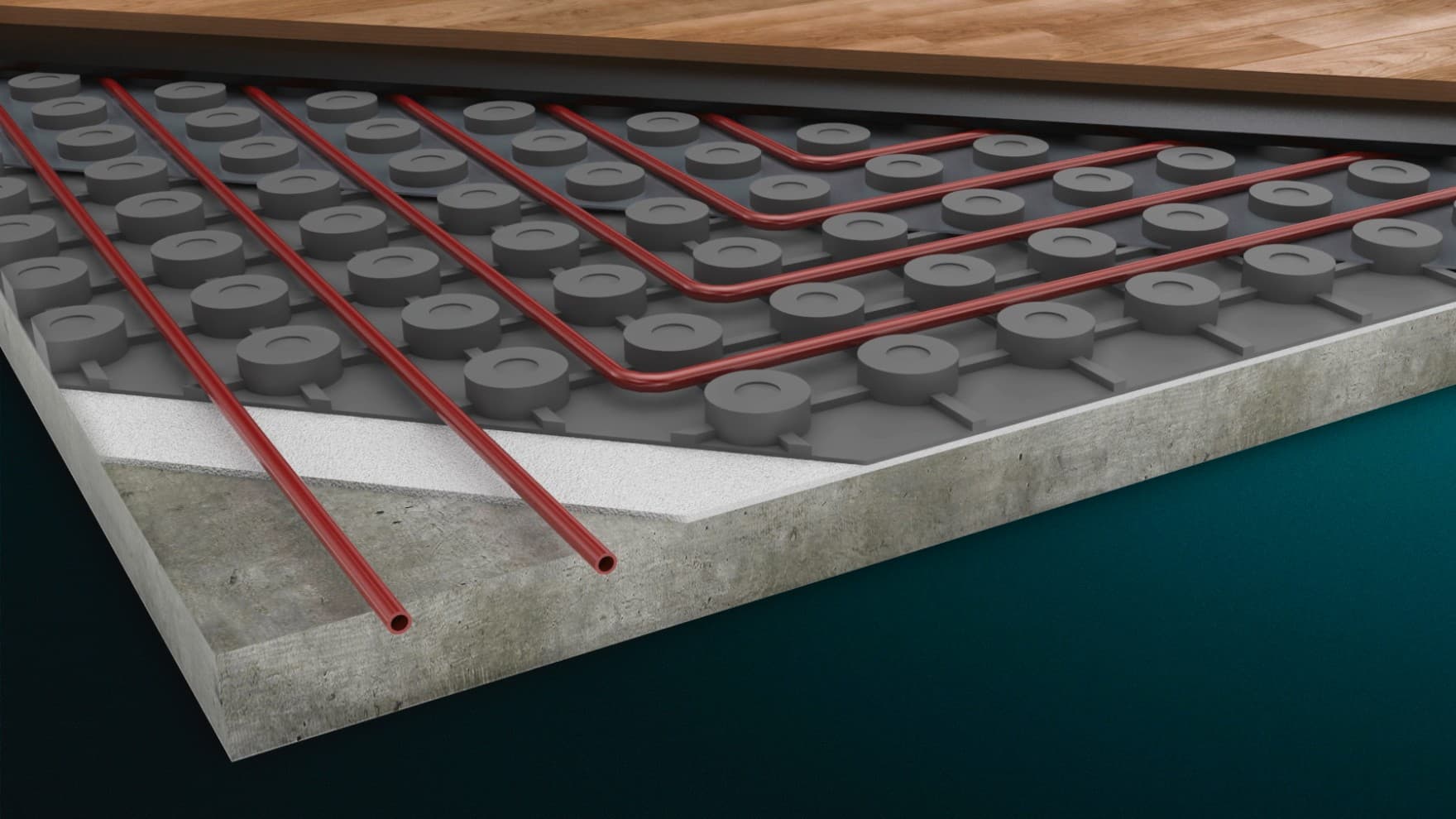
Installation in a dry system.
When retrofitting underfloor heating systems in existing buildings and when renovating old buildings, installation in a dry system plays a key role. Here the water-bearing pipes are laid on an insulating layer. In order to ensure a better distribution of the heat, additional heat conducting plates can be installed. The pipes are covered by a layer of boards, which can be made from a variety of materials, e.g., plaster, wood or natural stone. Finally, the desired floor covering is installed.
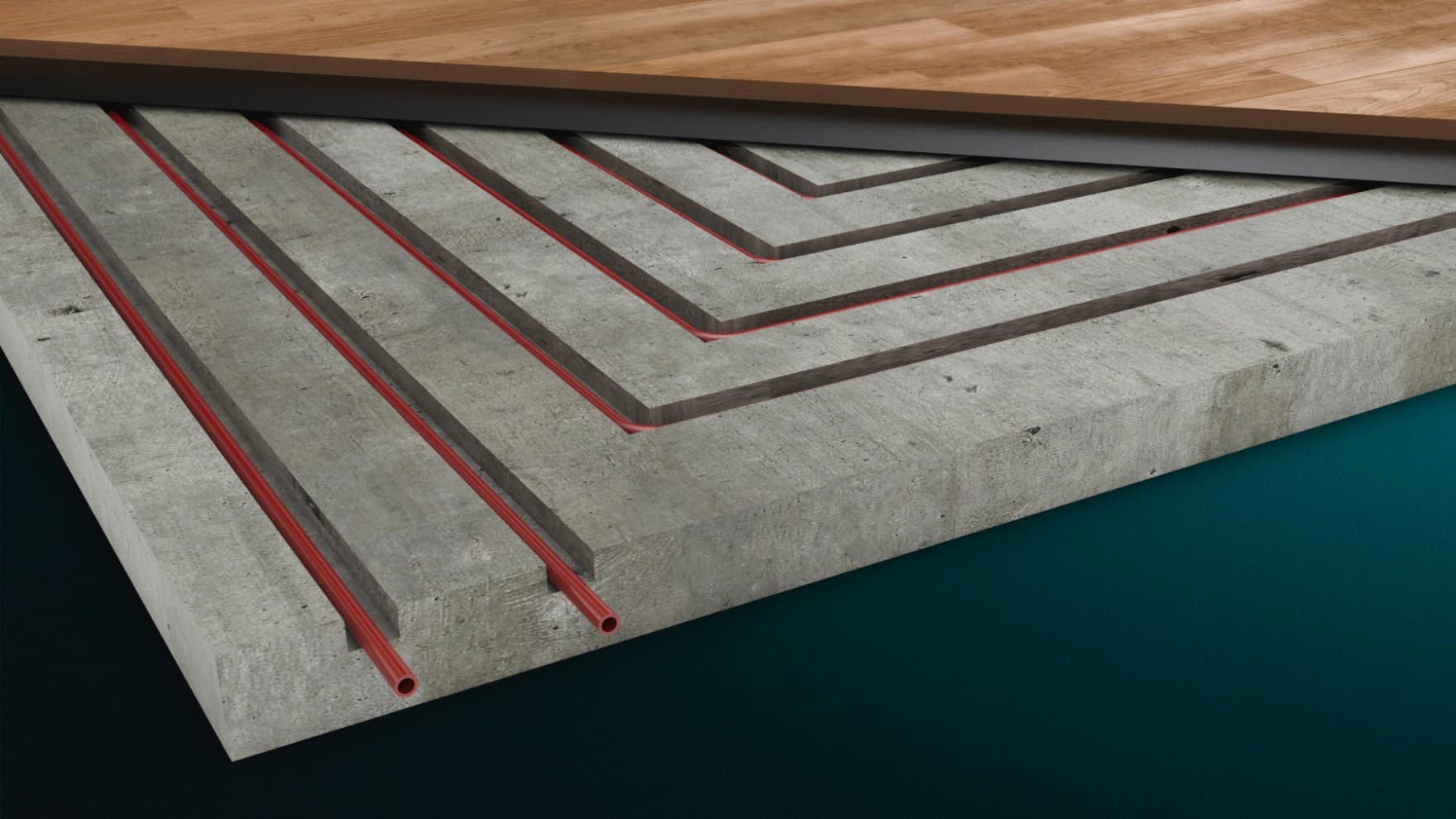
Installation using the milling system.
This relatively new method is most commonly used when renovating older buildings, when the floor should not be raised by the addition of new layers. The first step is to remove all residues (e.g. carpet adhesive) from the screed surface. This is followed by milling grooves in the screed using a special milling machine, which immediately vacuums up the drilling dust using a powerful vacuum cleaner. The water-carrying pipes are then placed in these grooves. The floor covering can then be installed.
The laying methods
The two patterns used for laying underfloor heating.
- The meander/snake pattern
- The bifilar/ loop pattern
- The modular pattern
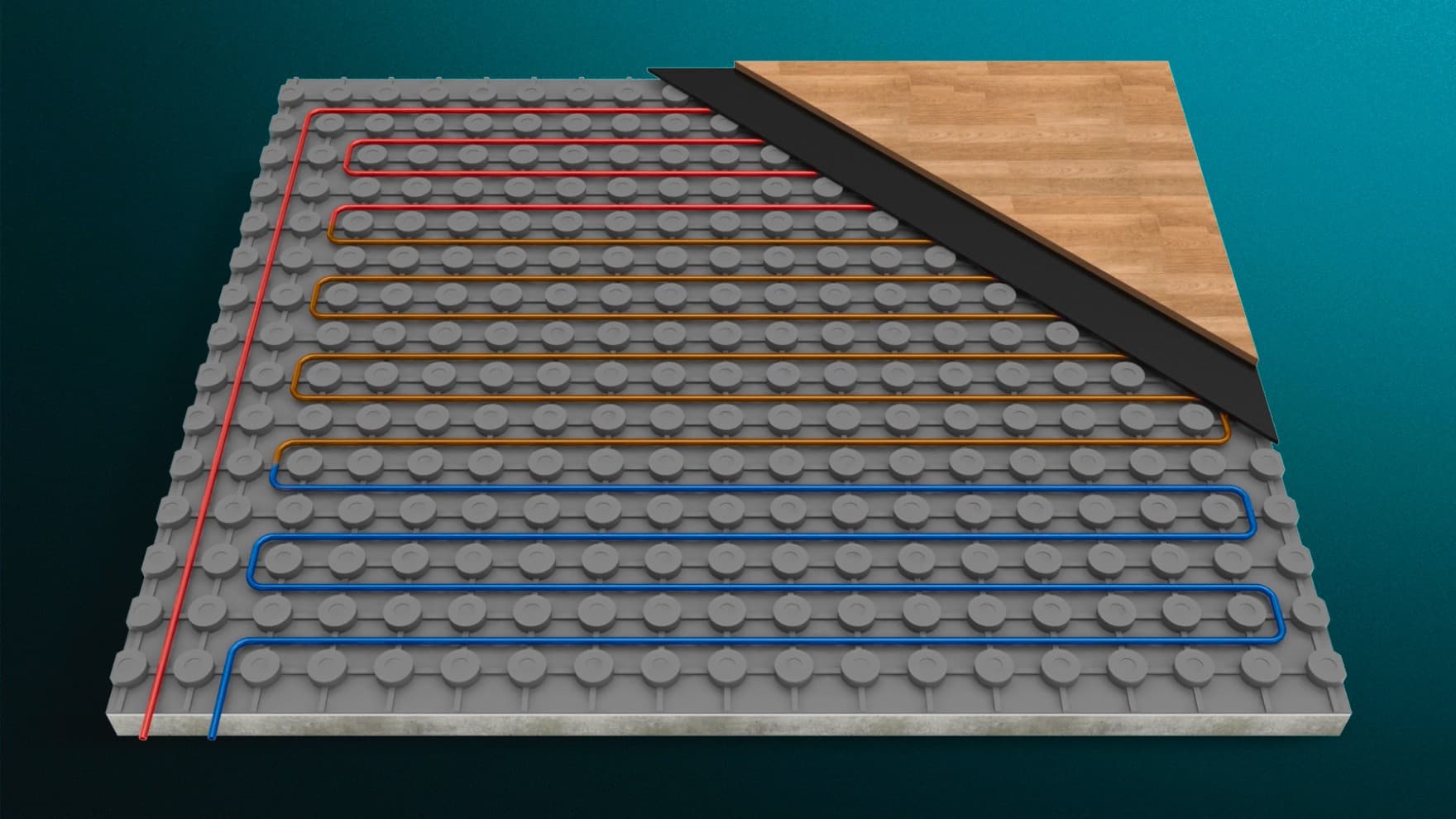
Here the pipe is laid back and forth in a snake-like pattern. It’s easy to install, but because the water cools along its path, the floor tends to be warmer on the supply side and cooler on the return side.
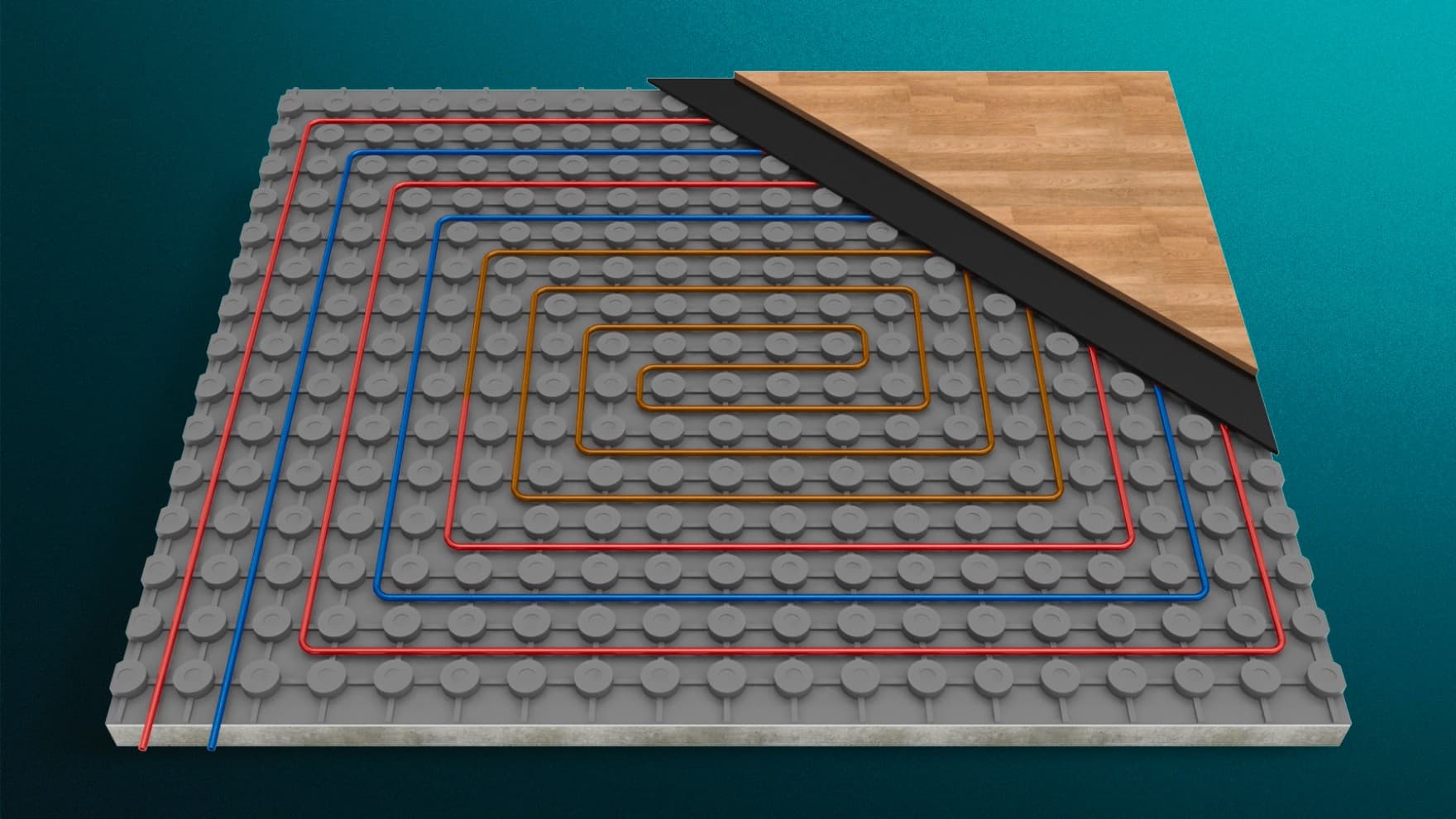
Costs of an underfloor heating
How much does it cost to install underfloor heating?
This question is quite difficult to answer, because several factors have an impact on the total costs:
- Type of heat generator,
- type of energy source,
- a new or old building,
- size of heated area, etc.
An electric underfloor heating system is somewhat less expensive to purchase and install. But keep in mind that the running cost for an electric underfloor heating are much higher and only fitting for smaller rooms where underfloor heating is to be installed later. This heating is only suitable for temporary use, such as taking a shower in the morning.