Air-to-water heat pumps: your guide to function, costs and benefits.

Air-to-water heat pumps are the most popular choice for reliable heating and hot water systems in both new and existing homes. Simple to install, they're ideal for cutting energy costs and lowering household carbon emissions. Learn everything you need to know to make an informed decision about this efficient technology.
Advantages
The advantages of an air-to-water heat pump.
- Most accessible heat source.
The heat from the ambient air can be drawn in and utilised particularly easily by a fan in the heat pump.
- Not subject to authorisation.
No official authorisations are required for the installation of air-to-water heat pumps.
- Uncomplicated installation.
Air-to-water heat pumps can be easily installed on the property. No major structural measures are required.
- Cost-effective.
Compared to ground or water heat pumps, air-to-water heat pumps are cheaper to purchase.
Possible disadvantages of an air-to-water heat pump
Making sure you are well informed.
Air to water heat pumps can be less efficient than ground source or water source heat pumps on very cold days, as the outside air is subject to greater temperature fluctuations. However, intelligent installation can increase efficiency and optimise energy consumption.
Furthermore, noise can be a consideration with air to water heat pumps, as the outdoor unit contains the entire refrigerant circuit, which may produce sound (e.g. the compressor). These noises can be effectively minimised with ideal installation and compliance with distance rules.
Operating principle of an air-to-water heat pump
How does an air-to-water heat pump work?
Air-to-water water heat pumps use outside air as a free natural source. Utilising the outside air as a heat source they generate around 75 % environmental energy. The remaining 25 % is required from electrical energy.
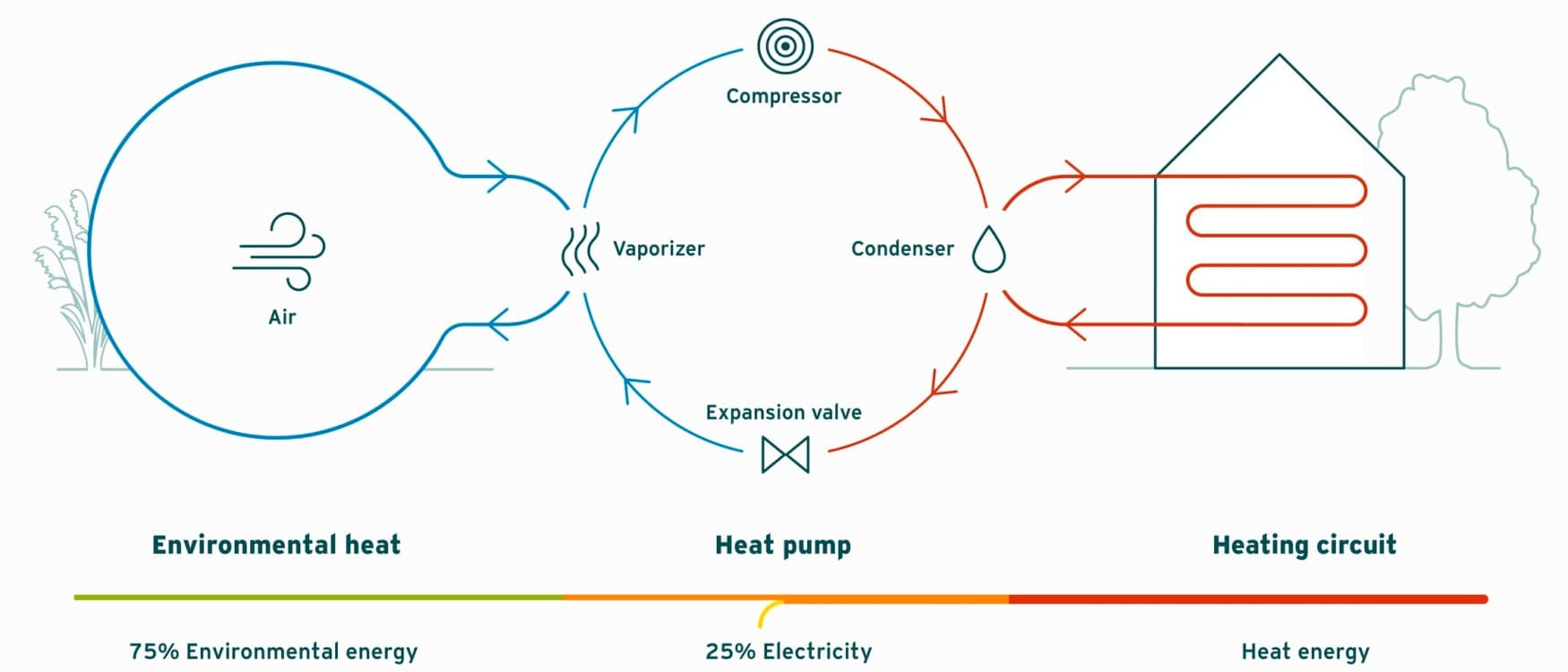
An air-to-water heat pump works with a fan drawing in ambient air, directing it to a heat exchanger. Here, the heat from the air is absorbed by a refrigerant, which has a low boiling point. This causes the refrigerant to vaporise, changing from liquid to gas. An electric compressor then compresses the gaseous refrigerant, raising its pressure and temperature. The heat is extracted via a second heat exchanger and transferred to your home's heating distribution system (e.g. underfloor heating) through a condenser. As the heat is released, the refrigerant liquefies and is expanded by an expansion valve, returning to its initial temperature. This cycle repeats again.
By the way, even at outside temperatures as low as -20 °C, the heat supply is guaranteed with an air to water heat pump. In regions with very cold winter days, it is worth installing an additional electric heating element. This switches on automatically if the required temperature cannot be generated by operating the air to water heat pump alone.
Vaillant tip: What's the difference to an air-to-air heat pump?
Air-to-air heat pumps draw energy from the air and transfer this warmth straight into your home’s air, providing immediate heating without the need for a water-based system. They’re ideal for rather small spaces where quick adjustments to temperature are desired.
Air-to-water heat pumps, meanwhile, take a different approach. They use air to heat water, which then circulates through pipes to warm your heating distribution system like radiators. This makes them a versatile choice for both heating and hot water provision.
Now, when it comes to terminology, air-source heat pump is often used to describe and air-to-water heat pump. while that is not wrong, it’s important to note that it serves as a general label for both systems that use air as their energy source.
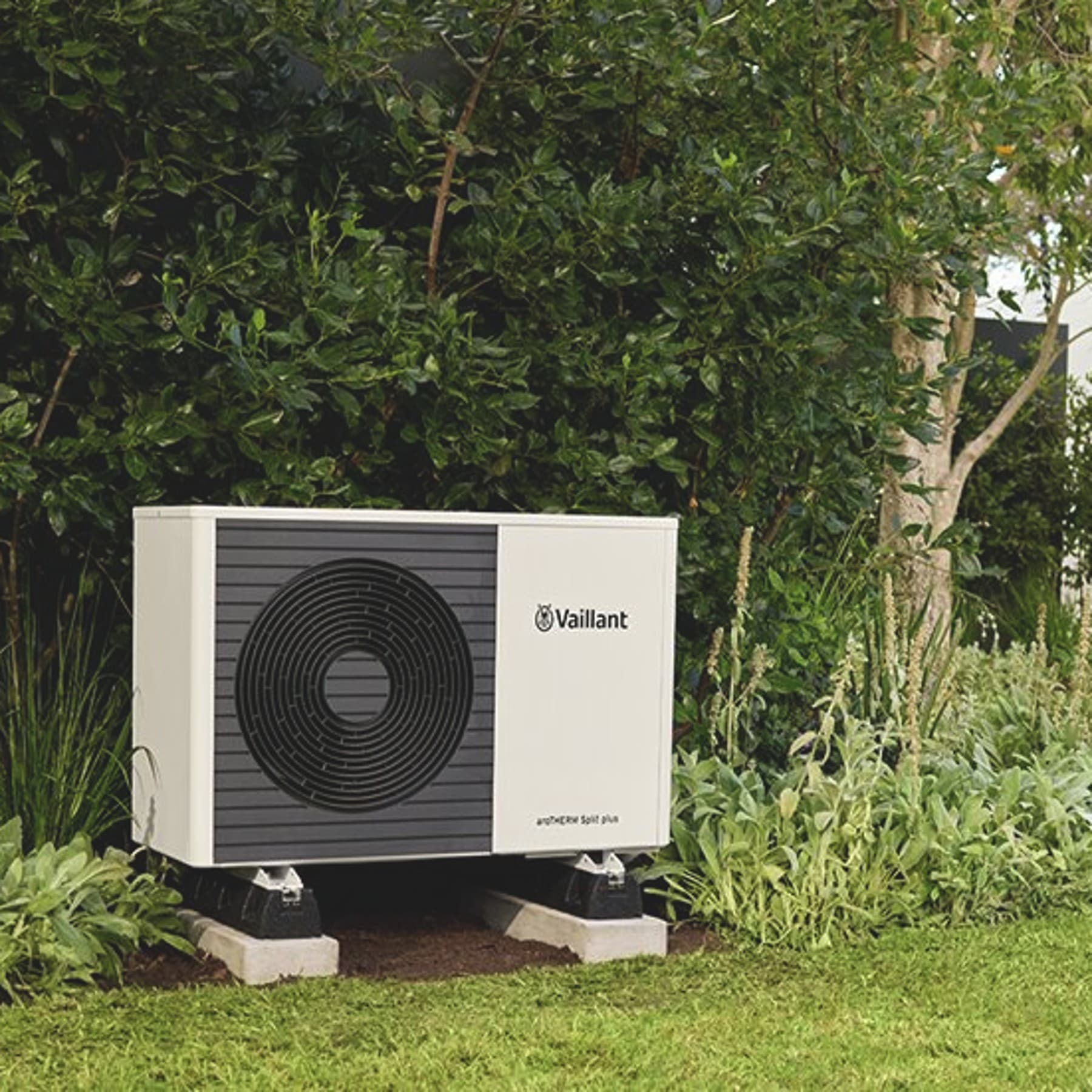
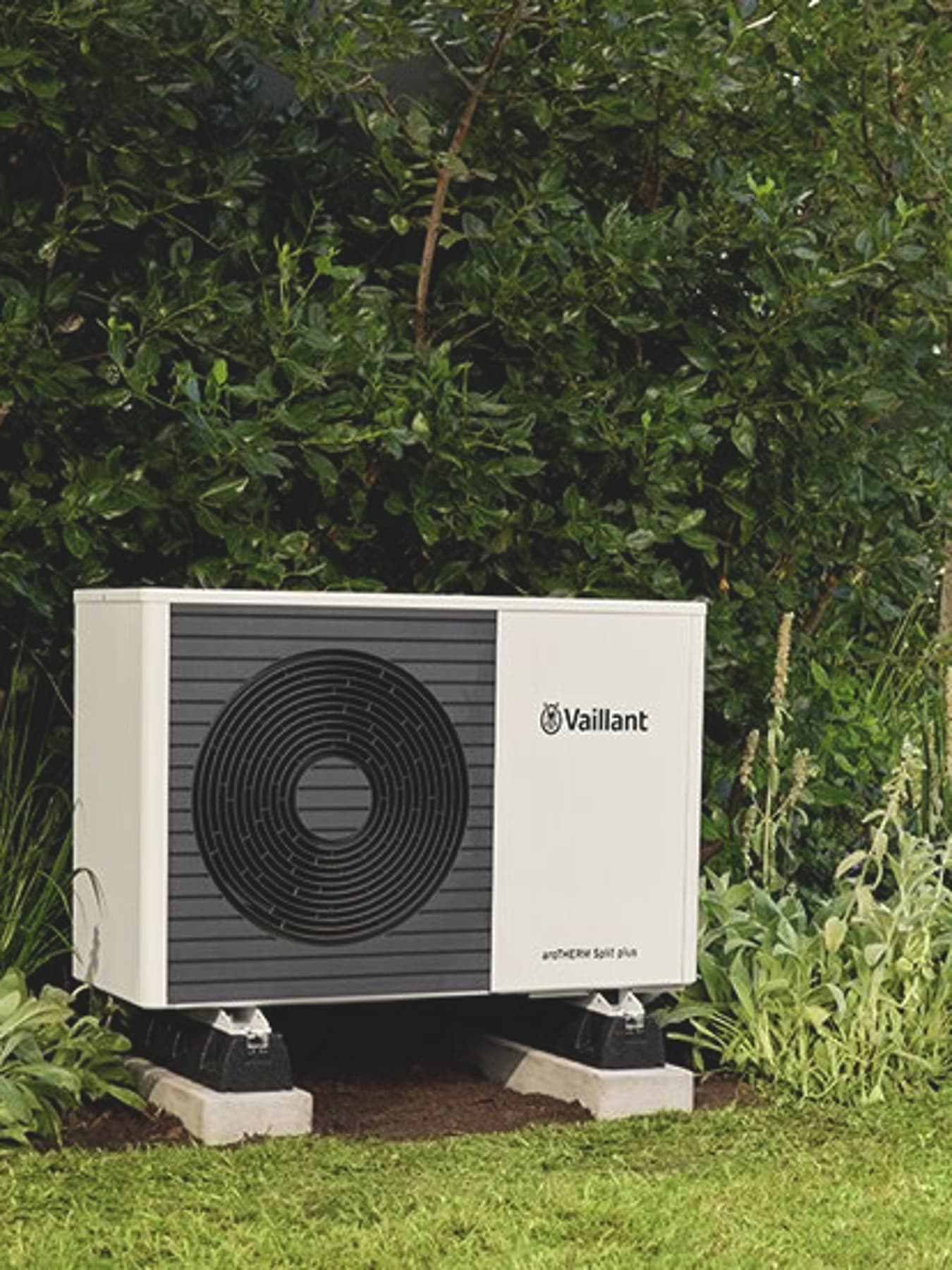
Ideal position in your home
Flexible installation with air-to-water heat pumps.
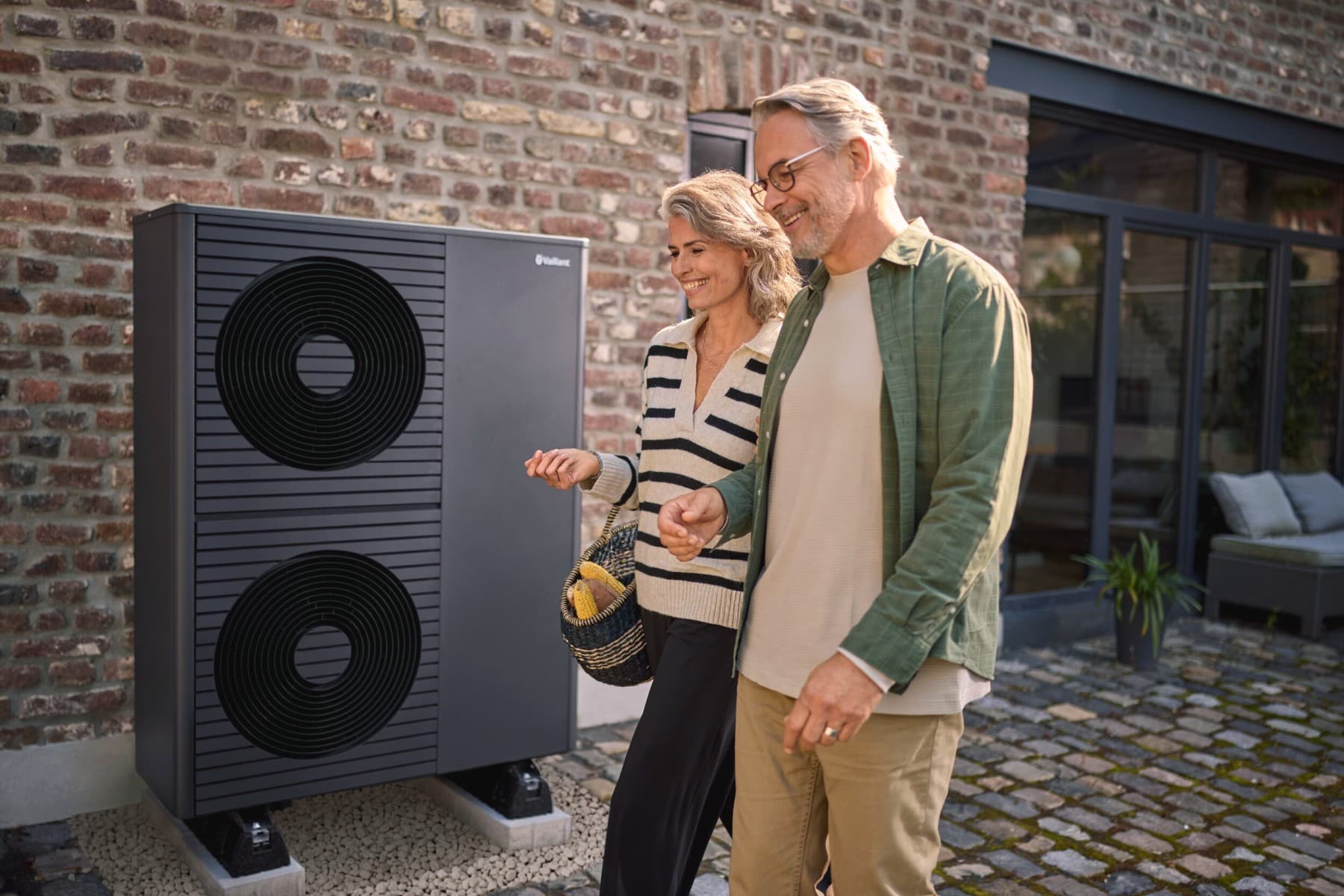
Air to water heat pumps are easily installed outdoors, with a solid base like concrete is essential for stability. They are complemented by an indoor unit, which are often placed in basements or utility rooms.
Ideal locations for installation:
- Garden: Provides ample space and flexibility.
- Front of house: Allows close proximity installation.
- Flat roof: Utilises existing space, ideal for limited areas.
- Sheltered spot: Prevents cool air from affecting efficiency.
To keep the pipework between the outdoor and indoor unit as short as possible, installation close to the house is ideal. This makes installation easier. Depending on the air to water heat pump model, installation close to the house also increases efficiency, as shorter pipework minimises heat loss.
Unsuitable locations for air-to-water heat pumps:
Near terraces, windows and doors: Not ideal due to cool air and operational noise.Close to neighbouring properties and public paths: Requires sufficient distance for safety and noise control.Areas with strong winds: Can affect efficiency by redirecting exhaust air. Ensure a safe, noise-controlled distance from neighbours and public paths. A sheltered location prevents cool air from impacting the fan's intake, maintaining efficiency.
- Near terraces, windows and doors: Not ideal due to cool air and operational noise.
- Close to neighbouring properties and public paths: Requires sufficient distance for safety and noise control.
- Areas with strong winds: Can affect efficiency by redirecting exhaust air.
Ensure a safe, noise-controlled distance from neighbours and public paths. A sheltered location prevents cool air from impacting the fan's intake, maintaining efficiency.
For new builds and modernisation
The right solution for every home.
- Modernisation
- New-build
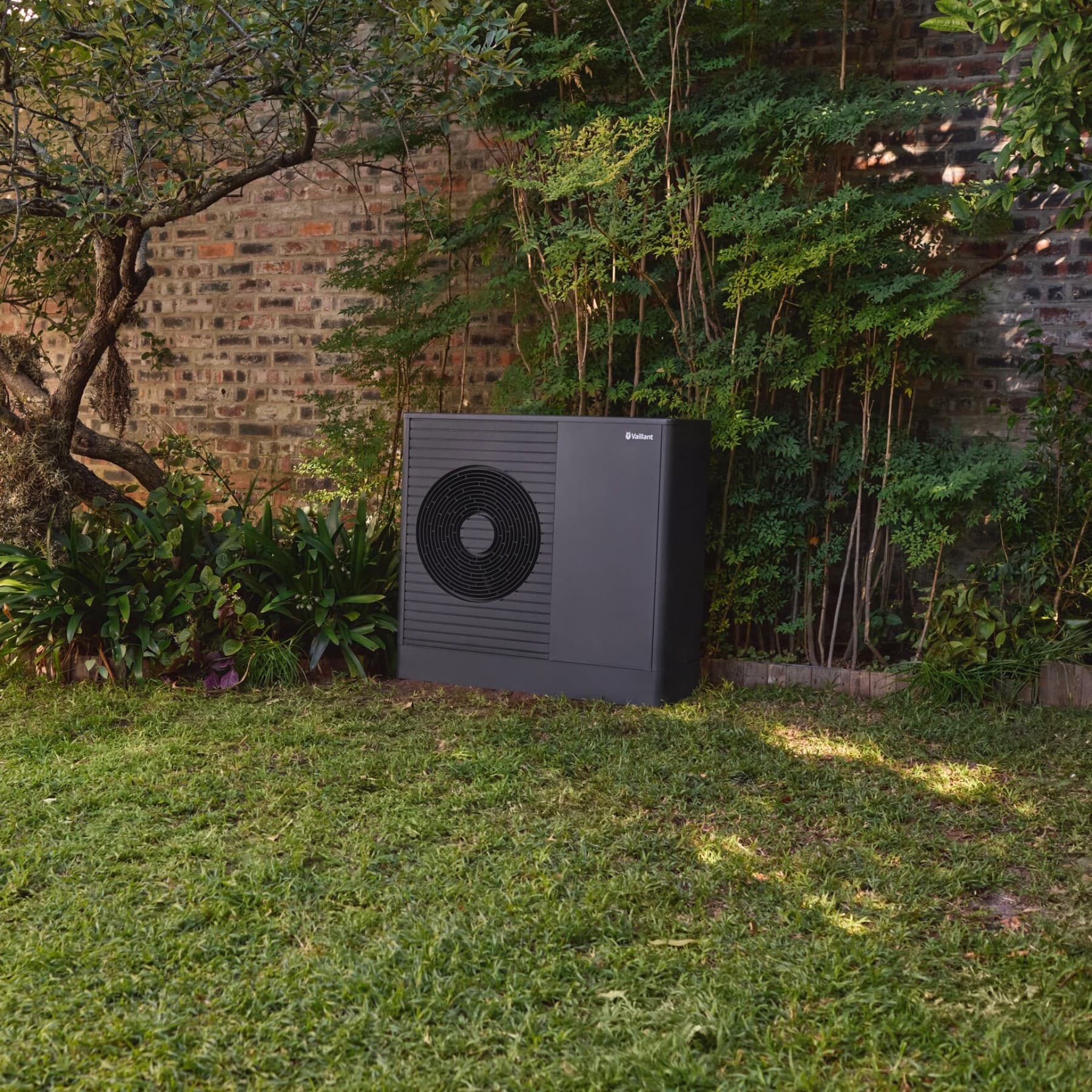
Air-to-water heat pumps in modernisation.
Air-to-water heat pumps are an excellent choice for modernising heating systems in existing buildings. You generally have two options:
Switch entirely to a heat pump system or install a hybrid solution, keeping your existing boiler as a backup.
Generally speaking both ways offer the advantage of installation without extensive construction work.
Especially in older buildings that rely on fossil fuels, switching to an air-to-water heat pump significantly reduces CO₂ emissions and energy costs. Additionally, air-to-water heat pumps enhance the property's value and contribute to a sustainable, future-proof home.
Find the requirements for modernising your exsiting building with a heat pump in the link below.
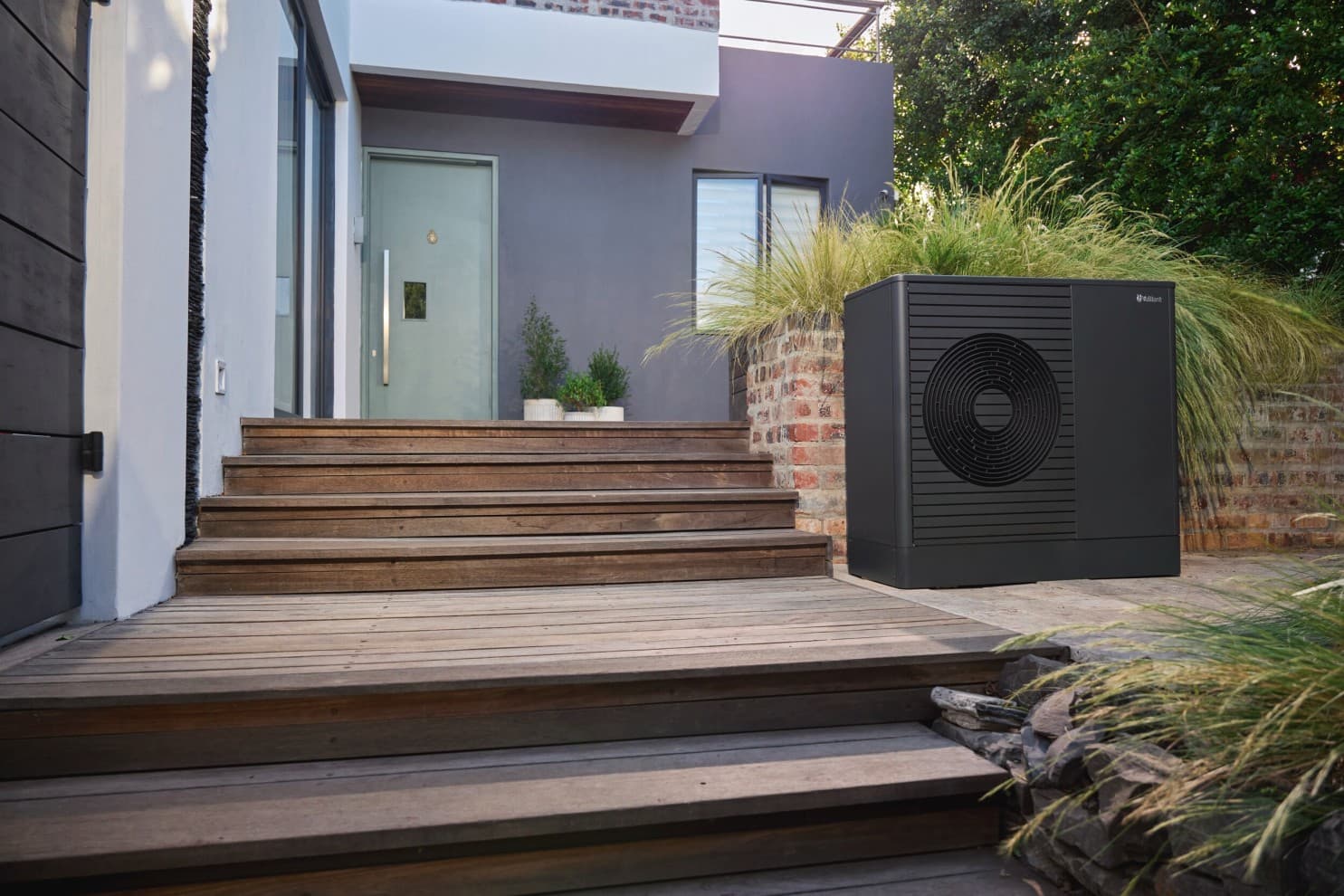

Heat pump portfolio
Rigorously tested in over 300 functional life tests - our most durable air-source heat pumps.
- 1/4Air-to-Water Heat PumparoTHERM proMinimum size for maximum comfort: the aroTHERM pro with an output of 5 to 11 kW is our space-saving heat pumpGet more details
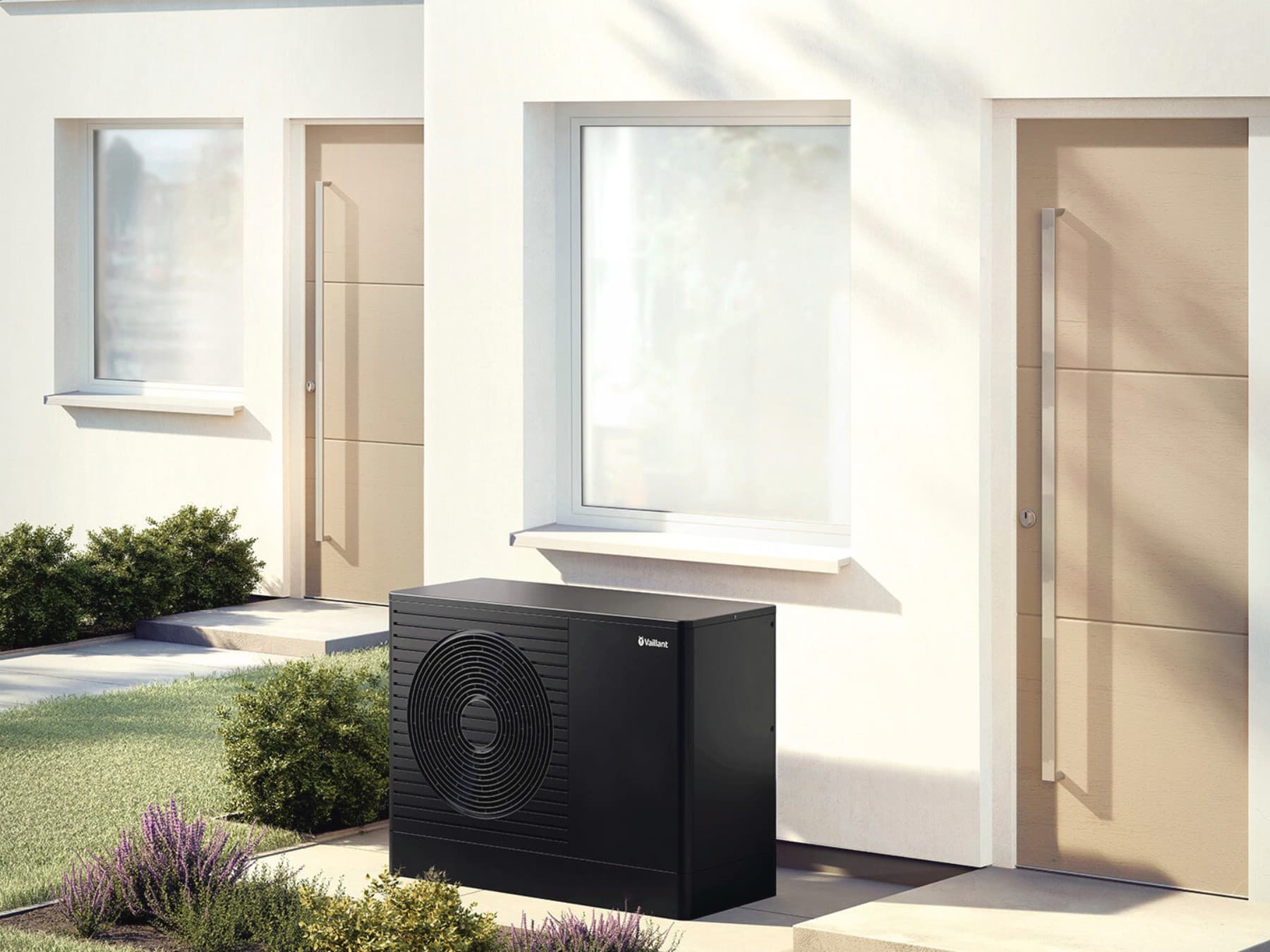
The space saver for outdoor installation
Minimum size for maximum comfort: the aroTHERM pro with an output of 5 to 11 kW is our space-saving heat pump. It is not only the ideal solution for new buildings. Due to its high flow temperatures of up to 70 °C, it is the ideal solution for modernising your heating system while keeping existing radiators. Thanks to our industry-unique safety concept to reduce protective zones, the heat pump can be placed almost anywhere. With ErP labels up to A+++ (D - A+++), it offers highly efficient heating and is also eligible for subsidies. Furthermore, its use of the natural refrigerant R290 makes it a future-proof choice.
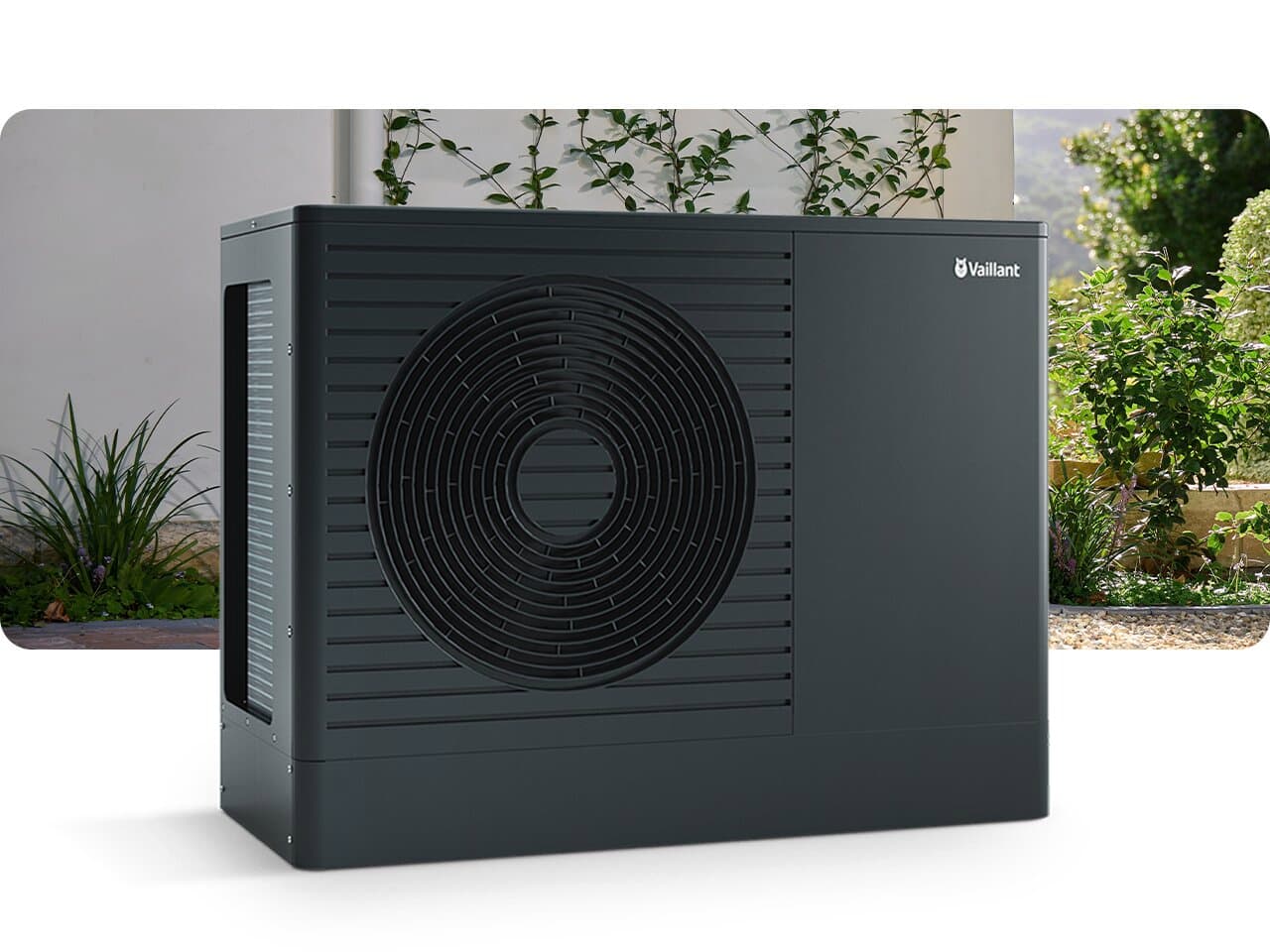
- 2/4Air-to-water heat pumparoTHERM plusOur most efficient air/water heat pump reduces operating costs.Get more details
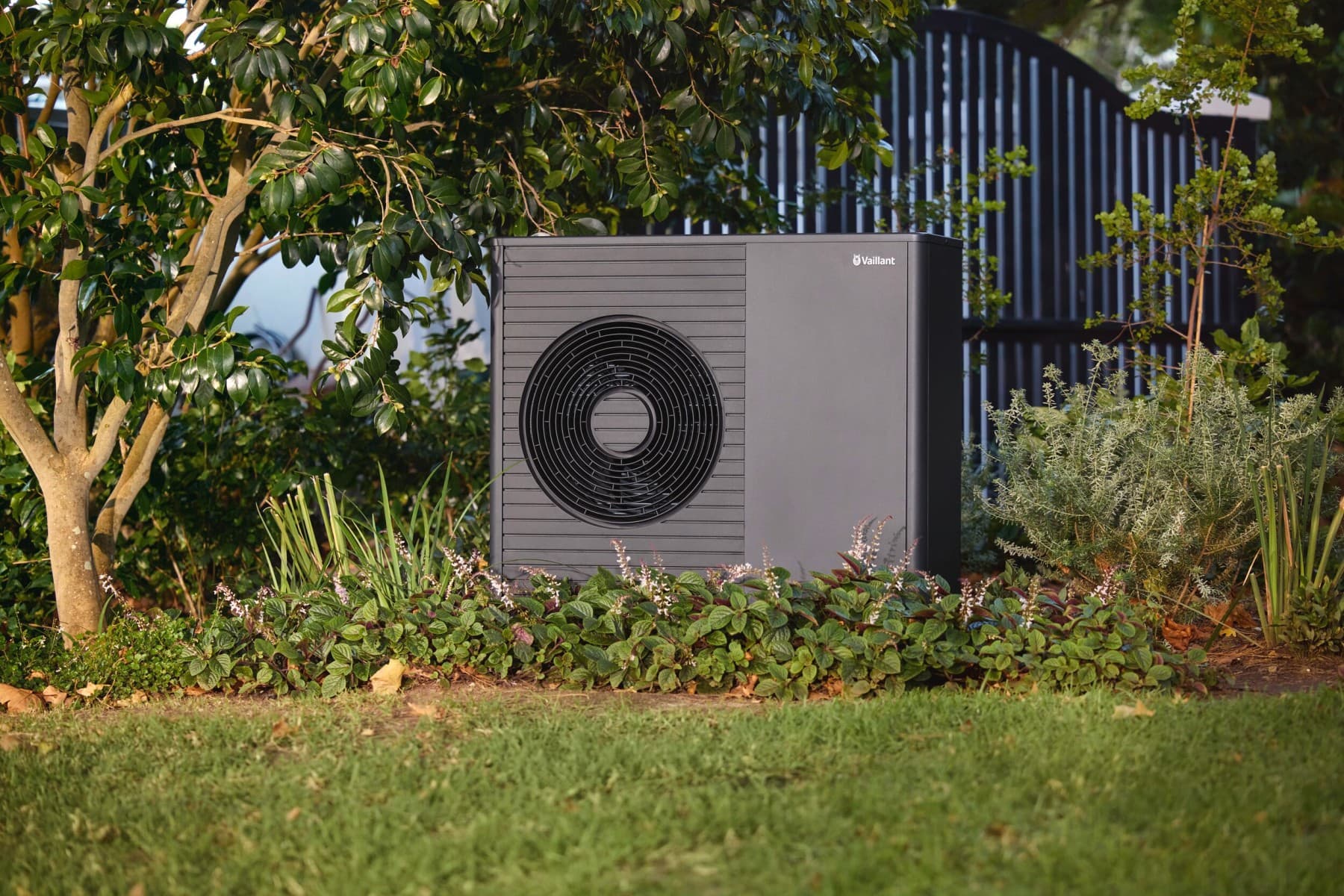
Efficiency in its most flexible form.
- Our most efficient air/water heat pump reduces operating costs.
- Our quietest air/water heat pump with 28 dB(A) for a peaceful neighbourhood
- Maximum freedom of positioning thanks to uniquely minimal protective zones.
- Elegant design in black grey
- Including free 5-year guarantee
The new standard: Our new aroTHERM plus heat pump always finds its place. This is because our safety concept, which is unique in the industry and minimises the necessary distances. Equipped with the natural refrigerant R290, it is our most efficient air-to-water heat pump and generates up to five parts heat* from one part electricity. Available in output sizes from 3 to 12 kW, it is ideal for one-family houses - even with existing radiators, of course.
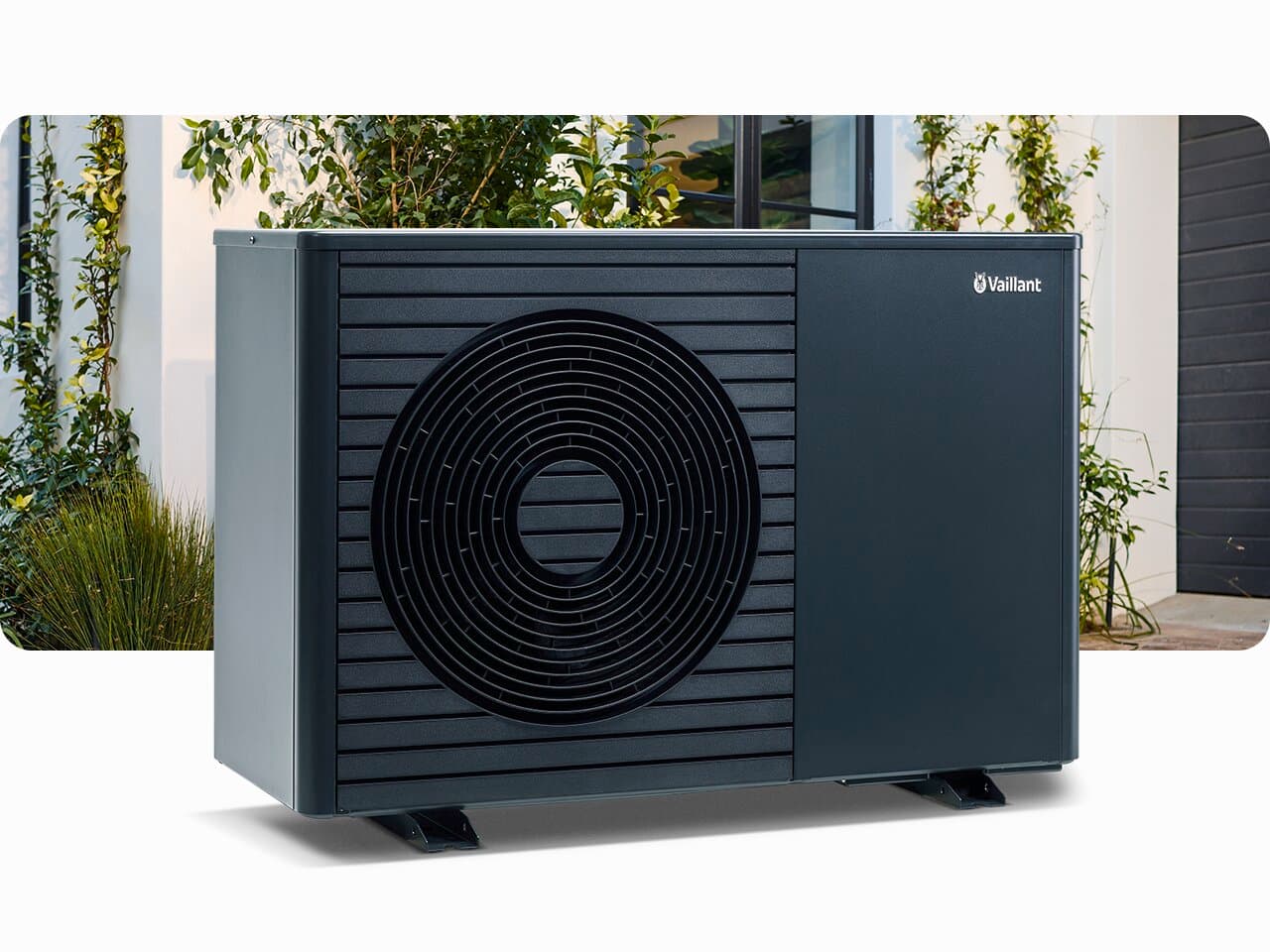
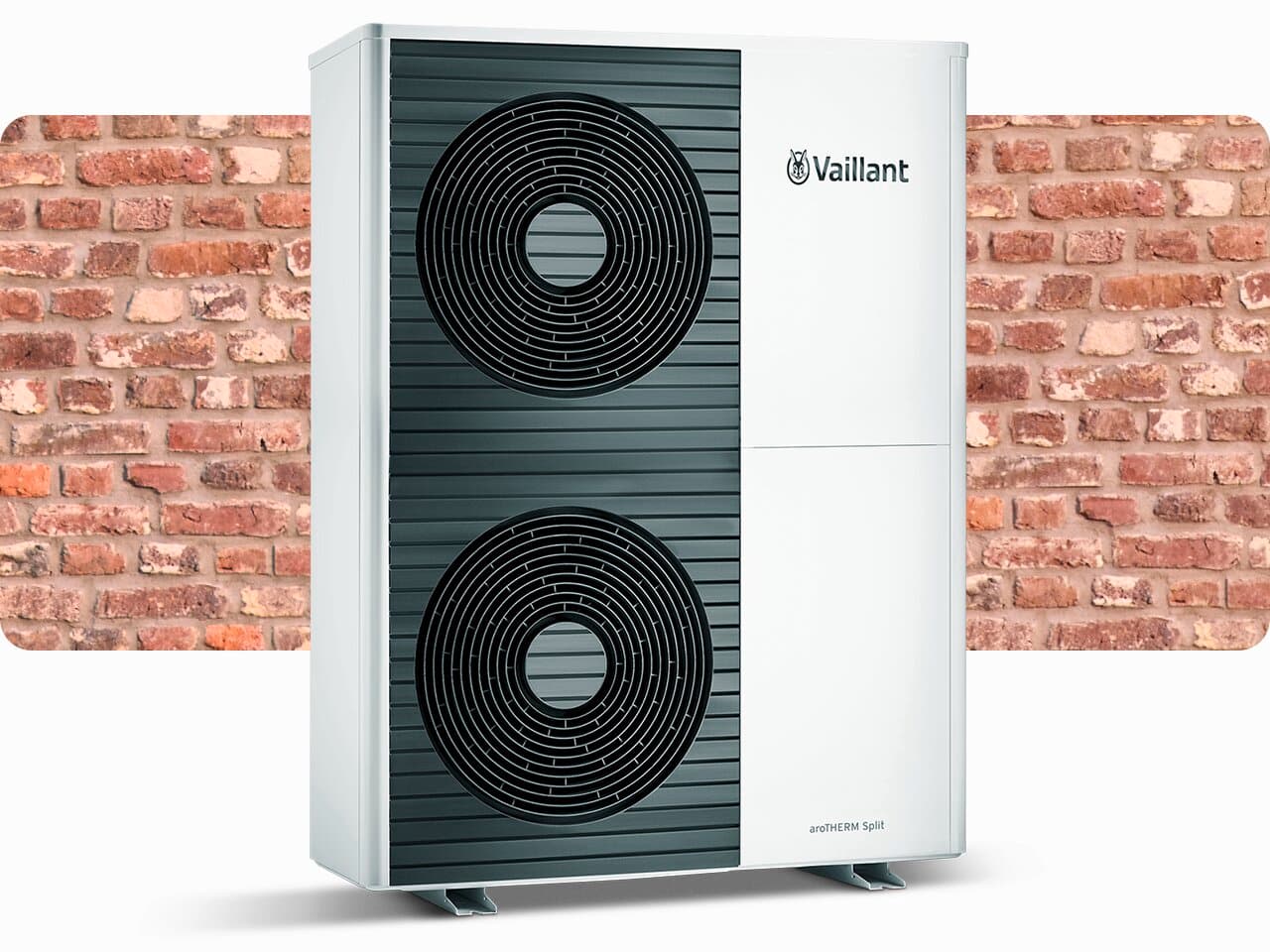
- 3/4Air-to-Water Heat PumparoTHERM SplitA split heating solution with up to 12 kW output for larger single-family houses or multi-family houses.Get more details
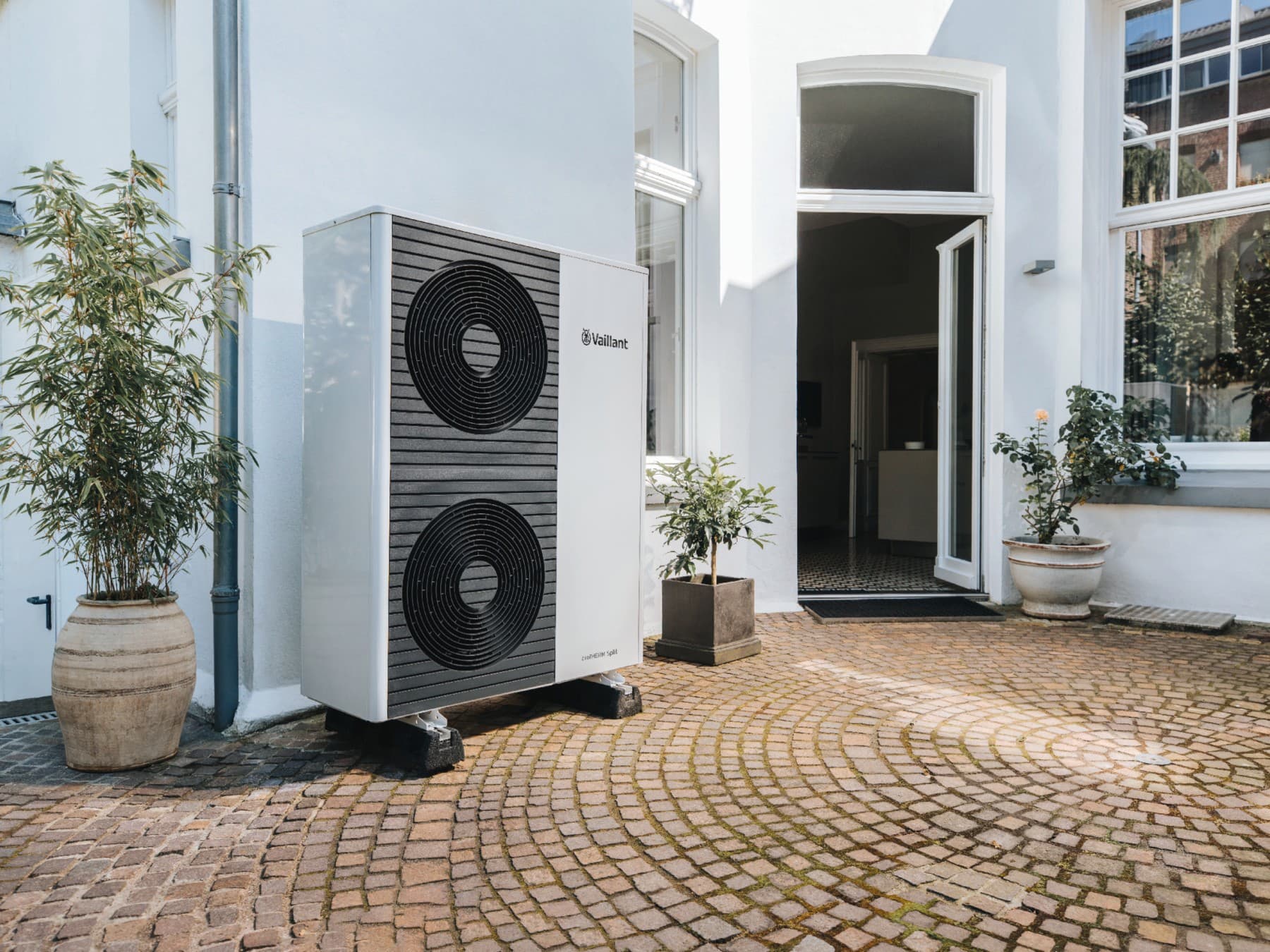
A split heating solution with up to 12 kW output for larger single-family houses or multi-family houses.
- Super quiet operation
- High energy efficiency at low operational costs
- Outstanding quality and durability
- Can even be installed up to 40m away from your property
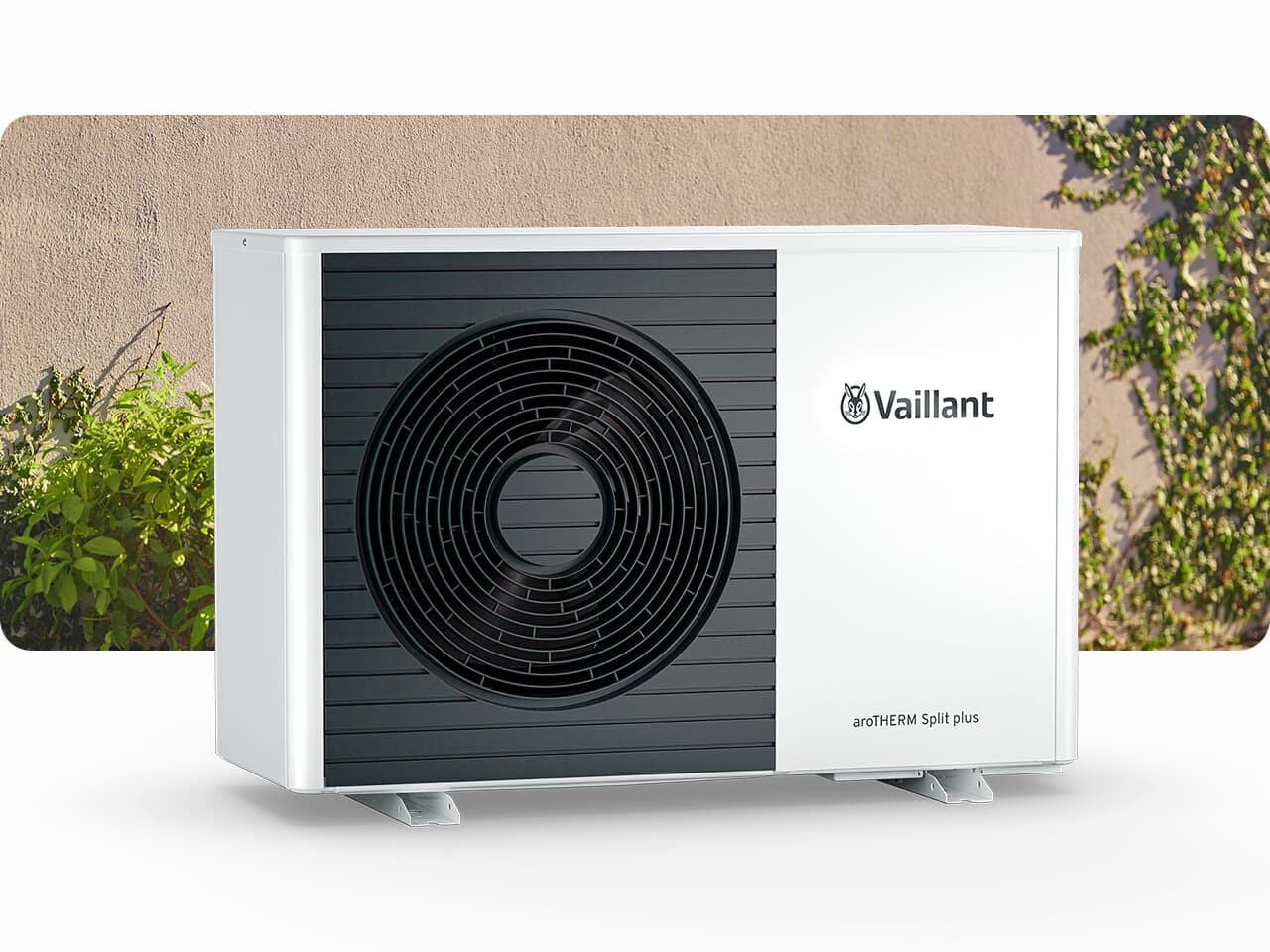
The aroTHERM Split heat pump increases your energy efficiency by using free environmental heat as its main energy source. With its output of 10 and 12 kW it is a cost-efficient heating solution for larger single-family houses or multi-family houses.
- 4/4Air-to-water heat pumparoTHERM Split plusA highly efficient split heating solution for one-family houses or energy modernisation projects.Get more details
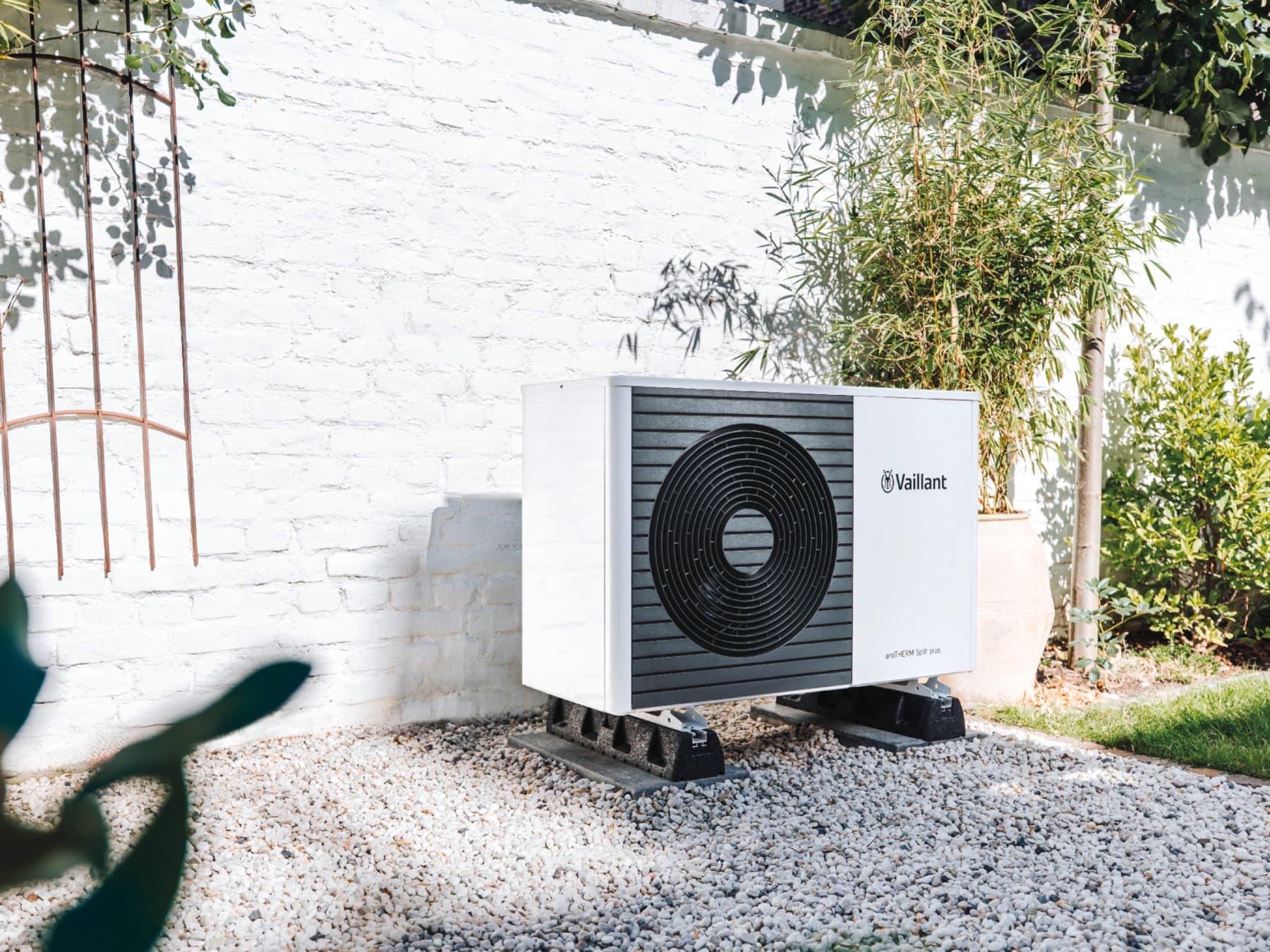
A highly efficient split heating solution for one-family houses or energy modernisation projects.
- Low running costs due to high efficiency
- Low running costs due to high efficiency
- High heating, cooling and hot water comfort
- Flexible installation
The aroTHERM Split plus reduces energy consumption with free environmental heat. With its output from 3 kW to 7 kW it is the ideal choice for newly built one-family houses or in energy modernisation projects. And with a distance of up to 40 metres between the indoor and the outdoor units, you are also flexible in choosing the installation place.