A closer look at heating with natural, liquid or green gas.

The difference between natural gas, LNG and LPG
Matching the right fuel to your energy needs.
Natural gas is a naturally occurring, combustible gas mixture primarily composed of methane, extracted from underground reservoirs and distributed through a vast network of pipelines for heating. When cooled to temperatures below -160°C, it becomes liquefied natural gas (LNG), drastically reducing its volume by 600 times, making storage and transport more efficient. LNG is transported across regions via tankers, where it can be distributed by rail or converted back to gas at LNG terminals. This efficient transport method allows LNG to be utilised in areas far from traditional gas pipelines.
Meanwhile, LPG, or liquefied petroleum gas, consists of propane and butane, liquefied under lower pressure for compact transport and storage. LPG is a crucial energy source, especially in rural areas where households are not connected to natural gas networks, with the heating fuel being delivered by tankers. It is stored in special tanks that can be installed above or below ground on private property. This non-toxic, low-pollutant fuel is produced during the extraction and processing of crude oil, natural gas, and shale gas, making it suitable for use in water and nature conservation areas.
What are green gases?
Powering the future with nature's fuel.
- Hydrogen
- Biogas
- Bio (liquified) natural gas
- Bio liquified petrolium gas

Hydrogen: an opportunity for the future.
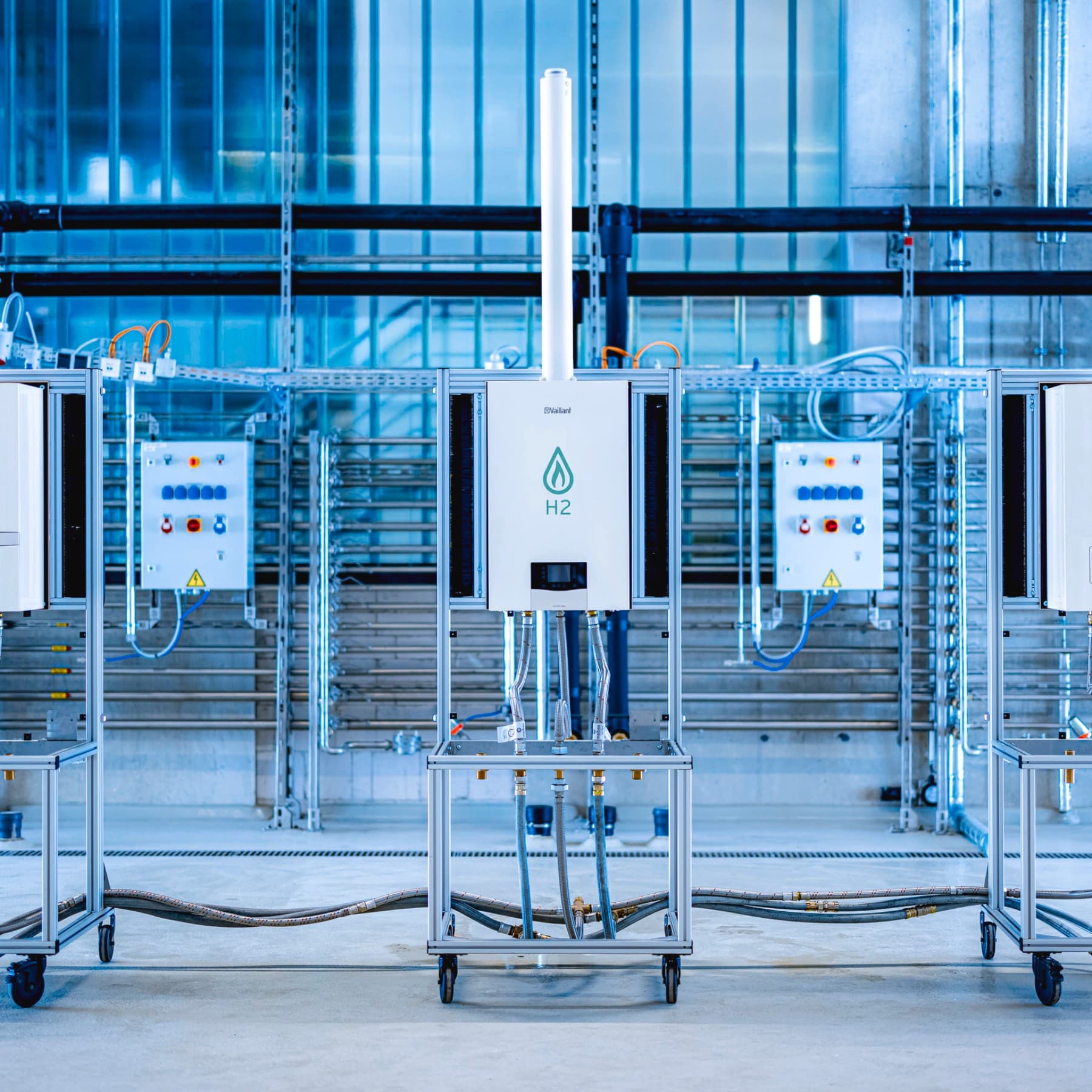
Hydrogen is becoming an essential energy source in heating technology, with its importance steadily rising. Power-to-gas technology uses surplus green electricity from solar or wind to produce hydrogen through electrolysis, which is then added to the natural gas grid. This process allows for the storage of unused green electricity. While hydrogen can currently be mixed with natural gas for heating, the transition to 100% hydrogen depends on successful test projects, gas network operator commitment, and political developments. The EU plans to increase hydrogen in natural gas to 20% over the next 15 years. Encouragingly, our modern gas condensing boilers like the or are designed to be adaptable for using 100% hydrogen, supporting the shift towards cleaner heating solutions.

Benefits of heating with green gas
Driving the energy transition in heating.
- Decarbonising heating step by step.
Green gases gradually replace fossil fuels in heating systems, significantly cutting CO₂ emissions and supporting climate goals, contributing to a cleaner energy future.
- Storing energy with flexible solutions.
Green gases store surplus renewable energy, crucial for fluctuating production. They enable heating systems to act as energy storage, enhancing supply security.
- Integrating seamlessly with existing systems.
Green gases can be fed into current natural gas networks, facilitating a sustainable energy transition without the need for extensive new infrastructure investments.
- Pioneering innovative energy technologies.
Advancements in green gas production foster heating market innovation. Green hydrogen boilers, for example, provide efficient, emission-free heating solutions.
The future of biogas and hydrogen
Navigating the promises and challenges of green gas heating.
Heating with green gases presents both opportunities and challenges. Green gases like biogas (biomethane) and hydrogen offer a renewable, climate-neutral alternative to fossil fuels, significantly reduce CO₂ emissions when integrated into existing systems. This supports the energy transition, but there are criticisms regarding resource competition, efficiency and cost. Biogas production often competes with food production, while infrastructure for green hydrogen is still developing. In addition, hydrogen heating systems are less efficient than other climate-friendly options like heat pumps, making them costly.
Despite these challenges, the future of green gases in heating looks promising. Investments in biogas and biomethane production are set to grow, with plans to increase output significantly by 2040, potentially covering a substantial portion of EU gas demand. To fully realize their potential, supportive policies and infrastructure development are essential, ensuring green gases can effectively complement other renewable sources. Continued investment and innovation will be key to unlocking the full potential of green gas heating for a sustainable future.