What is an immersion heater? Everything you need to know.

Explanation of an immersion heater
What is an immersion heater?
Immersion heaters are electric water heaters that sit directly in your tank. They provide hot water using an electric element, perfect for homes without gas or as a reliable backup. A thermostat regulates the temperature for efficiency.
There are two main types:
Fixed immersion heaters are permanently installed and controlled via a wall switch and thermostat – a common solution for domestic hot water.
Portable immersion heaters, less common in homes, are mainly for temporary water heating in industrial settings or for quick, portable use. Since immersion heaters only need electricity, they’re a good option for homes without gas or oil and are sometimes paired with renewable energy sources like solar panels to keep running costs down.
Advantages of immersion heaters.
- Energy efficiency.
Immersion heaters are highly efficient because they heat the water directly, without the need for complex machinery or additional fuel sources. They use only the electricity needed to heat the water. This makes them an ideal solution if you are looking to conserve energy and lower utility bills.
- Reliability.
With an immersion heater, you can rely on a consistent source of hot water. It’s a straightforward solution that’s less prone to breakdowns compared to more complex systems like boilers.
- Ease of installation.
Installing an immersion heater is relatively simple. This makes it ideal for properties without a gas supply or looking to supplement an existing heating system.
- Backup heating.
They are an excellent backup when a boiler is not functioning or you need additional hot water capacity. They’re ideal for households that need reliable hot water even if the central heating system isn’t in use.
How it works
How does an immersion heater work?
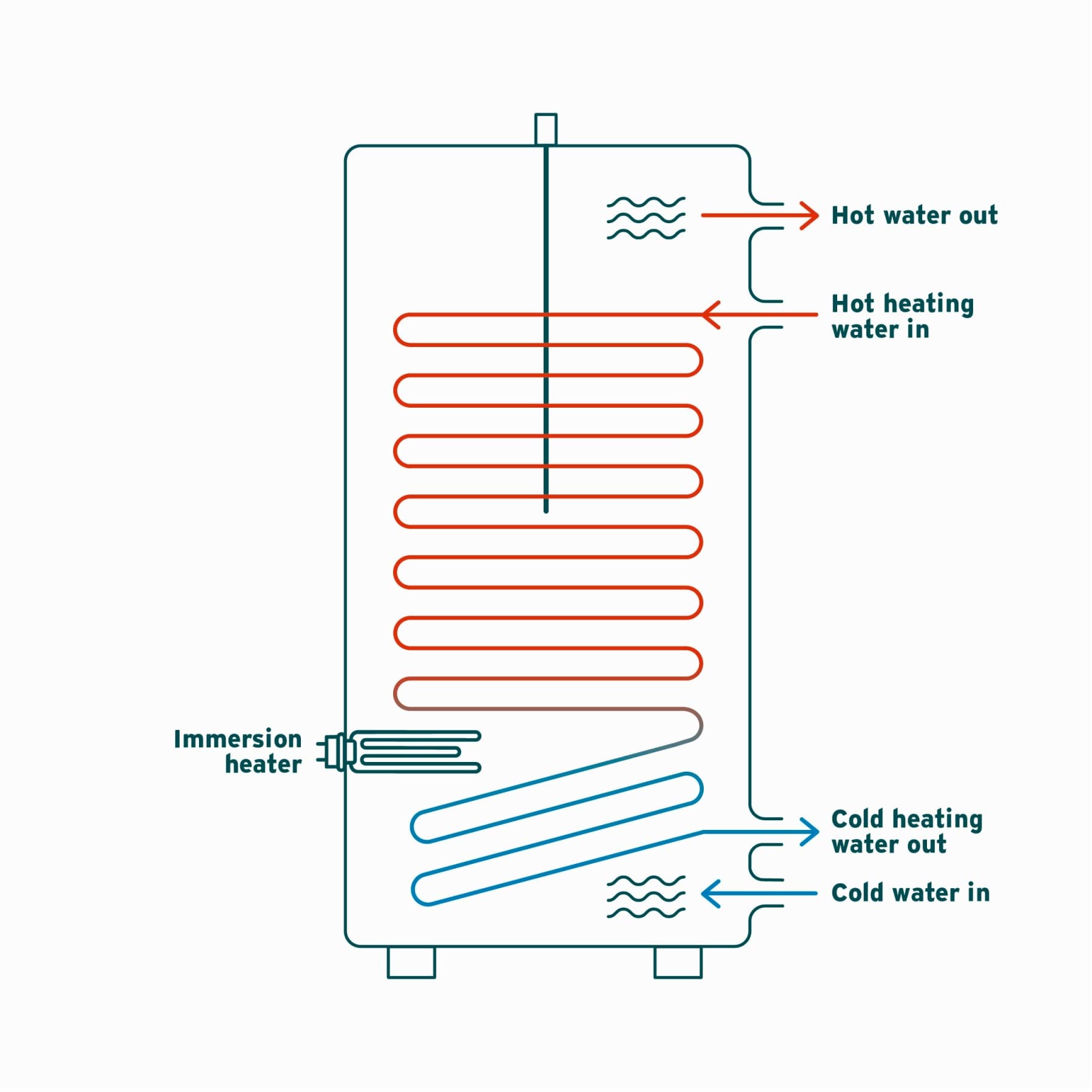
Immersion heaters operate through a simple mechanism. It is usually installed inside a hot water cylinder and consists of a metal element that heats the water. When the heater is turned on, electricity flows through the element, heating it. The heat from the element is then transferred directly to the surrounding water, raising its temperature.
They are usually controlled by a thermostat, which allows you to set the desired water temperature. Once the water reaches the pre-set temperature, the thermostat automatically switches off the power to the element to prevent overheating.
When to use
When should you use an immersion heater?
- No gas supply available.If your home doesn’t have access to natural gas,they can provide an effective and affordable alternative to gas-powered water heating systems.
- Supplemental heating.If your primary hot water system struggles to keep up with demand, an immersion heater can provide extra capacity.
- PV surplus for hot water.Immersion heaters are frequently used with PV surplus to efficiently convert excess solar electricity directly into hot water. This maximizes self-consumption of renewable energy and reduces reliance on grid power.
- Backup heating system.If you have a boiler, but it is out of service, an immersion heater can be used as a temporary solution for hot water.
How to maintain your immersion heater.
- Check the heating element.
Over time, mineral deposits can build up on the heating element. This can reduce efficiency and cause the heater to overheat. Occasionally check and clean the element to maintain optimal performance.
- Inspect the thermostat.
The thermostat controls the water temperature. Make sure it’s functioning properly to avoid overheating or inadequate heating.
- Ensure proper insulation.
Proper insulation of the hot water cylinder helps retain heat for longer periods, reducing the need for constant heating.
Immersion heater vs boiler
How does an immersion heater compare to a boiler?
| Immersion Heater | Boiler | |
|---|---|---|
| Heating Method and Fuel Source | Uses electricity to heat water directly in a tank. No gas or oil supply needed – ideal for all-electric homes. Can be costly to run if electricity is your only hot water source. | No complex pipework or venting required. Best for smaller homes with moderate hot water needs. |
| Hot Water Supply and Heating Capacity | Heats only the water in the tank. Requires waiting for reheating once hot water runs out. May not suit homes with high hot water demand. | Provides both hot water and central heating. Heats water on demand – no waiting for a tank to refill. Ideal for homes with multiple bathrooms or high hot water demand. |
| Energy Efficiency | Converts nearly all electricity into heat (efficient use of energy). Electricity costs more than gas, leading to higher expenses for frequent use. | Modern boilers (especially condensing models) are highly efficient. Reuse waste heat, reducing energy bills for larger homes. |
| Reliability and Maintenance | Low-maintenance due to few moving parts. Mineral buildup on the heating element may reduce efficiency, requiring occasional cleaning. | Requires regular servicing, especially for gas or oil systems. More components mean higher maintenance compared to immersion heaters. |
| Cost and Installation | Simpler and cheaper to install than a boiler. No complex pipework or venting required. Best for smaller homes with moderate hot water needs. | Installation is more expensive due to additional plumbing and setup. Long-term savings make it suitable for larger homes with higher heating demands. |
Which option is your perfect fit?
- Immersion heater
- Boiler
When your solar panels generate more electricity than your home needs, an immersion heater provides a smart way to use that PV surplus. Instead of sending excess power back to the grid for little return, the immersion heater converts it directly into hot water. This effectively stores your solar energy as heat, maximizing your self-consumption of renewable power and reducing your reliance on costly grid electricity for water heating.