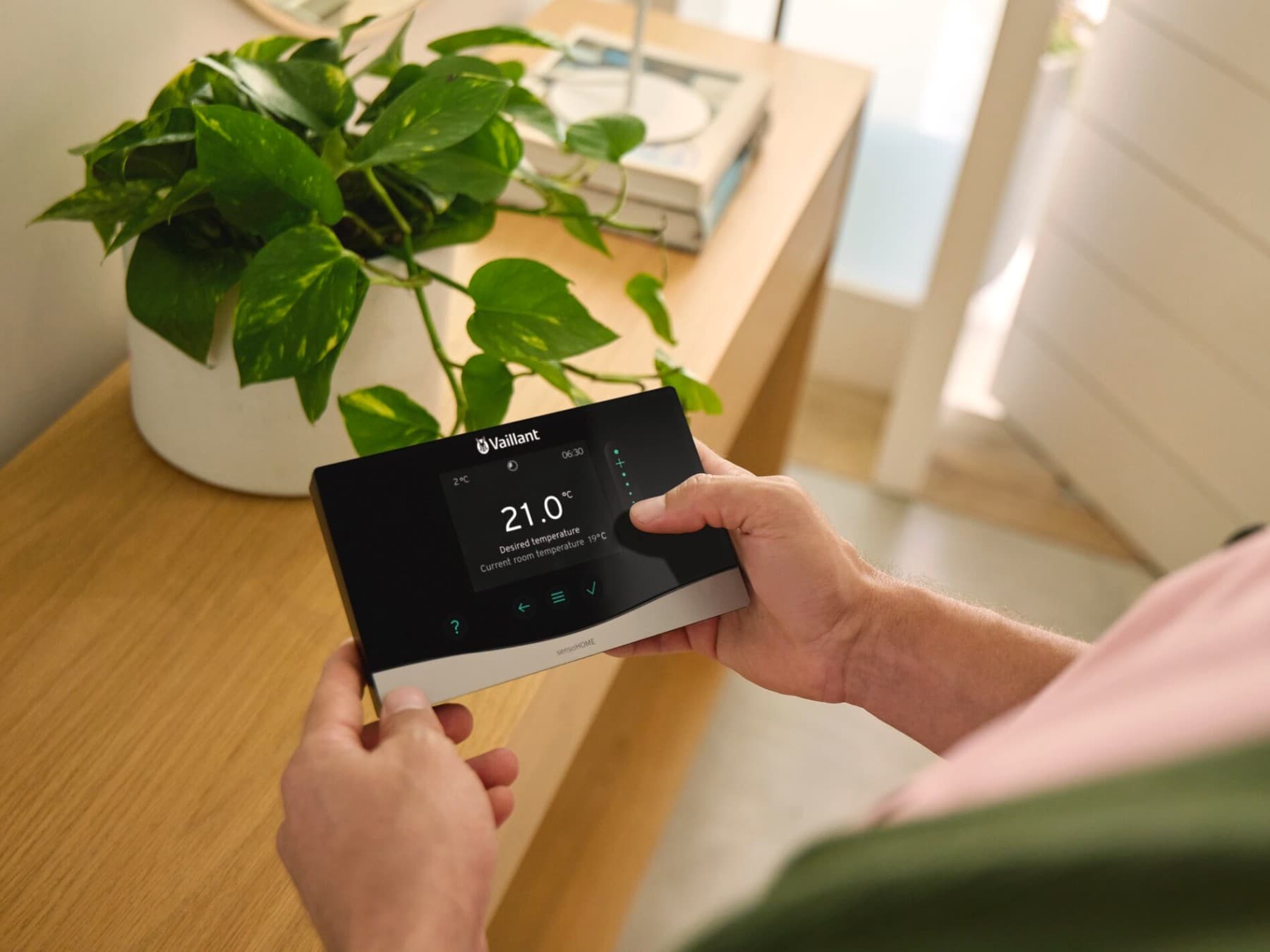
Thermostat

A thermostat controls the individual room temperature and is a component of the heating system. There are mechanical and electronic thermostats. Both thermostats are equipped with an integrated temperature sensor that controls the flow of water in the radiator in accordance with the ambient temperature. If the temperature falls below the set level, a substance contracts in mechanical thermostats and a return spring opens the valve for the hot water. In electronic thermostats, sensors send the opening command to a motor, which then opens the valve. When the desired temperature is reached, the valve will close automatically.
Mechanical thermostats typically have a scale ranging from a snowflake symbol and 1 to 5. Electronic thermostats and remote thermostats can be programmed exactly to the degree. In addition, it is possible to set specific times for the heating. Some digital radio thermostats that are linked to a smart home and controlled via apps are also equipped with window sensors that reduce the heating power when a window is open. Mechanical thermostats then increase the heating power to compensate for the drop in temperature.
< Glossary