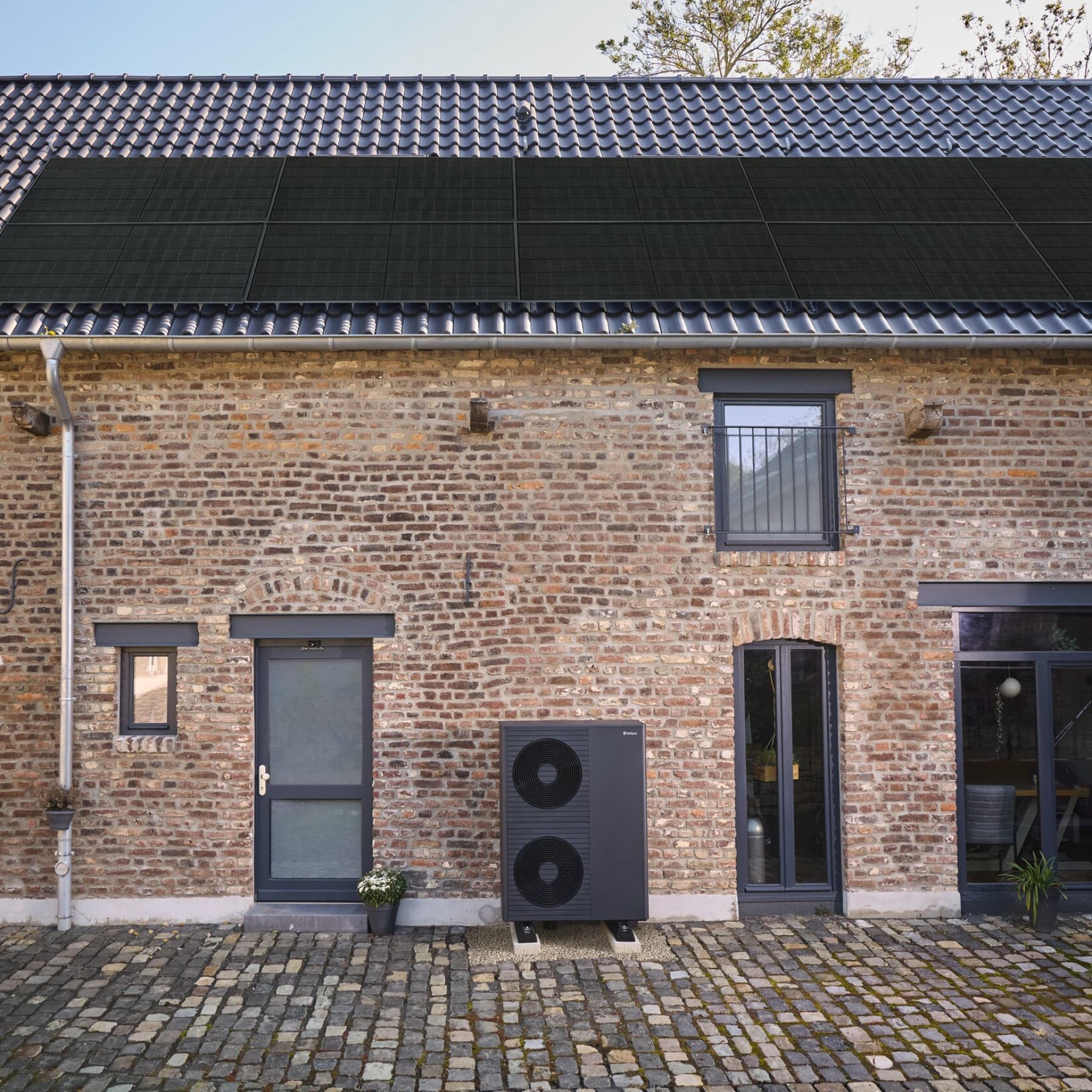
Infrared heating: innovative, fast and efficient heating.

Pleasant solar heat to warm you up.
Infrared heaters offer you an innovative approach to heating. Unlike conventional radiators, which heat the air, infrared systems generate cosy infrared rays. These rays warm objects such as furniture, people, floor and walls in your room, which then release the heat back into the room. Enjoy an evenly distributed warmth that radiates gentle cosiness in your home.
How infrared heating works
The science behind radiant heat technology.
Infrared heaters generate electric radiant heat, which first heats solid and liquid objects. These then release the heat into the air, creating a pleasant room climate.
Infrared radiation consists of long-wave electromagnetic rays that are invisible to humans but can be felt as heat. These rays are absolutely harmless and are similar to natural solar radiation.
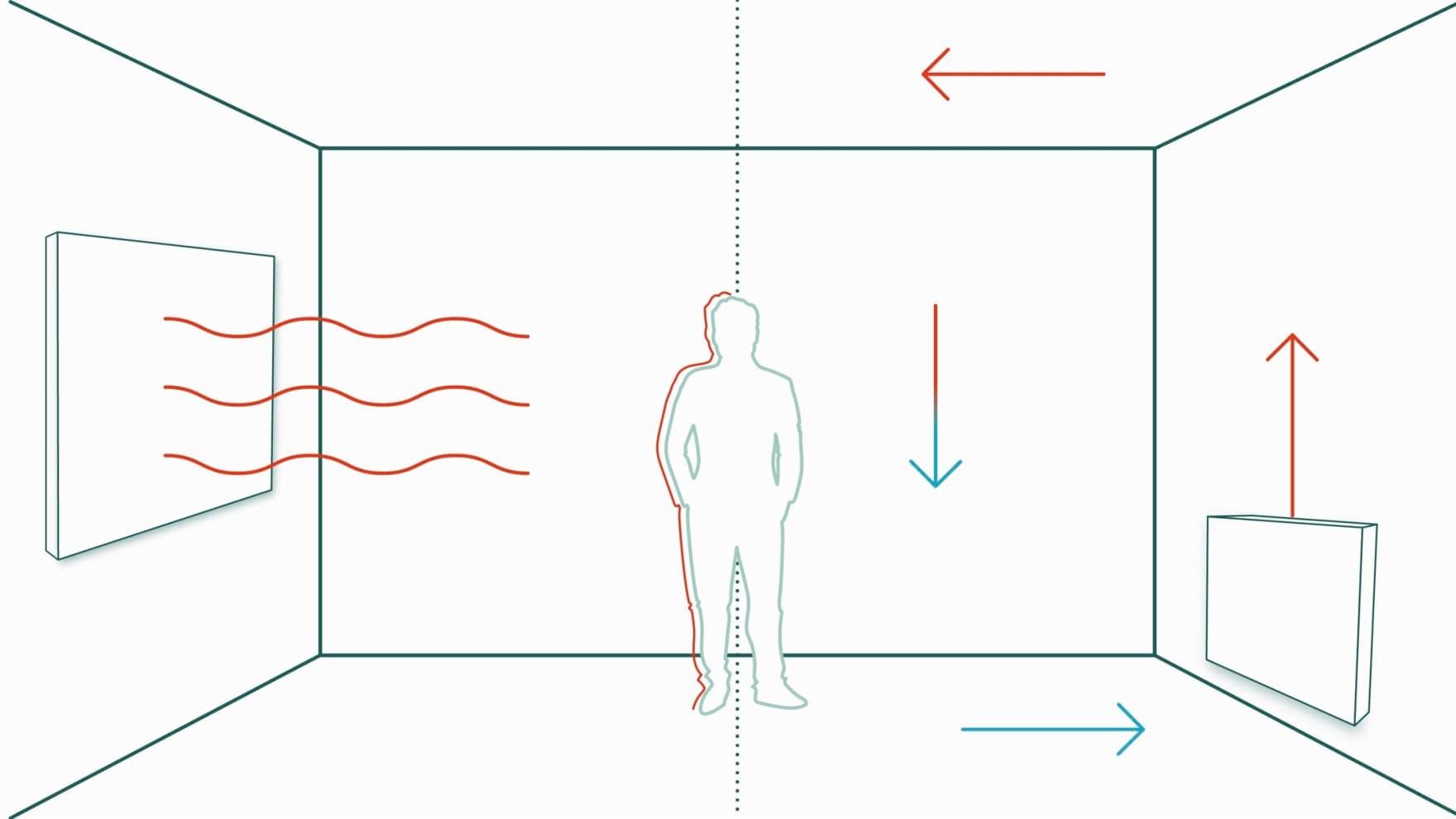
The technical structure of an infrared heater is simple: a current-carrying wire, the heating conductor, sits behind the front cover and heats it to temperatures between 75 and 200 °C. The long-wave infrared rays then meet walls, furniture and people, which absorb the heat and slowly release it into the surroundings. This creates a cosy warmth that you feel immediately.
Advantages and disadvantages of infrared heating
What speaks for infrared heating.
- Low acquisition costs.
Compared to other heating systems, such as gas or oil heating, you benefit from significantly lower purchase costs. You also save on installation expenditures as the infrared panels are simply mounted on the wall or ceiling.
- Space-saving shape.
The flat panels maximise your living space as they are installed on the wall or ceiling. If the infrared heating is not combined with another heating system, there is also no need for a boiler room.
- Long durability.
Infrared heaters are exceptionally reliable and designed for a service life of around 20 years with minimal maintenance.
- Healthy heating.
Infrared heaters are particularly suitable for allergy sufferers and asthmatics. In addition, the heat radiated onto floors, walls, ceilings and furniture prevents the formation of mould.
Despite the numerous advantages of infrared heating, there are a few disadvantages to consider. If the house is poorly insulated, the operating costs can be high. The same applies to permanent use of infrared heating, which is why it is not suitable as the main heating system. In addition, you need a separate heating system to heat water.
Application areas for infrared heaters
Four use cases, one solution.
- Newbuild house
- Old building
- Bathroom
- Additional heater

Well-insulated houses, low-energy and passive houses are ideal for the use of infrared heating, as the low energy requirement means that the purchase costs for a conventional heating system are often not worthwhile. A detailed calculation can determine whether infrared heating is worthwhile or not. On the other hand, infrared heating is very well suited as an additional heating system in conjunction with photovoltaics and an electricity storage unit, as the electricity required is produced free of charge.


Customise your comfort.
Infrared heaters offer you the opportunity to integrate seamlessly into the interior design style of your home. This is because the flat front can be covered with heat-resistant films as well as textures and materials such as ceramic, glass and metal. There is also a 2-in-1 solution for your bathroom, as the infrared heater can also be used as a mirror.
There are numerous variants of infrared heating for the ceiling, which can either be used inconspicuously as a ceiling panel or, if required, conspicuously as a design element. Mounting on the ceiling also has the advantage that the heat is radiated evenly and unhindered from above.