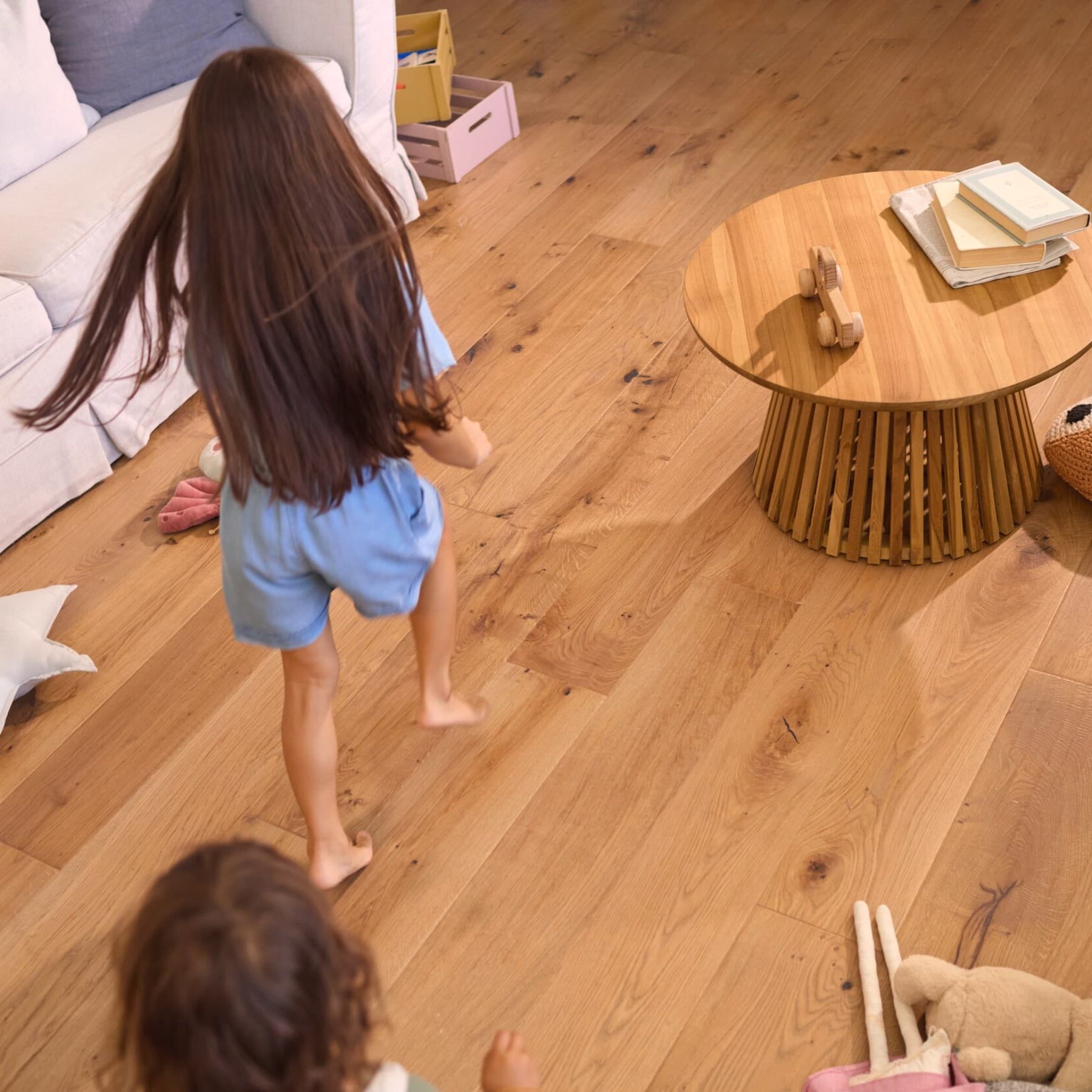
Surface heating: the future-proof heat distribution for your home.

How surface heating works
Surface heating explained simply.
Surface heating systems distribute warmth in the room using radiant heat, much like the sun. This method ensures thermal energy spreads evenly across large areas and becomes effective when it contacts solid objects, like walls or people. This allows the systems to operate at slightly lower (1-2 °C) temperatures, compared to radiators, without sacrificing comfort.
Surface heating systems operate either electric or water-based:
- Electric systems use heating mats with insulated cables underneath the heating surface. These cables release thermal energy when powered, warming the layers above.
- Typically, water-based systems consist of long pipes as the heat source. These thin heating pipes are laid out extensively behind/under the area to be heated. Heated water circulates through these pipes, delivering thermal energy.
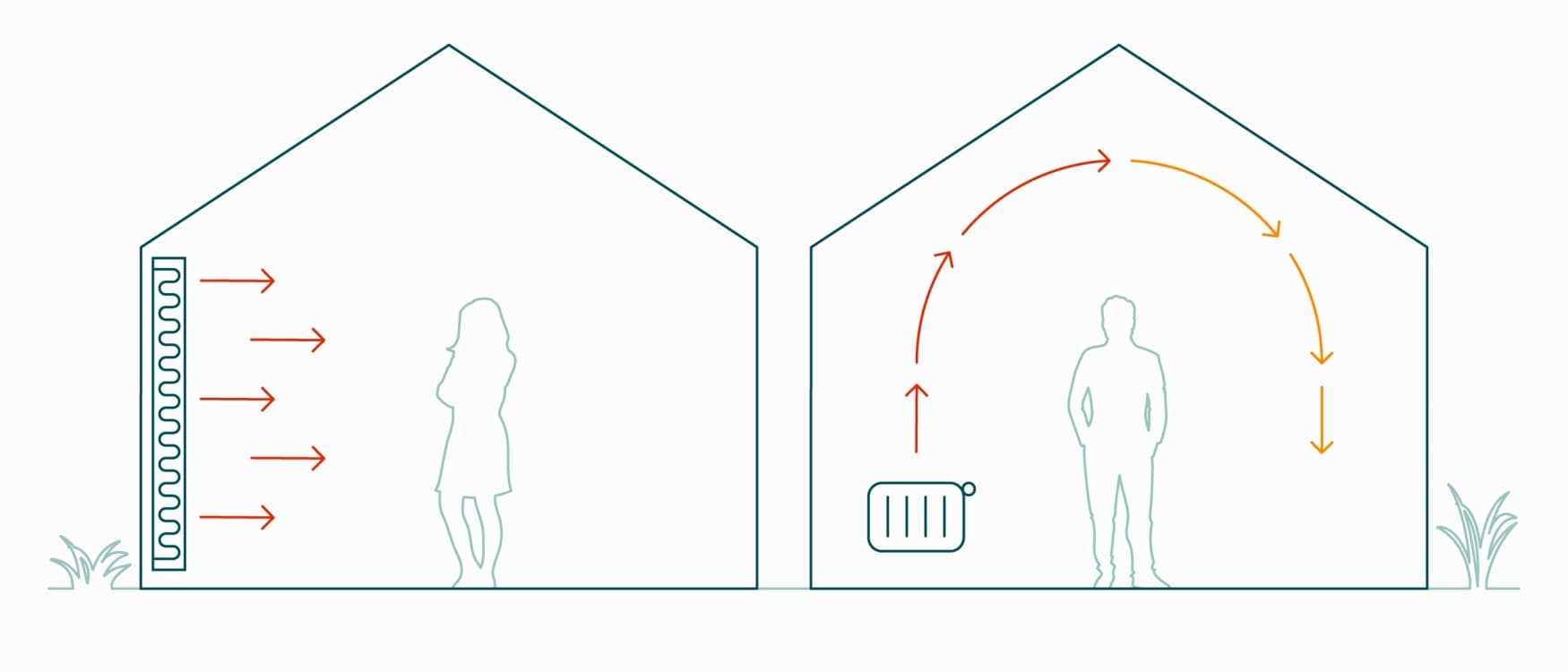
This infographic visualizes the difference between a surface heating (left), in this case a wall heating and a conventional radiator (right). The warmth of surface heating is perceived as more pleasent than the heat of a radiator.
Advantages of space heating
These are the perks of surface heating.
- Cosy radiant warmth.
Compared to convection heat, radiant heat creates a special feeling of comfort. Many people find the warmth particularly pleasant, like being caressed by the sun.
- Lower temperatures for warm comfort.
Floor, wall, and ceiling heating systems offer comfort with less energy. Operating at lower temperatures, they use the entire floor to heat efficiently at thirty-five degrees Celsius, unlike radiators often needing fifty-five to seventy degrees.
- Invisible heat distributors.
Surface heating systems can be installed out of sight, therefore you have more options for arranging your rooms than with radiators.
- Cool your home in summer.
As summers grow increasingly hotter, a feature not to be underestimated is the ability of surface temperature systems to cool rooms by about 1- 2 °C when combined with a heat pump.
Types of space heating
What are the different types of surface heating?
- Underfloor heating
- Wall heating
- Ceiling heating
Underfloor heating is the most prevalent form of surface heating. The heating circuits are installed beneath the screed on top of insulation. The length of each pipe coil is determined by the room's heating needs, or the heating load.
In smaller rooms, the floor area may not suffice for the heating coils, as they cannot be laid too closely to avoid overheating the floor. In such cases, additional heating circuits might need to be installed on the walls or even beneath the ceiling.
Get more information on underfloor heating.
Product highlight
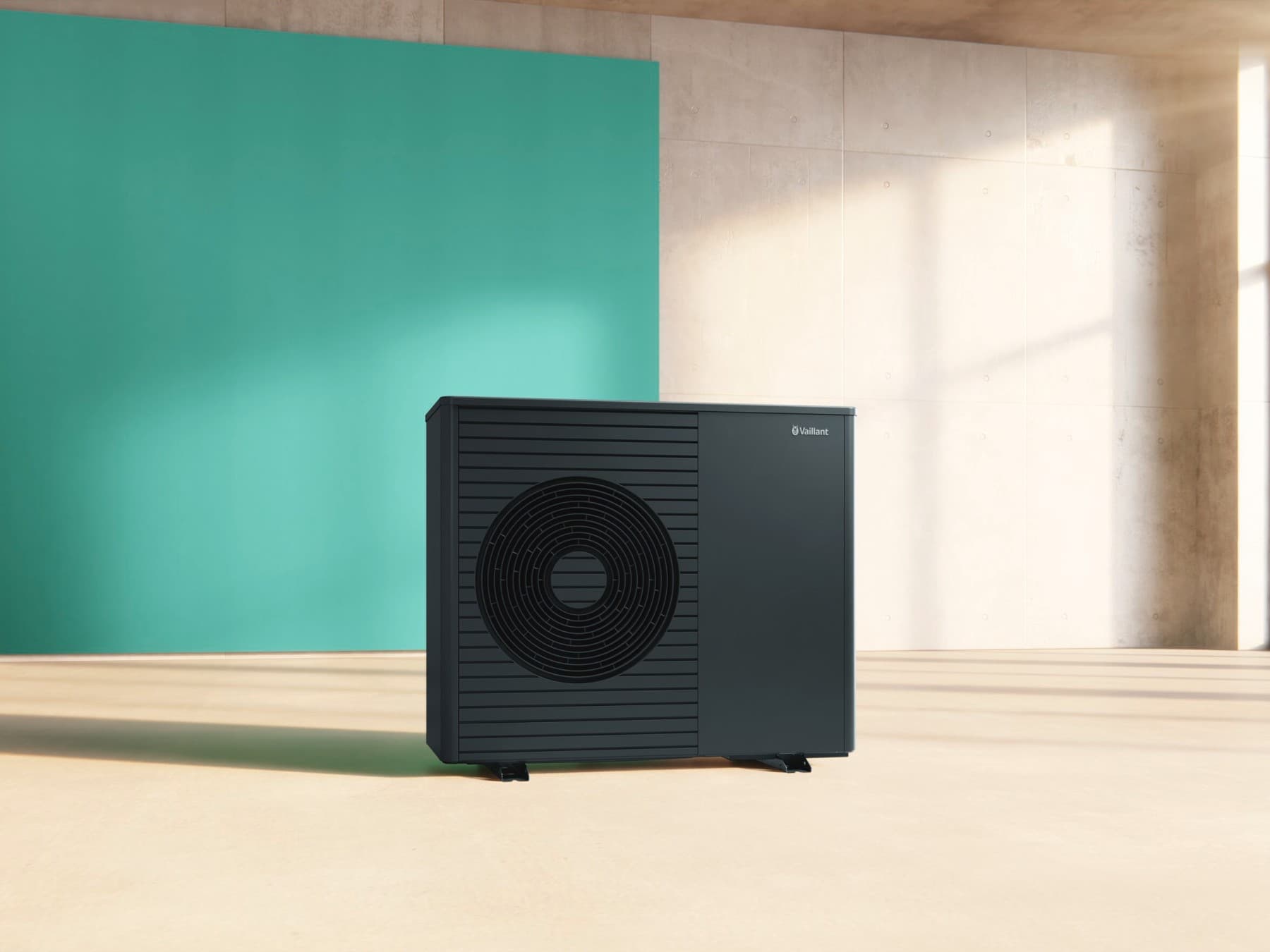
Pair Vaillant's most sustainable heat pump with your surface heating.
Discover the aroTHERM plus heat pump from Vaillant, designed to work seamlessly with surface heating. Harness 75% environmental heat and 25% electricity for efficient warmth. Durable and eco-friendly with natural refrigerant R290, it's the perfect low-temperature heating solution.