Ceiling heating: Efficiency and comfort from above.

How ceiling heating works
The principle of ceiling heating.
Ceiling heating systems are a type of radiant heating like underfloor heating. Just as the name suggests they are installed on the ceiling and controlled by a central unit, such as a heat pump. Unlike conventional heaters, they distribute heat evenly across the room. Through electromagnetic radiation they directly warm objects and people, transforming everything in the room into a heat source for a cosy atmosphere.
There are two main types of ceiling heating systems available: water-based systems and electric systems.
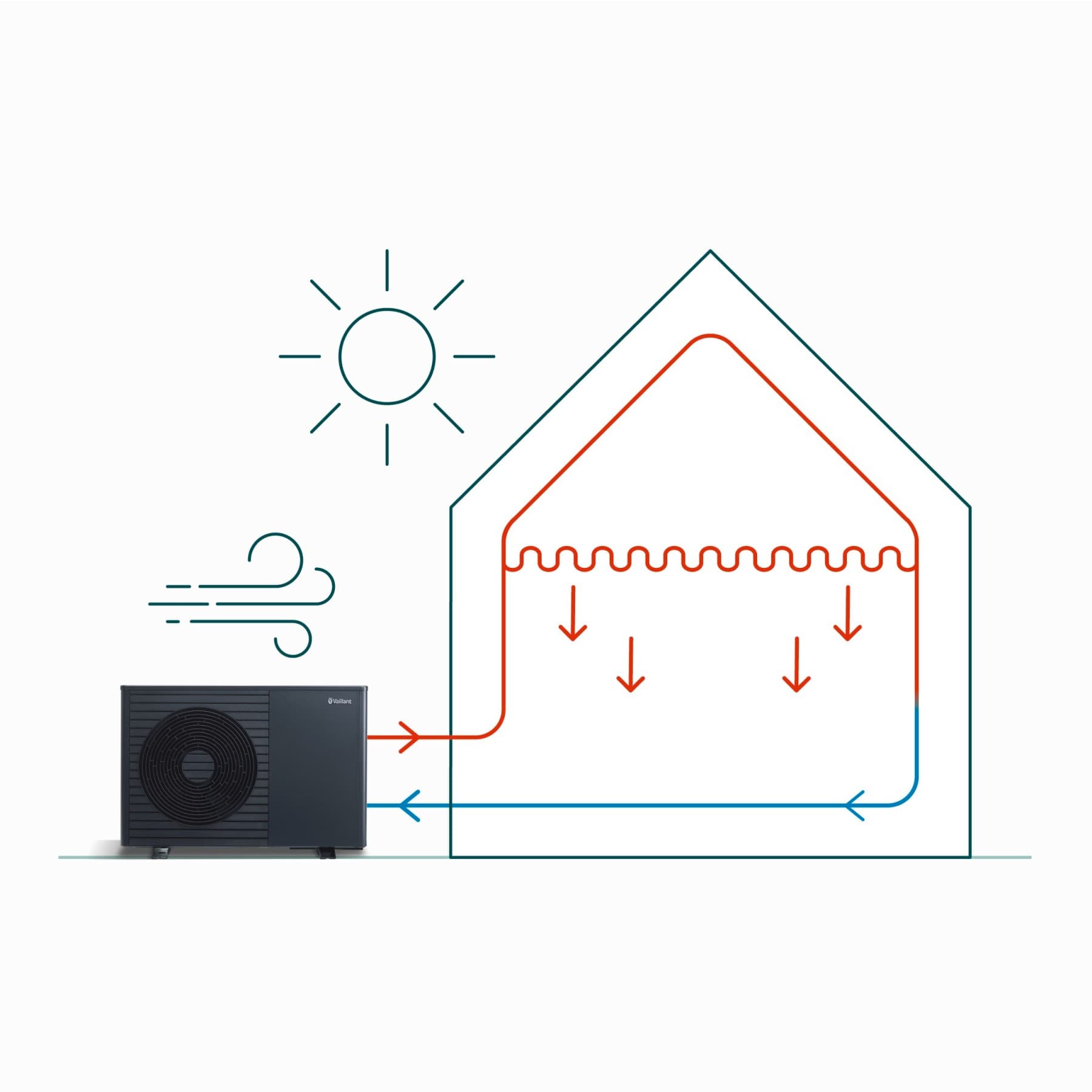
The illustration shows a water-based ceiling heater in combination with a heat pump.
Advantages of ceiling heating
What makes warmth from above so special.
- Save on heating costs.
Ceiling heating systems emit warmth over a large area, using a low flow temperature of about 26 to 38 °C. This makes heating especially efficient and therefore causes less running costs. (In contrast, traditional radiators usually require a flow temperature of 55 °C, making them less energy-efficient).
- Cool your home in summer.
The big plus in summer: Ceiling heating can complement heat pumps by acting as air conditioning, with cool water flowing through the pipes at temperatures between 16 and 20 °C reducing the room temperature by approx. 3 °C.
- Enjoy a healthy indoor climate.
Positioning the heating system on the ceiling and using a closed setup significantly reduces convection and dust circulation, benefiting allergy sufferers. Unlike typical heating systems, this approach also prevents the air from drying out.
- Keey your mid-century home charm.
Ceiling heating can be retrofitted in older buildings with ease, avoiding the need to remove valuable solid wood floors, unlike floor heating. Additionally, ceiling heating systems perform well even in rooms with high ceilings.
Types of ceiling heating
Water based vs. electric ceiling systems.
- Water-based Systems
- Electric systems
The most common type of ceiling heating is the water-based system. It operates similarly to traditional floor heating: water heated by a source like an air-to-water heat pump circulates through pipes, transferring energy to ceiling panels to radiate warmth. This heating system can be managed and controlled as an independent circuit.
Are ceiling heatings suitable for mid-century homes?
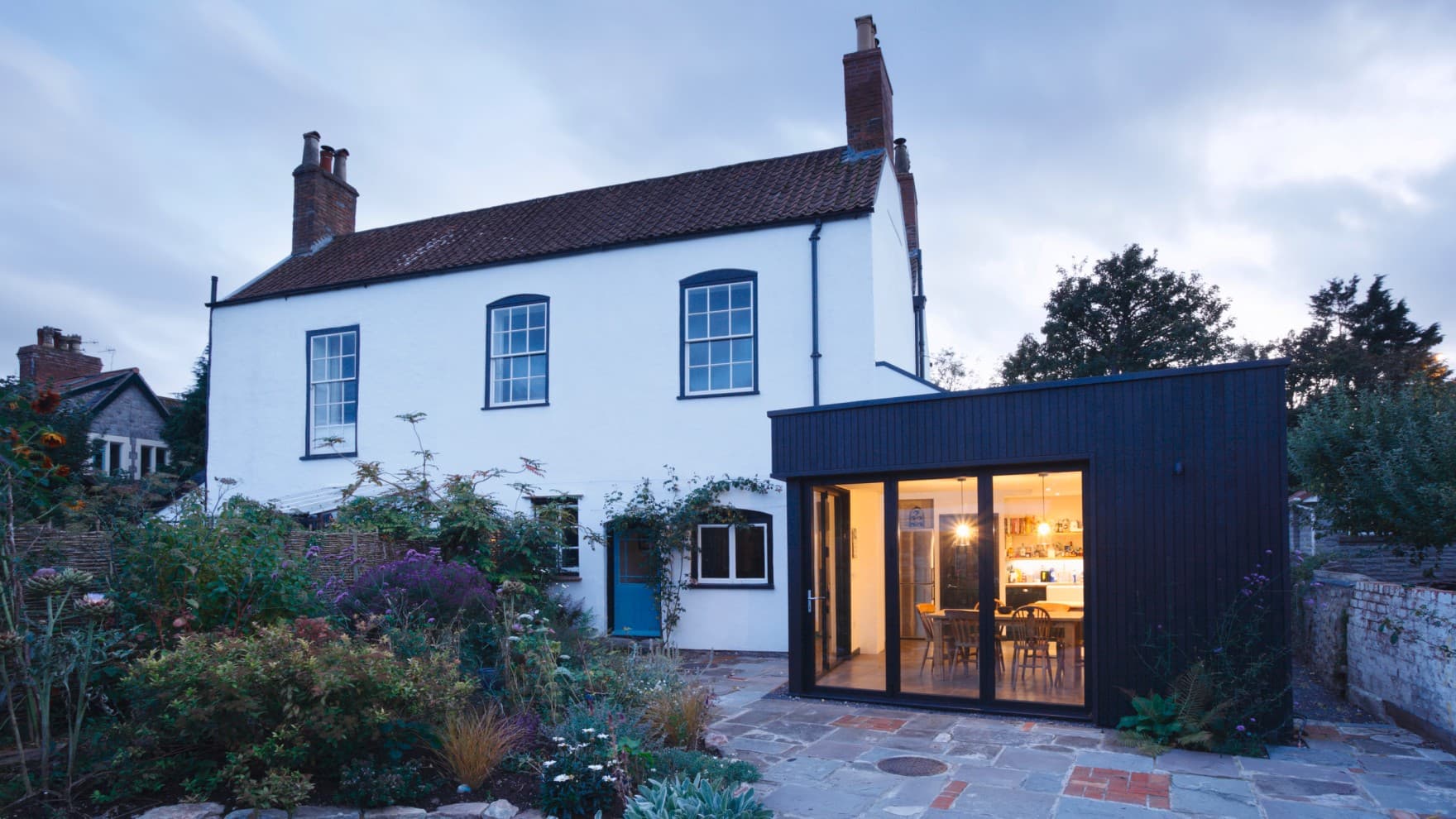
Ceiling heating particularly shines in mid-century homes, if you are not planning on getting new flooring, either because you have a tight budget or if the floor is a precious wooden floor for example. Plus ceiling heating is relatively easy to install either under plaster or on pipe coils' carrier plates.