Reinvent your home with innovative wall heating technology.

How wall heating works
The secret of wall heating.
Wall heating is a type of surface heating system that spreads warmth evenly across a large area, similar to floor and ceiling heating systems. Unlike traditional radiators that depend on convection heat, wall heating units radiate heat directly, enveloping objects and people in the room with a comforting warmth, much like the sun's gentle rays.
Consider this: a room warmed to 18°C with radiant heat feels just as cosy and inviting as one heated to 21°C with traditional convection. This method is closely related to the technology used in infrared heating panels, which also provide efficient radiant heat.
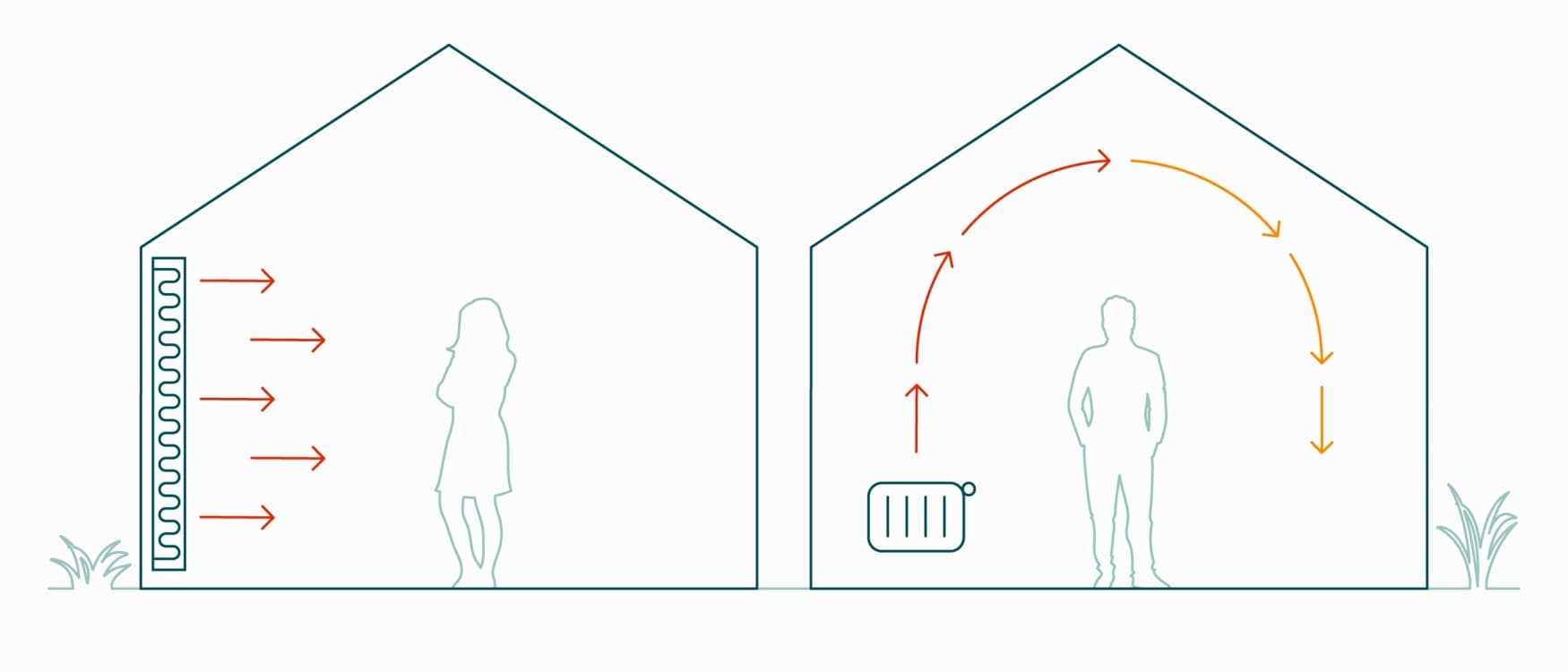
Check out the graphic below to see the different effects of radiant vs. convection heat. On the left hand side see the effect of wall heating on a human body, vs. the heat distribution of a conventional radiator on the right hand side.
Advantages and Disadvantages of wall heating
When wall heating wins.
- The feeling of being stroked by the sun.
Some people say they prefer the feeling of warmth radiating from the walls, often compared to the feeling of sunlight on the body, which has a relaxing effect. Wall heating can therefore create a more comfortable environment, especially in larger or open spaces.
- Lower temperatures, lower energy bills.
Unlike radiators that require high temperatures of 60 to 75°C, wall heating systems operate comfortably at around 45°C. Lower flow temperatures contribute to lower greenhouse gas emissions, making heating systems more environmentally friendly.
- Embrace dry comfort.
Wall heating helps maintain warm, dry surfaces, which can effectively control humidity levels and reduce the risk of mould growth. By promoting better air circulation and integrating seamlessly with ventilation systems, wall heating becomes a valuable choice in environments where moisture control is essential.
- The asthetic option for a sleek, modern home.
Wall heating, much like floor heating, seamlessly integrates into your home, leaving walls free for your personal touch because it's easily installed under plaster and therefore invisible.
Disadvantages of wall heating.
Beside the advantages of the wall heating, there are a few downsides to keep in mind. One of the key considerations with wall heating is the need for effective insulation, especially on exterior walls, to prevent heat loss. Additionally, the system can limit where you place furniture and decorations, as blocking the heated walls can reduce efficiency. Moreover, wall heating requires significant wall space, which can be challenging in rooms with many windows or doors.
Types of Wall Heating Systems
Different fits for different purposes.
- Water-based wall heating units
- Electric wall heating units
Water-based wall heating units work much like underfloor heating. Warm water flows through pipes in the walls, spreading heat evenly throughout the room. You can install these systems using either drywall or wet methods. With drywall, you attach pre-made panels with built-in pipes, while wet installations embed the pipes directly into plastered walls.
Drywall construction saves time, whereas wet wall heating is often more cost-effective in terms of materials. Both use flexible plastic pipes that are easily installed and connected to an existing heating circuit or manifold.