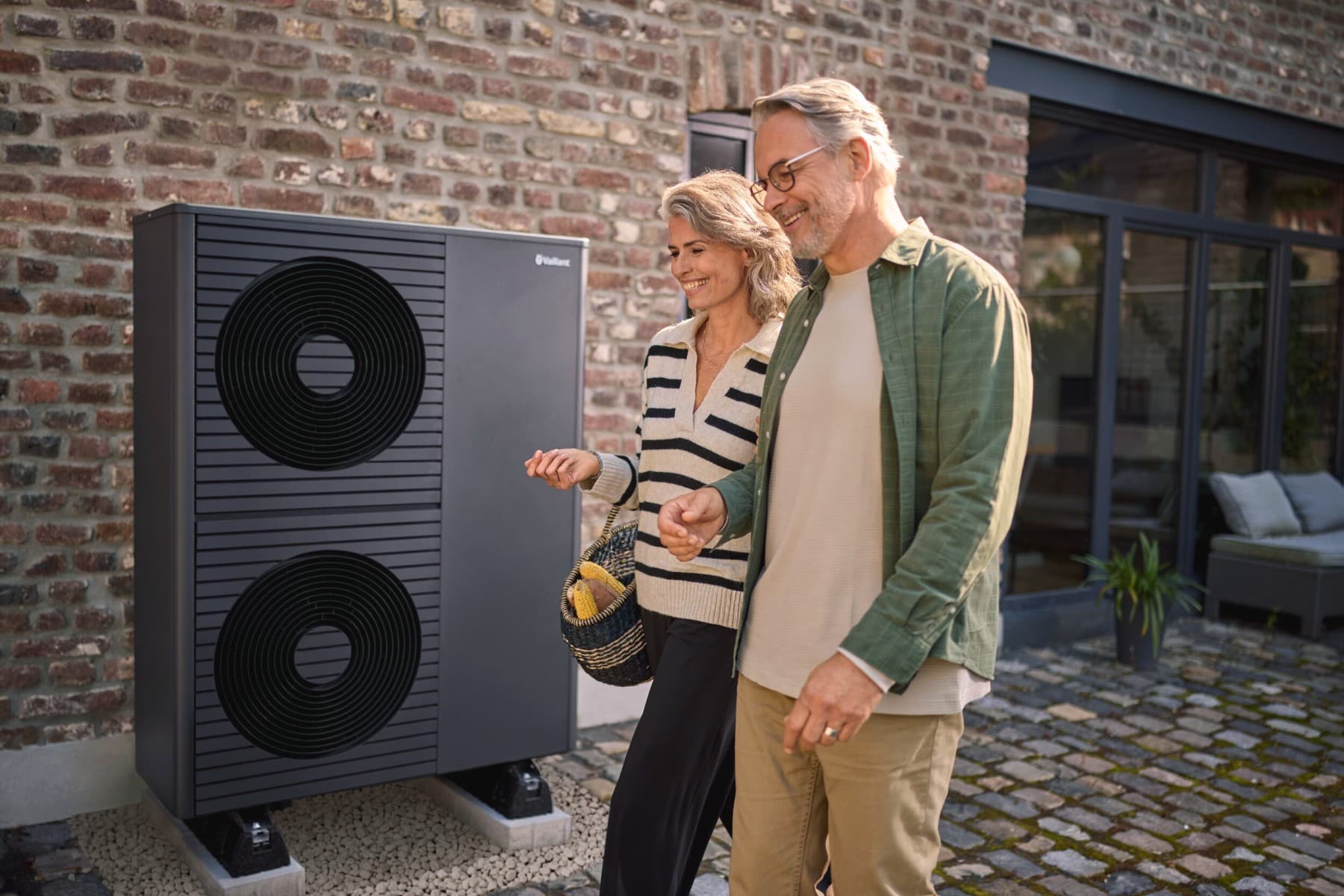
Efficient and reliable heating with buffer cylinders.

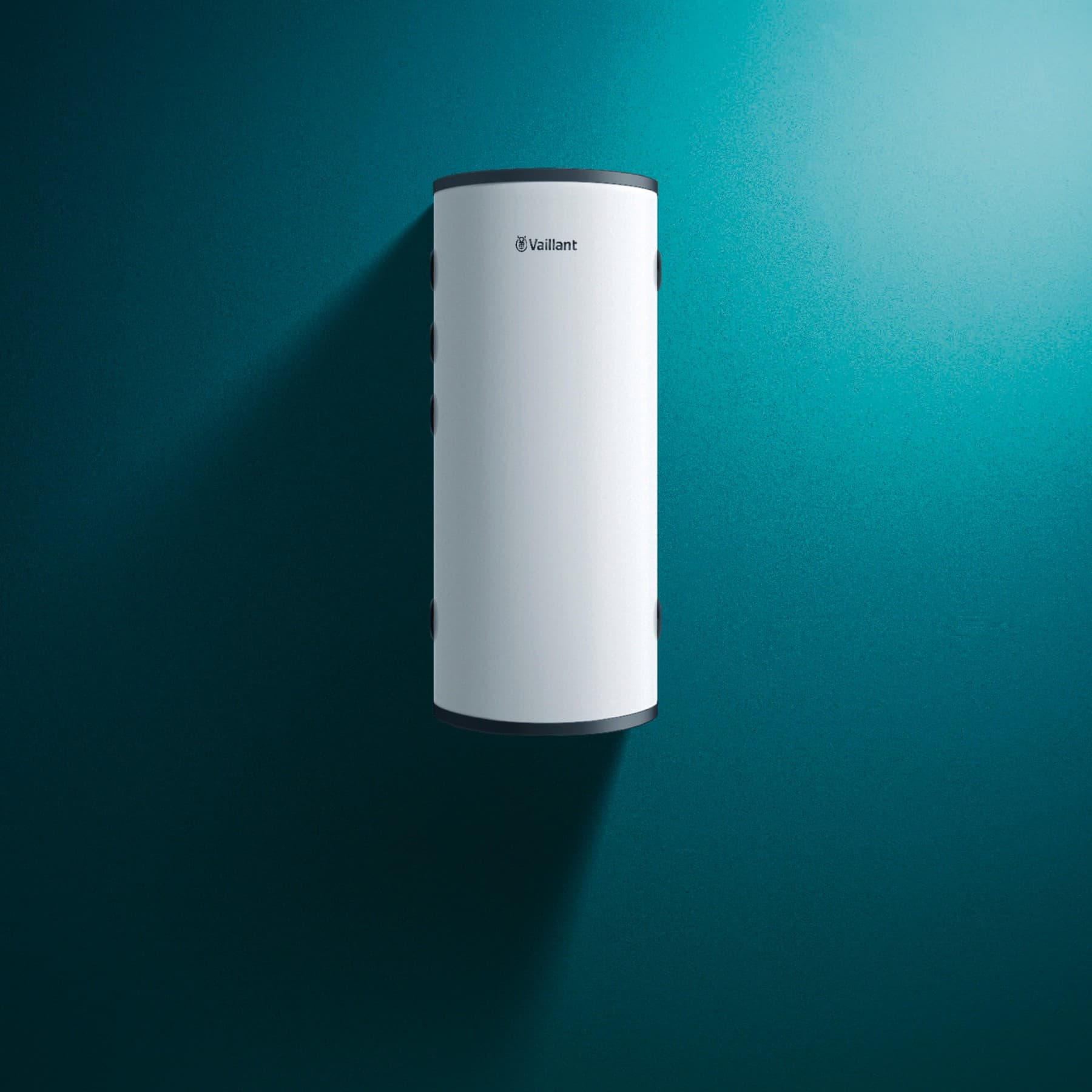
Greater efficiency and longer lifespan
Store heat efficiently: here’s how it works.
A buffer cylinder is a central component of modern heating systems. It stores excess heat and releases it when needed. This means the heat generator doesn’t have to constantly switch on and off. The result? Less wear on the system, a longer lifespan, and improved efficiency.
In the heating circuit, the buffer cylinder is positioned between the heat generator and the radiators. It’s flowed through by the heating water: hot water enters at the top, while cooler water returns at the bottom. This creates temperature layering, enabling efficient use of the stored heat. At the same time, the cylinder provides hydraulic decoupling. In other words, fluctuations in heat demand are balanced without requiring the heat generator to continually respond.
Great reasons
Four advantages of buffer cylinders.
- Flexible heat utilisation.
Heat is stored efficiently in a buffer cylinder, ready to provide flexible warmth whenever you need it most.
- Greater efficiency.
Buffer cylinders increase the efficiency of the heating system while simultaneously reducing wear and tear.
- Sustainable energy.
Renewable energy is captured and stored efficiently, ensuring it’s ready to provide consistent warmth at any time.
- Versatile heating solution.
Seamless integration into a wide range of heating systems ensures optimal efficiency and flexibility for your home.
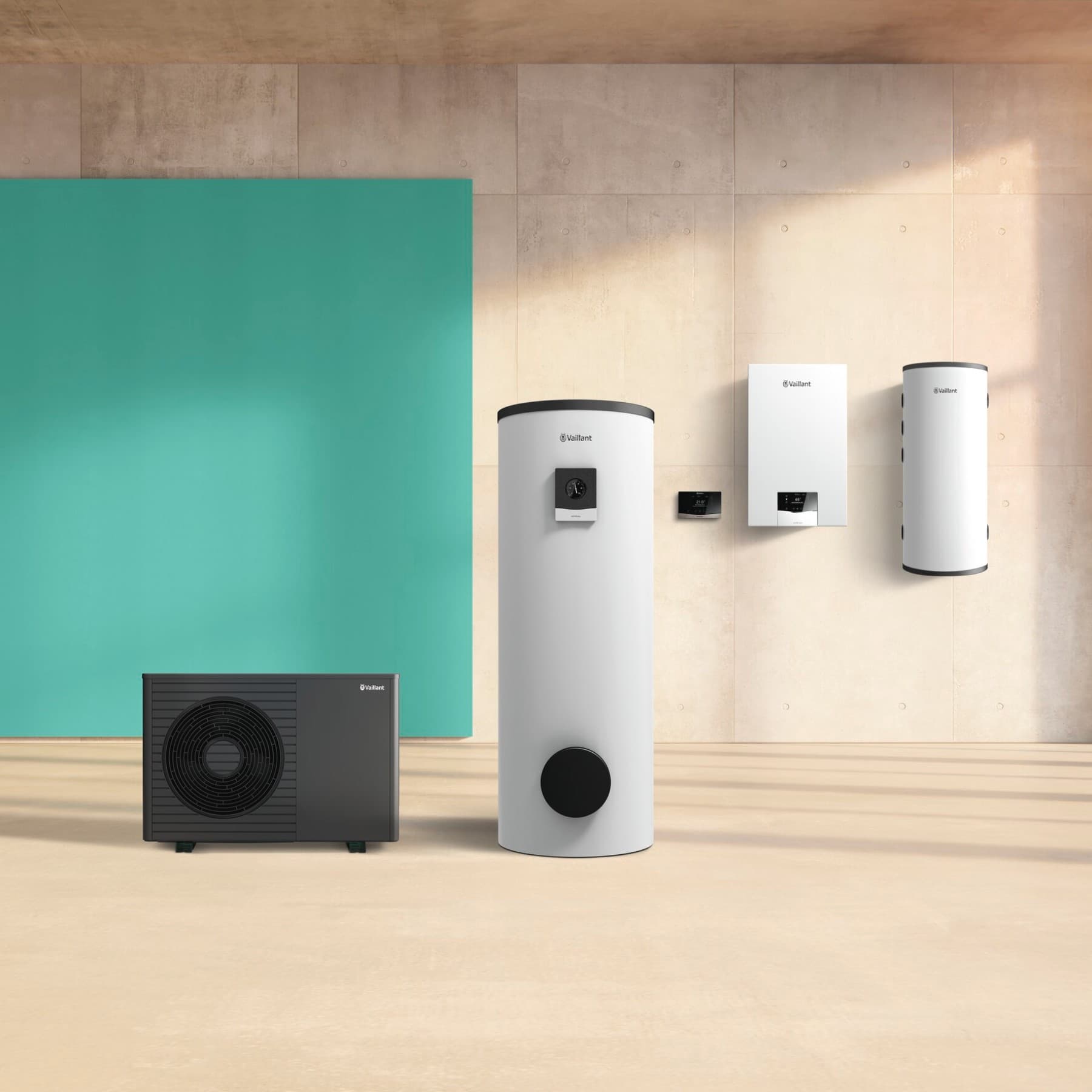
Great Teamwork
The perfect duo: heat pump and buffer cylinder.
A buffer cylinder truly shines when combined with a heat pump and a solar system. While the solar system generates the most electricity midday, heating demands usually peak in the evening. The buffer cylinder stores the excess heat generated when electricity is abundant and releases it later when you need it.
If a heat pump is paired with underfloor heating, the large volume of pipes in the floor can act as a natural buffer. With closely spaced, large-scale installation, underfloor heating can even largely replace the need for a buffer cylinder. However, for hot water preparation, a dedicated hot water tank remains essential.
Always a good choice
An overview of the types of buffer tanks.
- Shift-load cylinders
- Hygiene cylinder
- Combination cylinder
- Solar cylinder
Hot water is lighter than cold. This principle is put to good use in a stratified charging tank. Unlike conventional buffer cylinders, which mix cold return water with hot flow water and only reach peak temperatures when fully heated (which rarely happens), the stratified charging cylinder maintains a natural layering system. Hot water always stays at the top, ensuring its availability even when the water at the bottom remains significantly cooler. By drawing water from the upper end of the tank, you’ll have hot water readily available. Additionally, it can be combined with a domestic water station for added convenience.