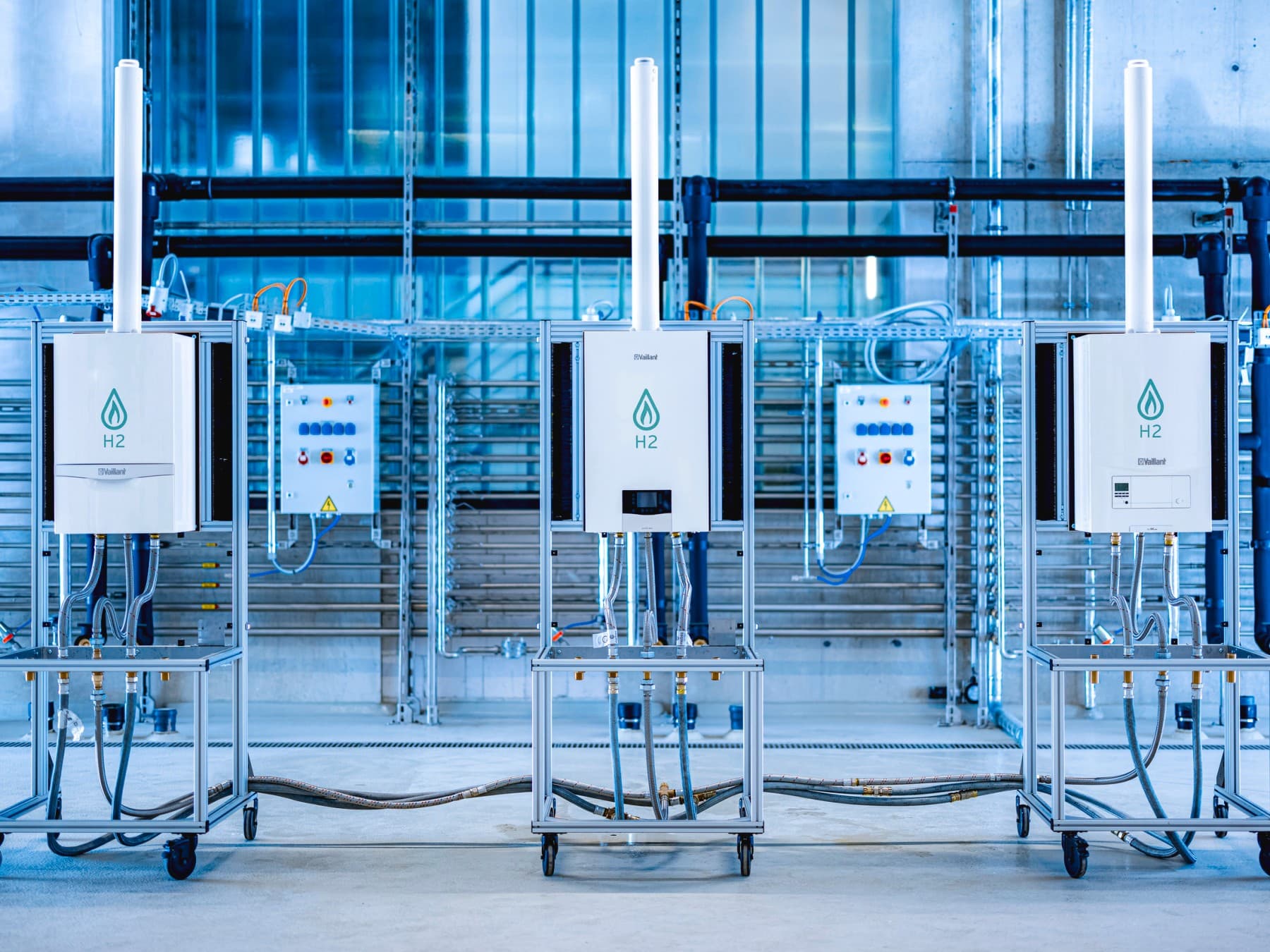
Fuel cell

The fuel cell is a power generating heating system. Electrical energy for domestic use and thermal energy for hot water and heating is produced from a fuel such as low-emission natural gas. A reformer converts the fuel into hydrogen. There are two electrodes in the fuel cell, and just like in a battery, one is positively charged (anode) and the other negatively (cathode). Separated by an ion-permeable membrane, oxygen is supplied to the electrodes and triggers the hydrogen to oxidise at the cathode, thereby generating a voltage between the electrodes. Thus the fuel cell generates not only electricity but also reaction heat, which can be used for heating. This principle applied to the fuel cell is also called "cold combustion", as no conventional combustion takes place.
Fuel cells generate an environmentally friendly and, with the exception of the CO₂ emission from heating the reformer, virtually pollutant-free energy with high efficiency and high effectiveness. Due to the lack of moving parts, fuel cells require very little maintenance, are quiet and durable, making them one of the combined heat and power generation systems of the future.
< Glossary