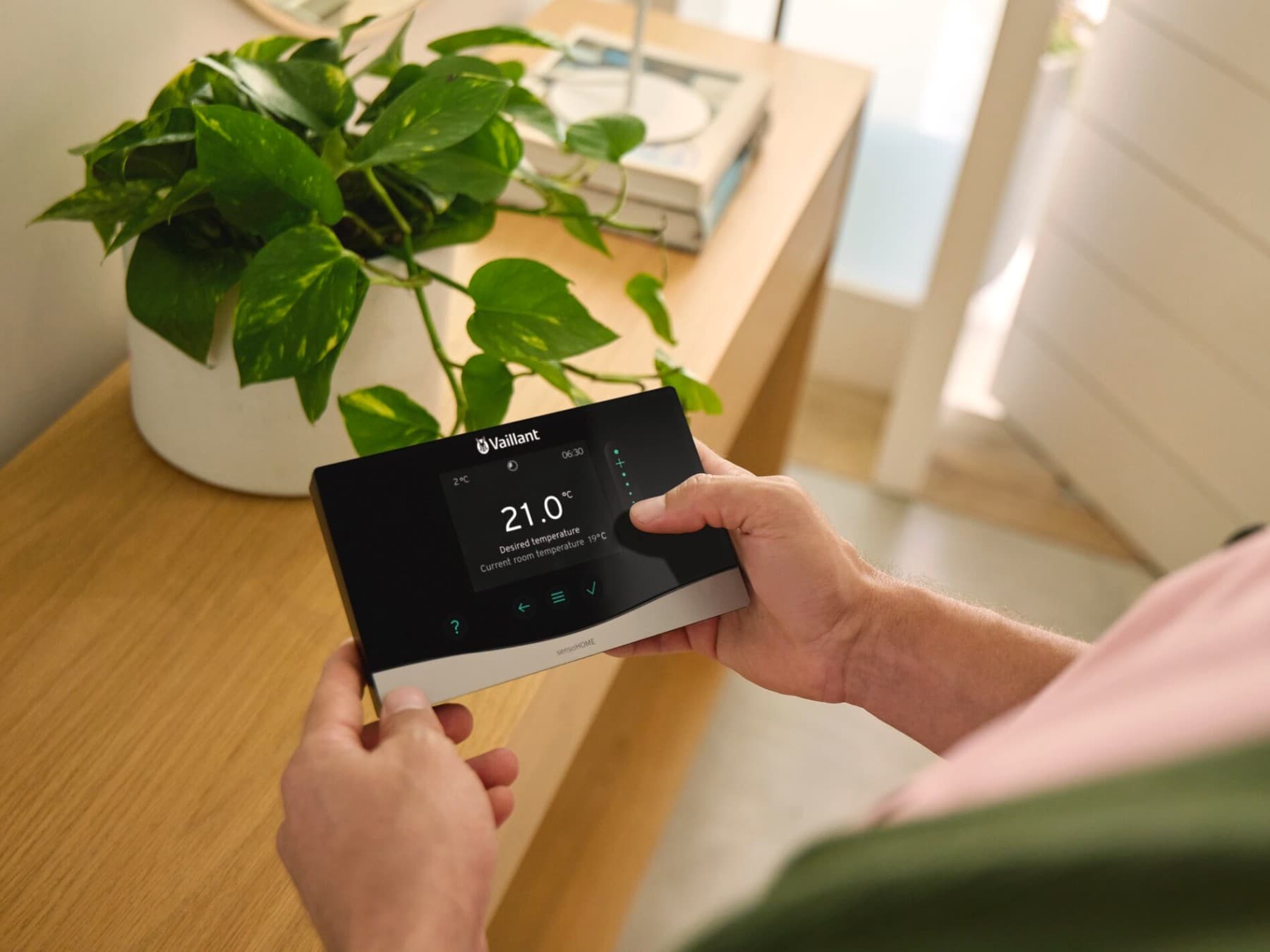
Temperature regulator

In closed systems, temperature regulators are used to control the temperature of radiators, cooling units and other devices that operate with either heating or cooling. Temperature regulators, also called thermostats, are available as mechanical ones with a scale from the snowflake symbol to 5 and electronic versions allowing precise determination to the degree.
A temperature sensor is the part of the temperature regulator that measures the actual temperature. Mechanical temperature sensors consist of materials that contract or expand when the temperature changes. Electrical temperature sensors work with sensors that transmit the data to a microcomputer and regulate the valve with a motor. The temperature regulator compares the actual value determined by the temperature sensor with the desired value (control value). If there is a difference (control value), the temperature is corrected accordingly by the actuator of the temperature regulator.
In heating systems, temperature regulators can be installed in several places to monitor the temperature and not just at the radiators. The temperature of a heat generator, such as a boiler, is controlled by a temperature regulator in the form of a safety temperature limiter to ensure that the maximum temperature is not exceeded.
< Glossary