Understand non-condensing vs. condensing boilers for efficient heating.

Difference between non-condensing and condensing technology
From flue to fuel: the boiler evolution.
In the world of heating, the terms "condensing" and "non-condensing" often cause confusion. They might seem similar, but the difference between non-condensing and condensing boilers is crucial. Non-condensing boiler technology is the older of the two and is less commonly used today. These boilers focus on the net calorific value, which is the maximum heat generated from burning a fuel. However, they don't account for the heat present in the water vapour of the flue gases. This means that non-condensing boilers only utilise the heat directly from the fuel and the heat in the water vapour is lost.
On the other hand, condensing boilers consider the total energy released during combustion, including the heat from cooling the water vapour in the flue gas. This results in a higher gross calorific value compared to non-condensing boilers. A condensing boiler using natural gas can harness around 11 % more thermal energy than a non-condensing boiler, and up to 8 % more when using heating oil. Thus, condensing boilers operate much more efficiently.
Advantages of condensing over non-condensing
Turning steam into value.
- Higher efficiency and lower heating costs.
Unlike non-condensing boilers, condensing boilers capture heat from cooled flue gases, maximising energy from fuel and reducing heating costs through increased efficiency.
- Compatible with renewable energy.
As condensing boilers use latest technology, they easily integrate with solar thermal or heat pumps, creating sustainable hybrid solutions for future-proof efficiency.
- Versatile solutions for every home.
Gas condensing boilers come in various sizes for heating and hot water, with options for floor-standing and wall-hanging installations to suit different needs.
- Future-ready with reduced emissions.
With efficient combustion that lowers emissions, condensing boilers are equipped to work with biofuels and are ready for hydrogen, ensuring you stay ahead in green energy solutions.
How a condensing boiler works
The power of condensing technology.
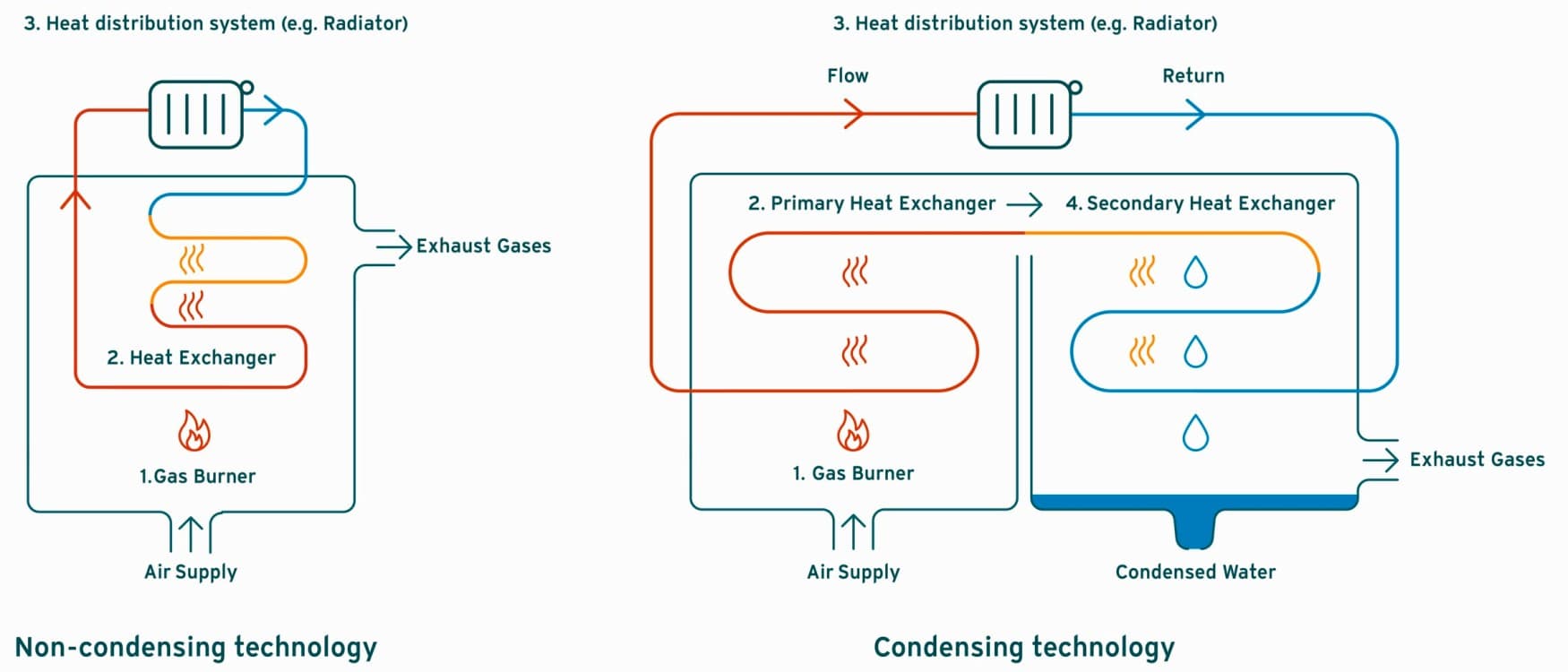
Unlike conventional non-condensing systems, condensing technology harnesses the full energy potential of a fuel, including the heat in the water vapour from flue gases, which is shown on the right-hand side of the infographic below. When gas is burned, carbon dioxide, water vapour, and other by-products are produced. In non-condensing systems, these flue gases escape without being utilised.
Condensing boilers capture the hot water vapour to boost heat output. Beyond the initial heat exchanger positioned directly above the burner flame, a second heat exchanger cools the flue gases. This process causes the water vapour to condense, releasing additional heat into the heating system.
The return flow, which carries cooled heating water back to the boiler, aids this process, especially in low-temperature systems like underfloor heating. This makes condensing boilers particularly efficient.
How the gross calorific value is calculated
Efficient heating starts with understanding energy values.
Understanding condensing boiler technology is simpler when you know about gross calorific value. This measures the energy stored in a substance, ready to be released during combustion. When natural gas is burned and its flue gas is cooled to 25°C, the net calorific value shows the total energy unleashed. Usually, this net value is a baseline at 100%, but condensing boilers can exceed this by using the gross calorific value.
For example, a boiler using natural gas has a net calorific value of about 10.4 kWh per cubic metre. To find the gross calorific value, include the energy from water vapour in the flue gas. This extra energy is added to our baseline. When natural gas combusts, it creates around 1.6 litres of water, each containing 0.63 kWh of heat energy.
So, the calculation unfolds as follows:
1.6 litres of water x 0.63 kWh of heat energy per litre = approx. 1 kWh/m³
This boosts the gross calorific value by 1 kWh/m³ over the net calorific value, resulting in:
Gross calorific value = 10.4 kWh/m³ + 1 kWh/m³ = 11.4 kWh/m³, an increase of about 9%. Thus, the efficiency reaches 109%.
Thanks to modern condensing technology, boilers can harness between 105% and 111% of the energy based on the net calorific value. Achieving optimal efficiency, however, requires a precise hydraulic balancing, ensuring each room receives the exact heat needed for maximum comfort.
Vaillant tip:
When you look at datasheets for condensing boilers, you might see efficiency ratings over 100%. This means that the heating system extracts more energy from the fuel than it actually contains. This can seem puzzling, but it's easily explained. These ratings are based on the net calorific value, which often exceeds 95%. These high numbers come from the difference of the net calorific value to the gross calorific value. The gross calorific value should ideally be considered as 100%, as it represents the peak heat output a condensing boiler can achieve.
Ready to switch?
Get to know the requirements for condensing boilers.
- Low return temperatureMaintaining a low return temperature in the heating system is essential in order to avoid wasting heat from the flue gases and thus saving energy. Radiators with low return temperatures are optimal for condensing boiler installations.
- Hydraulic balancingHydraulic balancing is another crucial step, ensuring each radiator receives the correct amount of heat and optimising the high efficiency pump's performance.
- Connection to waste-waterCondensing boilers also require a waste-water connection or a lifting system due to water generation from exhaust heat. Larger boilers might need a neutralisation system for the slightly acidic condensate.
- Retrofitting the chimneySwitching to condensing boilers often requires chimney modifications due to cooler, humid flue gases that risk condensation damage. Consider high-density ceramic pipes or more cost-effective stainless steel or plastic options for retrofitting.
Reliable heating solutions for modern homes
The right boiler for every situation.
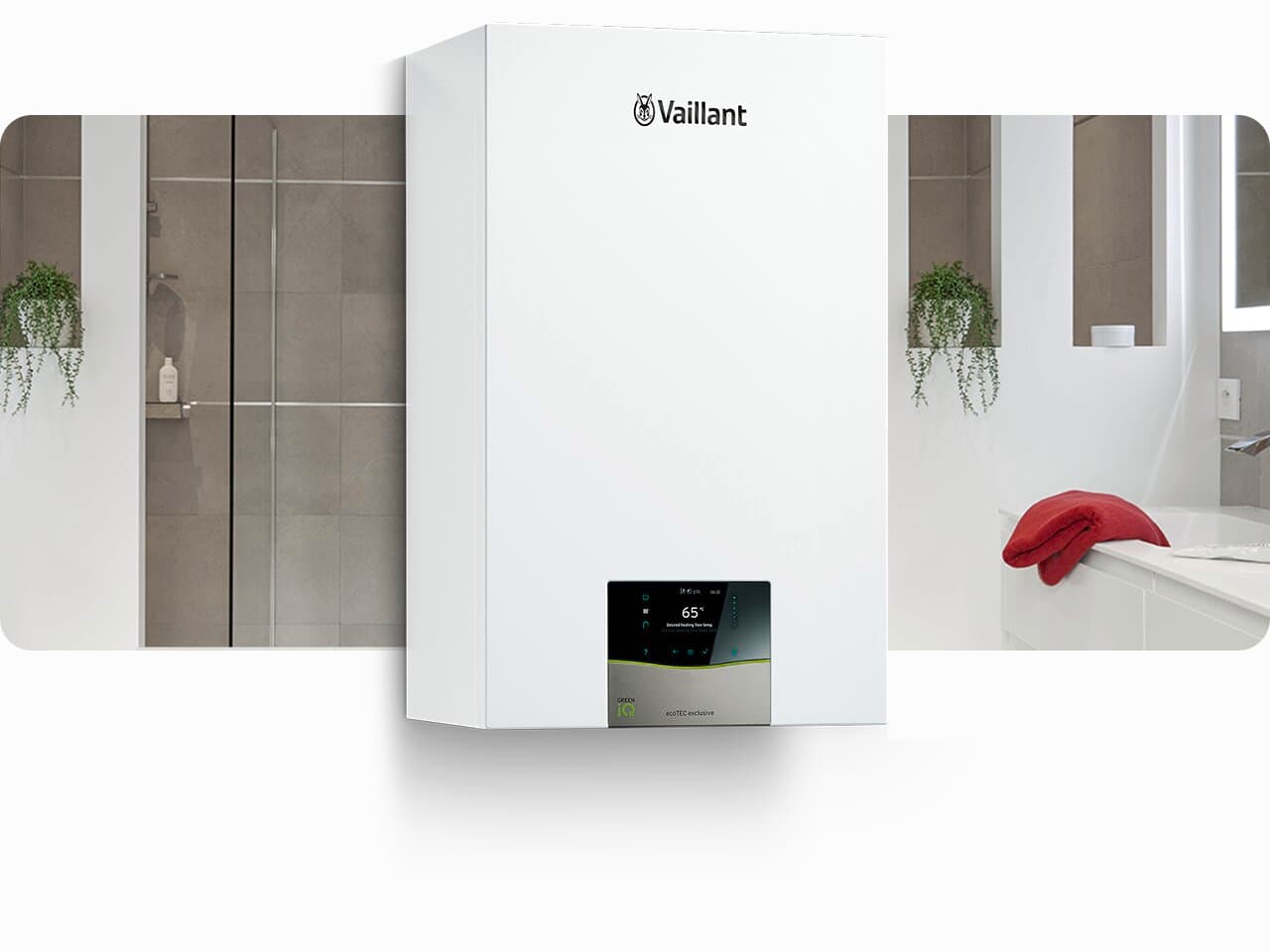
- 1/3Wall-Hung Boiler Gas, Condensing, CombiecoTEC exclusiveSustainable comfort: Premium gas condensing replacement in existing single-family homes.Get more details
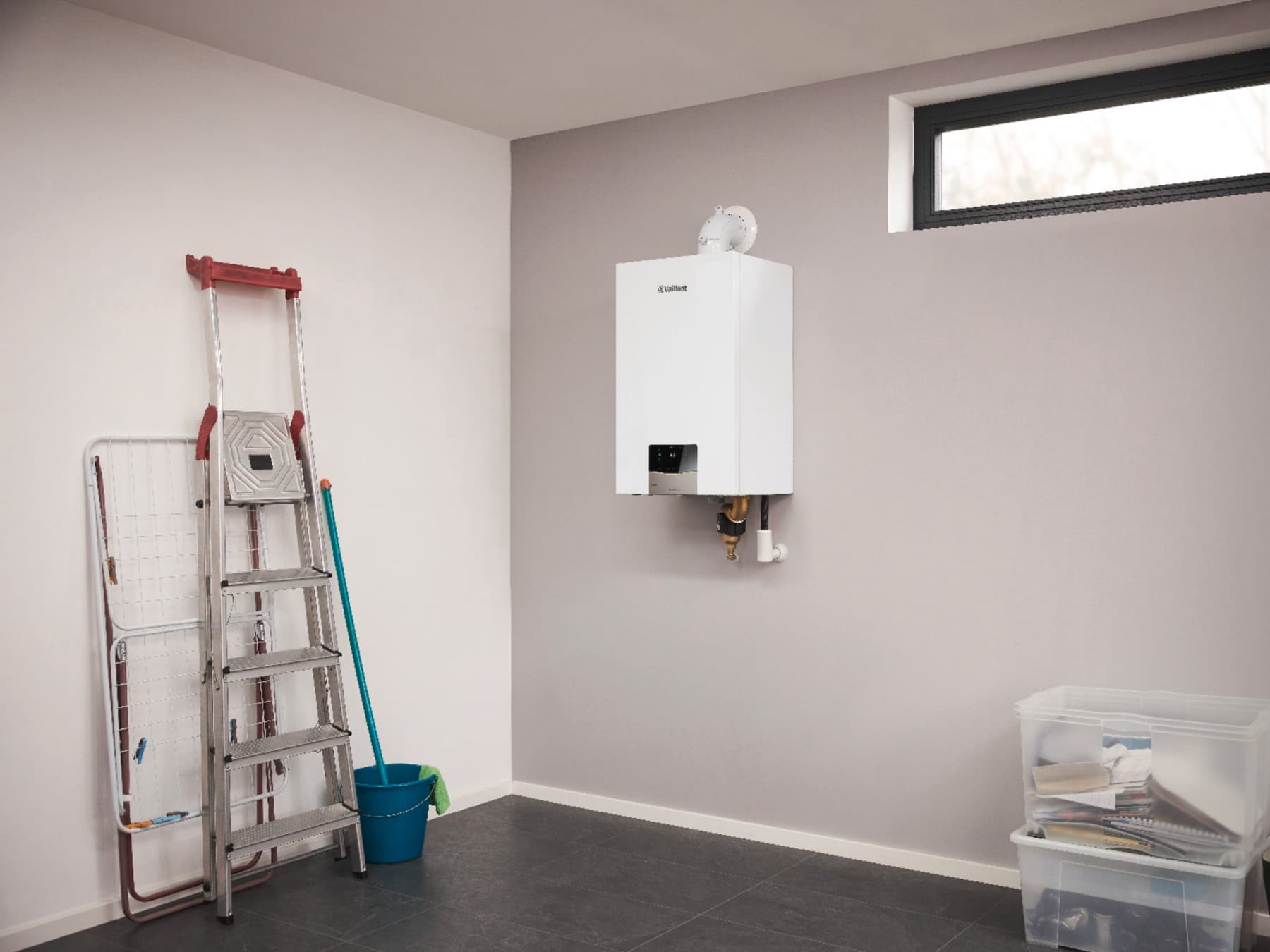
Sustainable comfort: Premium gas condensing replacement in existing single-family homes.
- Automatic adaption to fluctuating gas types and qualities
- Future-proof sustainability ready for up to 20% of hydrogen
- Handy monitoring via integrated touch display and app
- Smart navigation through consistent interface design with touch elements
- Combinable with many extensions to optimise comfort and efficiency
Efficient operation with optimised comfort thanks to smart technology: This makes our ecoTEC exclusive the ideal boiler replacement in existing, digitally aligned single-family homes connected to the gas grid: They offer the highest product quality, can be conveniently controlled via sensoApp, are made of a material that is 80% recyclable and can use up to 20% hydrogen with outputs of 15-30 kW.
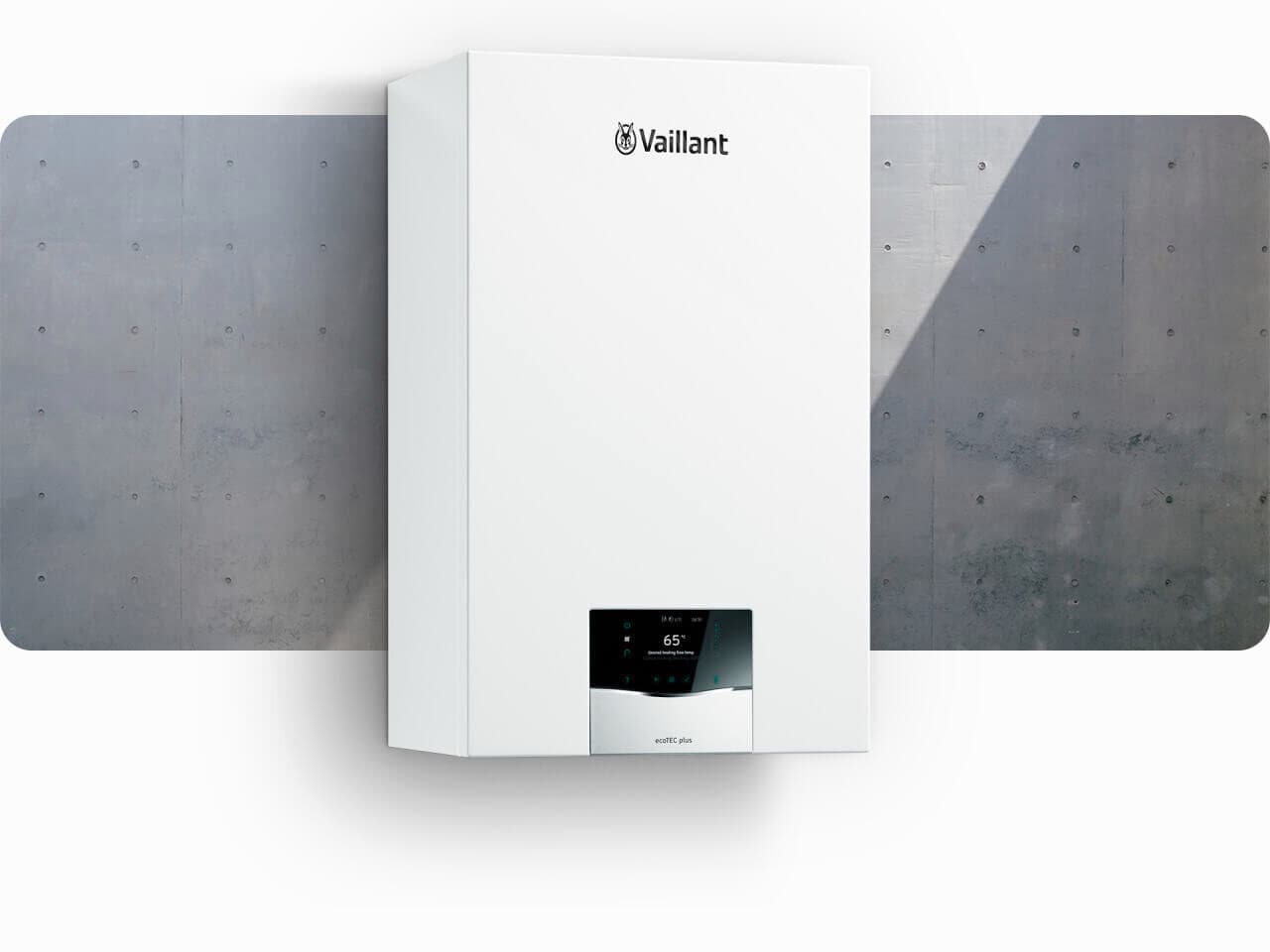
- 2/3Wall-hung boiler gas, condensing, combiecoTEC plusIdeally suitable for replacements in existing buildings.Get more details
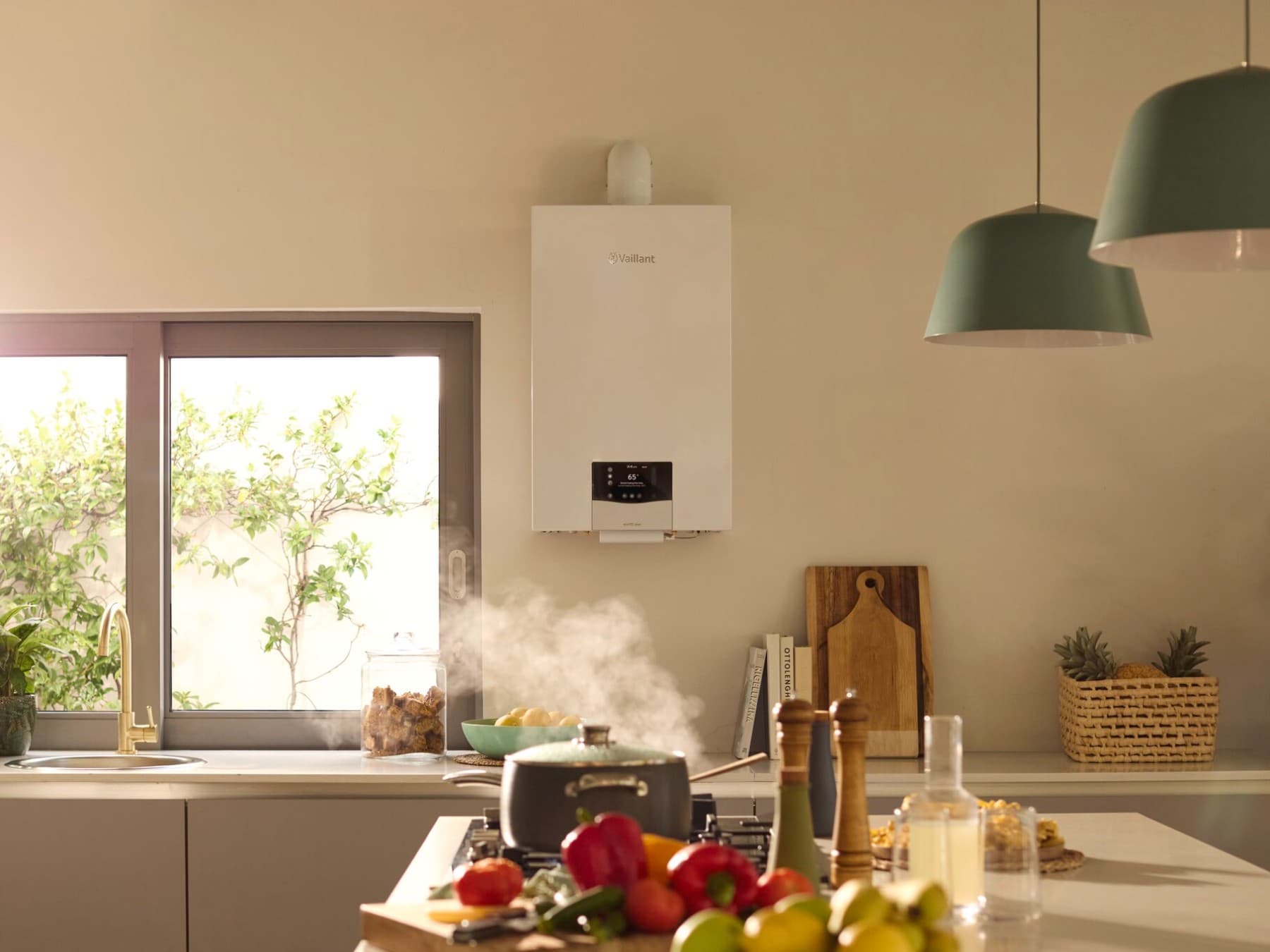
Ideally suitable for replacements in existing buildings.
- Automatic adaption to fluctuating gas types and qualities
- Future-proof sustainability ready for up to 20% of hydrogen
- Extendable with renewables like solar, thermal, or photovoltaics for even more efficient heating
- Easily connected to myVAILLANT connect internet gateway via plug and play for smart heating
- Handy monitoring with our new design and operating concept
Especially in existing buildings with gas grid connections, our ecoTEC plus boilers are a swift and the most popular solution to replace old gas boilers ecologically and efficiently: Made of a material that's 80% recyclable, they're easily installed using the given connections, provide reliable quality and can even utilise up to 20% of hydrogen for outputs of 10-30 kW – making it a future-proof choice that can reduce consumption and operating costs.
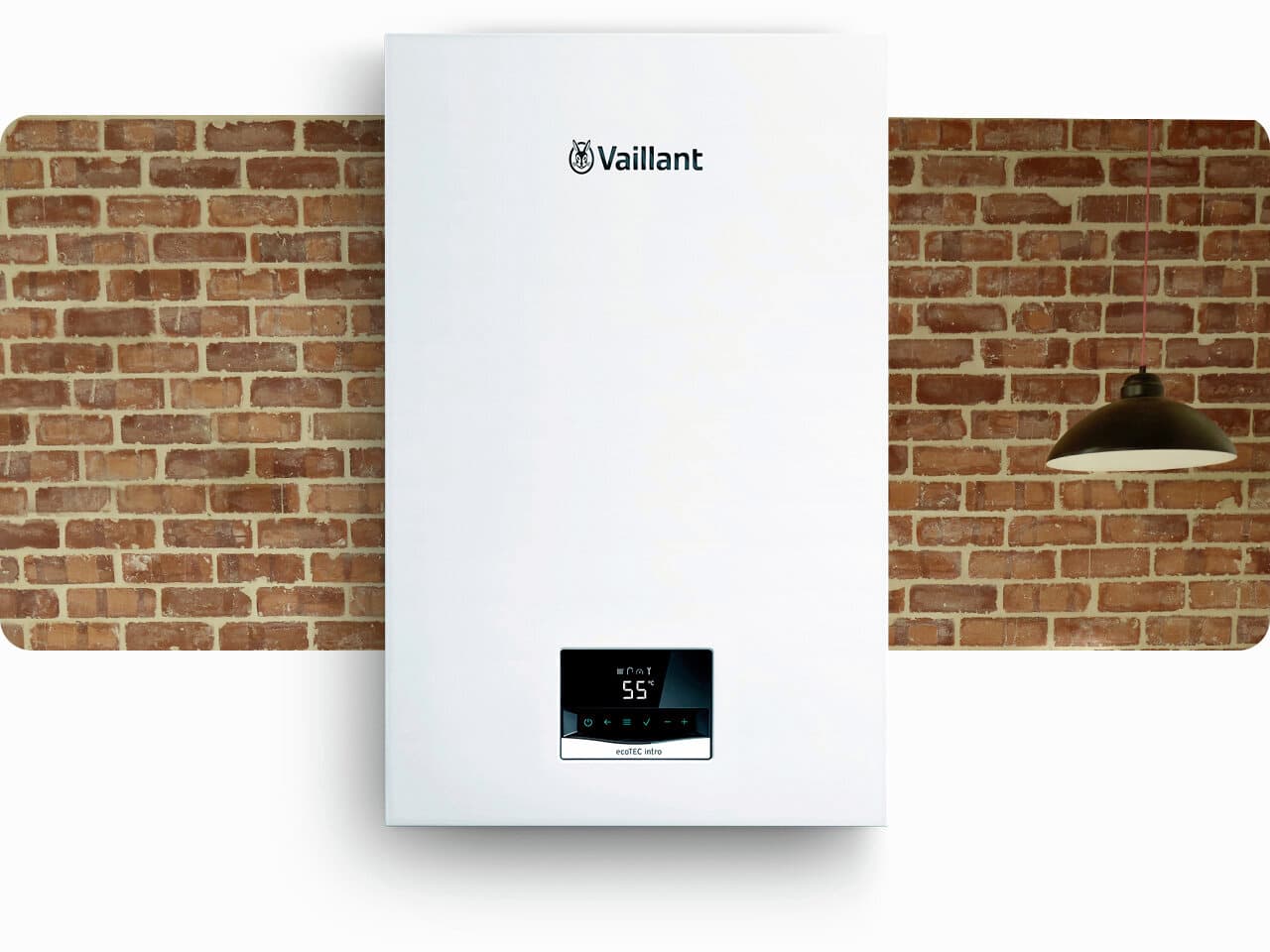
- 3/3Wall-Hung Boiler Gas, Condensing, CombiecoTEC introWall mounted gas condensing combi boiler for heating and hot water.Get more details
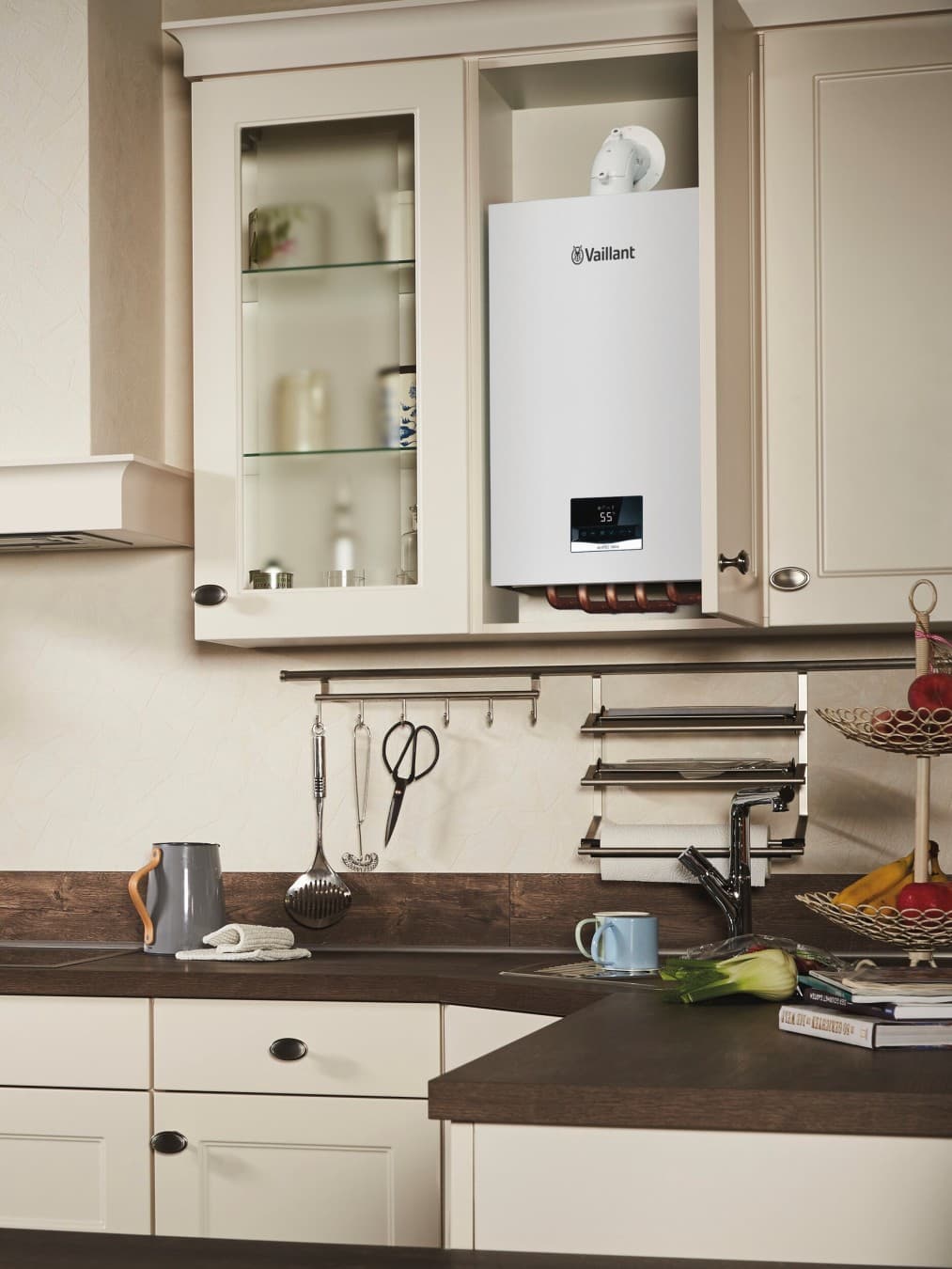
Wall mounted gas condensing combi boiler for heating and hot water.
- Meets essentials needs of heating and hot water comfort
- Ideal replacement solution for old boilers
- Compact dimensions and minimalistic design
- High energy efficiency offered by the condensing technology
- High quality at a reasonable price
The ecoTEC intro is a gas condensing boiler that combines heating and hot water in one device. It is one of the smallest and lightest wall-mounted gas condensing boilers in the market and the perfect solution for an apartment size of approx. 80 m2. The LED boiler display and the touch buttons allows you to easily adjust your heating profiles or set the temperature to your liking. It offers high quality at an attractive price. Operating costs are low, as it uses up to 30% less energy than older heating systems.