Heating curve: the key to balancing comfort and efficiency in your home.

Heating curve explained
Unlock the full potential of your heating system.
The heating curve or heating characteristic plays a significant role in managing the efficiency of your heating system. It visually represents how the flow temperature changes in response to fluctuations in outside temperatures. This curve is particularly relevant for heating systems with weather-compensated control, where the outside temperature dictates the necessary adjustments to the flow temperature. As the outdoor temperature drops, your system must respond by increasing the flow temperature to ensure comfort indoors. By adjusting this curve, you ensure your system delivers consistent warmth while minimising energy consumption. A well-optimised heating curve balances comfort and efficiency, positively impacting your environmental footprint.
Advantages of an optimised heating curve
Save money and stay comfortable.
- Maximise your savings.
A properly set heating curve generates only the heat necessary for your home, significantly reducing energy consumption. This means you have more money in your pocket.
- Stay cosy year-round.
By maintaining a consistent indoor temperature, you can avoid the discomfort of cold spots and enjoy a warm, inviting atmosphere throughout your home.
- Protect your investment.
An optimised heating curve reduces on-off cycles, minimising wear and tear on your system. This helps prolong the lifespan of your equipment, ensuring it performs well for years.
- Make your heating better.
By using less energy, an optimised heating curve contributes to lower carbon emissions, making your home more environmentally friendly.

Importance of the heating curve
Transform your home into a warm retreat.
Imagine coming home to a space that feels inviting and cosy, regardless of how chilly it is outside. A well-adjusted heating curve is not just a technical detail; it’s the cornerstone of a comfortable indoor climate. By allowing your heating system to respond dynamically to fluctuating outdoor temperatures, you can keep your home consistently warm without wasting precious energy. This adjustment enhances your comfort and leads to savings on energy bills. By understanding your heating curve, you make a smart choice for your wallet and the planet.
Key parameters of the heating curve
Master your heating system's mechanics.
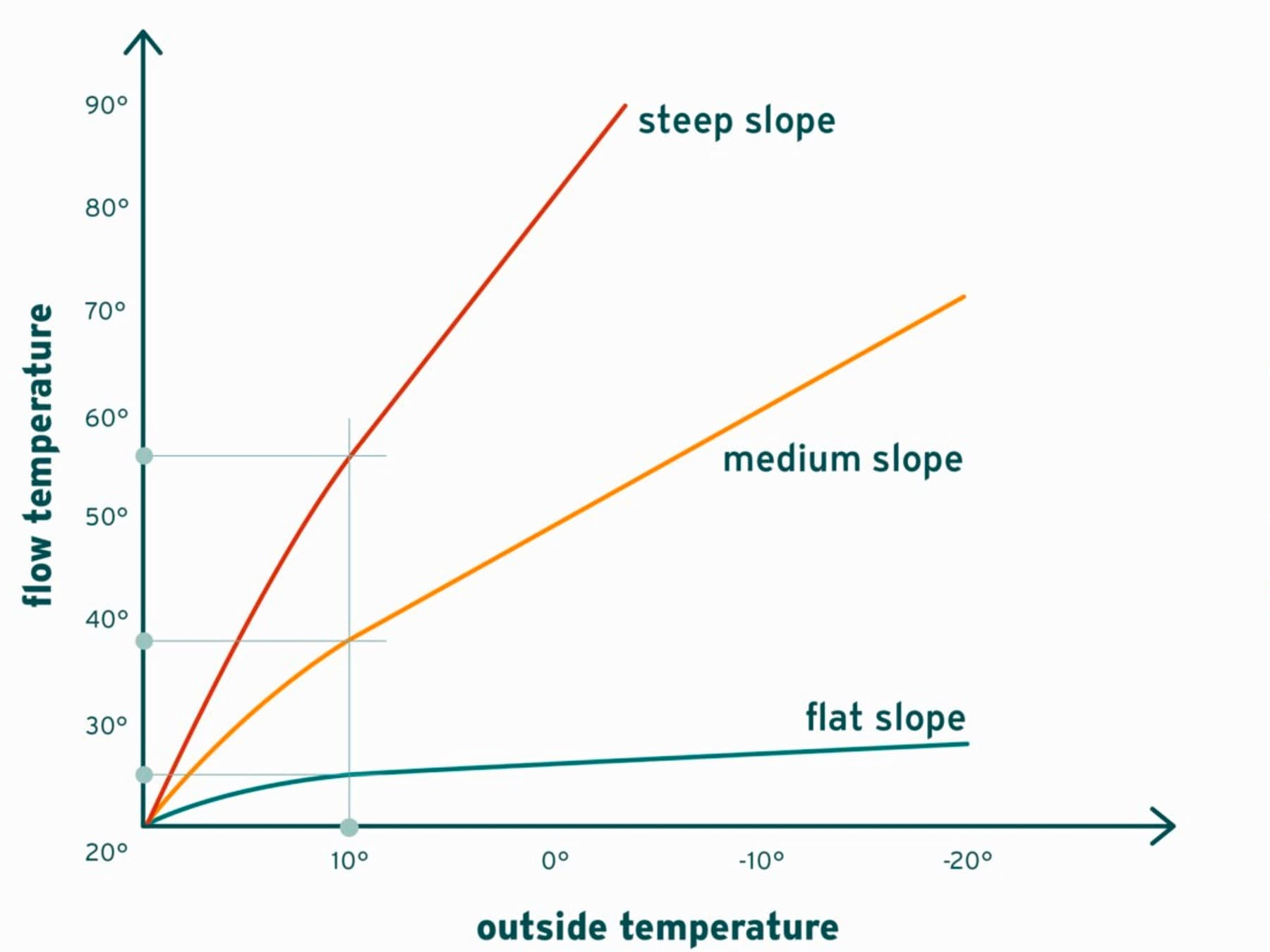
A heating curve, as shown in the following graphs, consists of two key parameters: slope and level.
The slope determines how quickly the flow temperature increases as the outside temperature drops. A steeper slope raises the flow temperature quickly, which can be beneficial during extreme cold spells. Conversely, a flatter slope allows for greater control during milder weather.
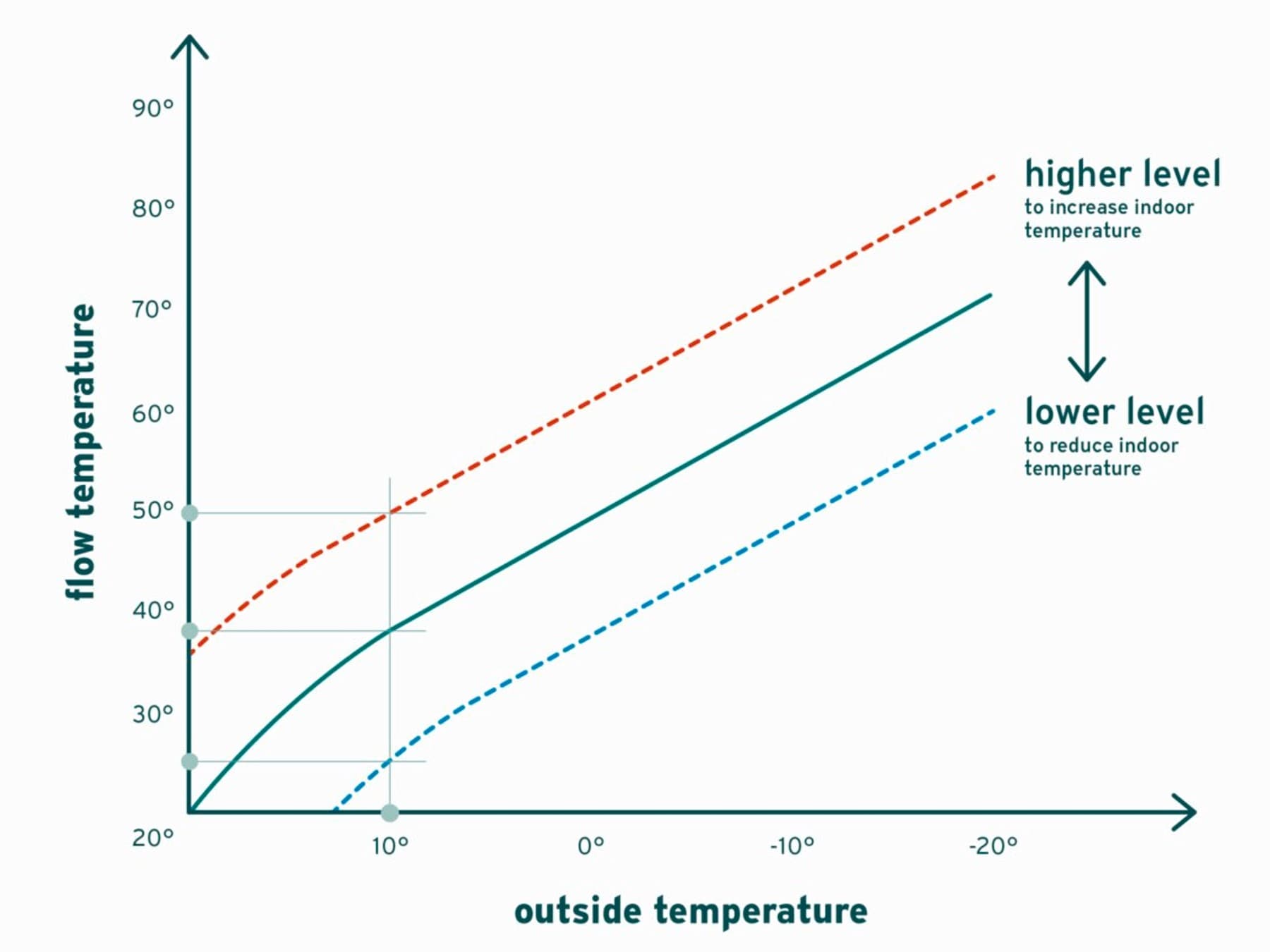
The level, on the other hand, sets the overall temperature of the heating curve. By adjusting the level, you can raise or lower the flow temperature uniformly across all outdoor conditions. If your rooms feel cooler than desired, simply raise the level of the heating curve. Conversely, if it’s too warm, lowering the level is the right approach.
This fine-tuning capability means that you can adapt your heating response to meet the specific needs of your home and lifestyle, ensuring optimal comfort year-round.
How to adjust the heating curve: a simple guide
Take charge of your home’s comfort.
Adjusting your heating curve may seem daunting at first, but with a few straightforward steps, you can master it. Here's how:
Four steps to higher efficiency.
- 1/4
Create a temperature log when the outside temperature consistently drops below 5 °C. Record the indoor temperature of the coldest room and the outdoor temperatures over several days with your current boiler settings and flow temperature. This practice will offer valuable insights into how your heating system responds to temperature changes, enabling you to make informed adjustments.
- 2/4
Start by adjusting the slope at 0.3 for underfloor heating and 1.0 - 1.3 for radiators in the boiler settings. If you notice that the room is consistently too cold, gradually increase the slope. If, on the other hand, the room feels too warm, you should decrease the slope.
Once you’ve addressed the slope, turn your attention to the level: raise the level if your home generally feels cold or lower it if it’s too warm. Additionally, you can easily set a minimum and maximum flow temperature for your system, ensuring the indoor temperature never goes beyond or below these limits. These adjustments can make a significant difference in your overall comfort.
- 3/4
After making your adjustments, it’s crucial to monitor the temperatures in your home. Keep an eye on how your heating system performs over the following days. Make further adjustments as needed. This will help you gauge the effectiveness of your adjustments.
- 4/4
As a homeowner with a Vaillant heating system, you can use the myVaillant app to optimise the flow temperature yourself. This gives you the chance to monitor the changes and make further amendments in the process.
Safety and optimisation
Home safe home: make safety and comfort your top priority.
When adjusting your heating curve, safety should always be a priority. Ensure that the flow temperature stays within safe limits to prevent scalding. Typically, an efficient and safe range for flow temperatures is between 35-40 °C for heat pumps and 55-75 °C for gas boilers.
Understanding and optimising your heating curve is crucial for creating a comfortable living space while saving on energy costs. If you are not sure how to make the correct settings or if you need help, we recommend contacting a local partner.