
Disadvantages of a heat pump: myths vs. reality.

Are heat pumps expensive to run?
Heat pumps use electricity, and with current electricity costs higher per kWh than gas or oil, this might seem like a disadvantage. However, here's where the true advantage of heat pumps shines through: for every one part of energy you invest, you receive four parts of heat by harnessing energy from the environment. This efficiency makes heat pumps more cost-effective than traditional gas heating, which only converts one kilowatt-hour of energy into one kilowatt-hour of heat. Plus, pairing heat pumps with photovoltaic systems on your roof can further reduce running costs, providing up to 100% renewable electricity for heating and hot water.
The big plus - you avoid high CO₂ cost in the future.
From 2026, sellers of heating oil or natural gas will have to buy emmission allowances at auction. To meet the 2030 target of a total amount of 70 million tons of CO₂ emissions from buildings, the number of available allowances will fall. This will push up CO₂ prices. Experts expect a dramatic heating costs increase for homeowners of by 35% for oil and 25% for natural gas by 2030. This sheds a whole new light on the running costs of a heat pump, which will be much more economical and predictable than fossil fuel heating in the near future.

Is noise a real issue with heat pumps?
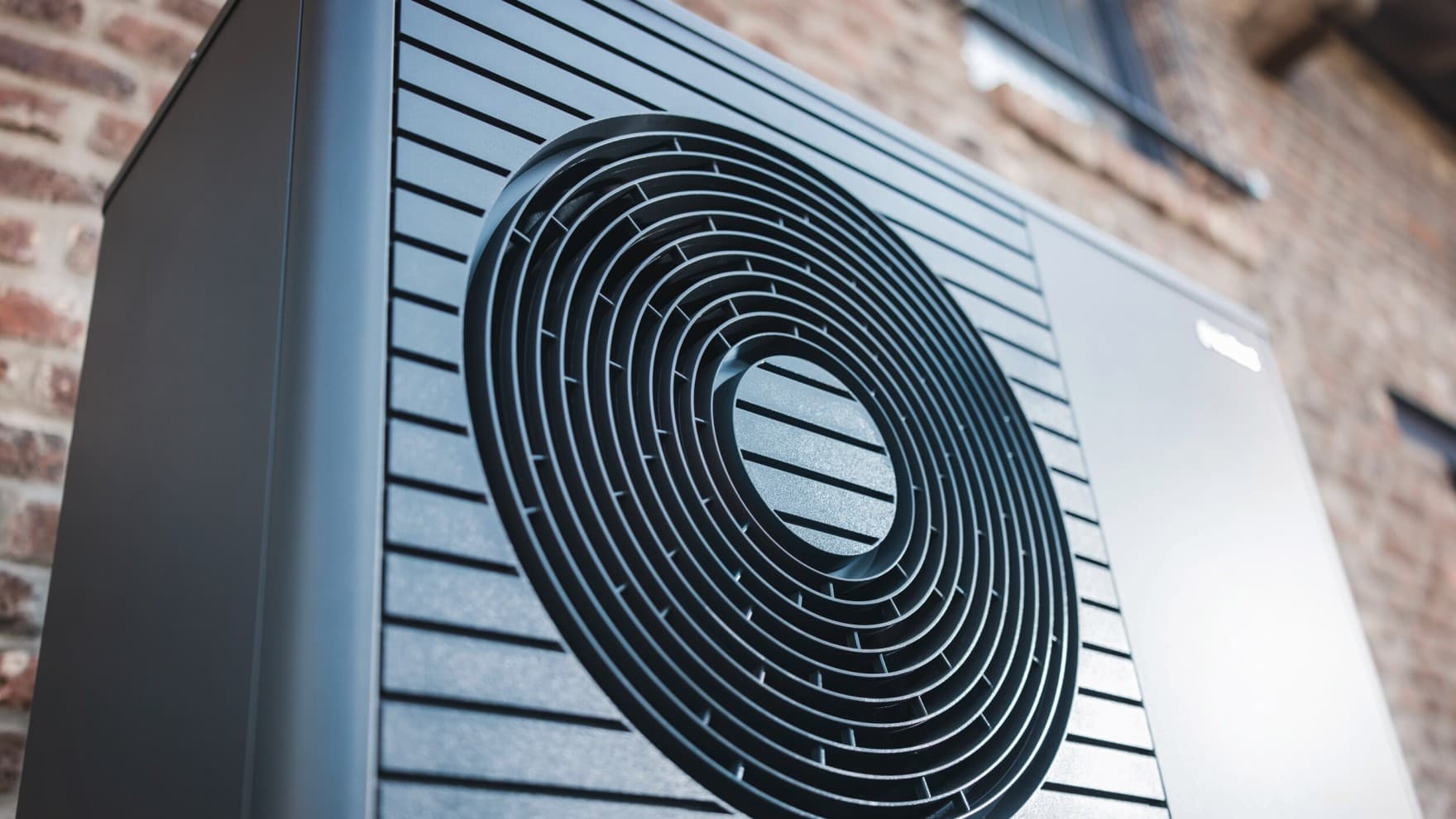
While some worry about noise levels, modern air-source heat pumps are designed with household peace in mind. They use fans to draw in ambient air, which can create some flow noise. However, air-to-water heat pumps placed outdoors produce sound levels between 46 and 64 decibels, depending on the mode. To put this in perspective, a fridge operates at about 50 decibels, and a normal conversation reaches around 60 decibels. With these comparisons, sound levels are quite manageable. At Vaillant, our heat pumps undergo intensive testing to optimise noise emission, and our particularly quiet models like the aroTHERM plus ensure a calm and quiet home.
Installation location.
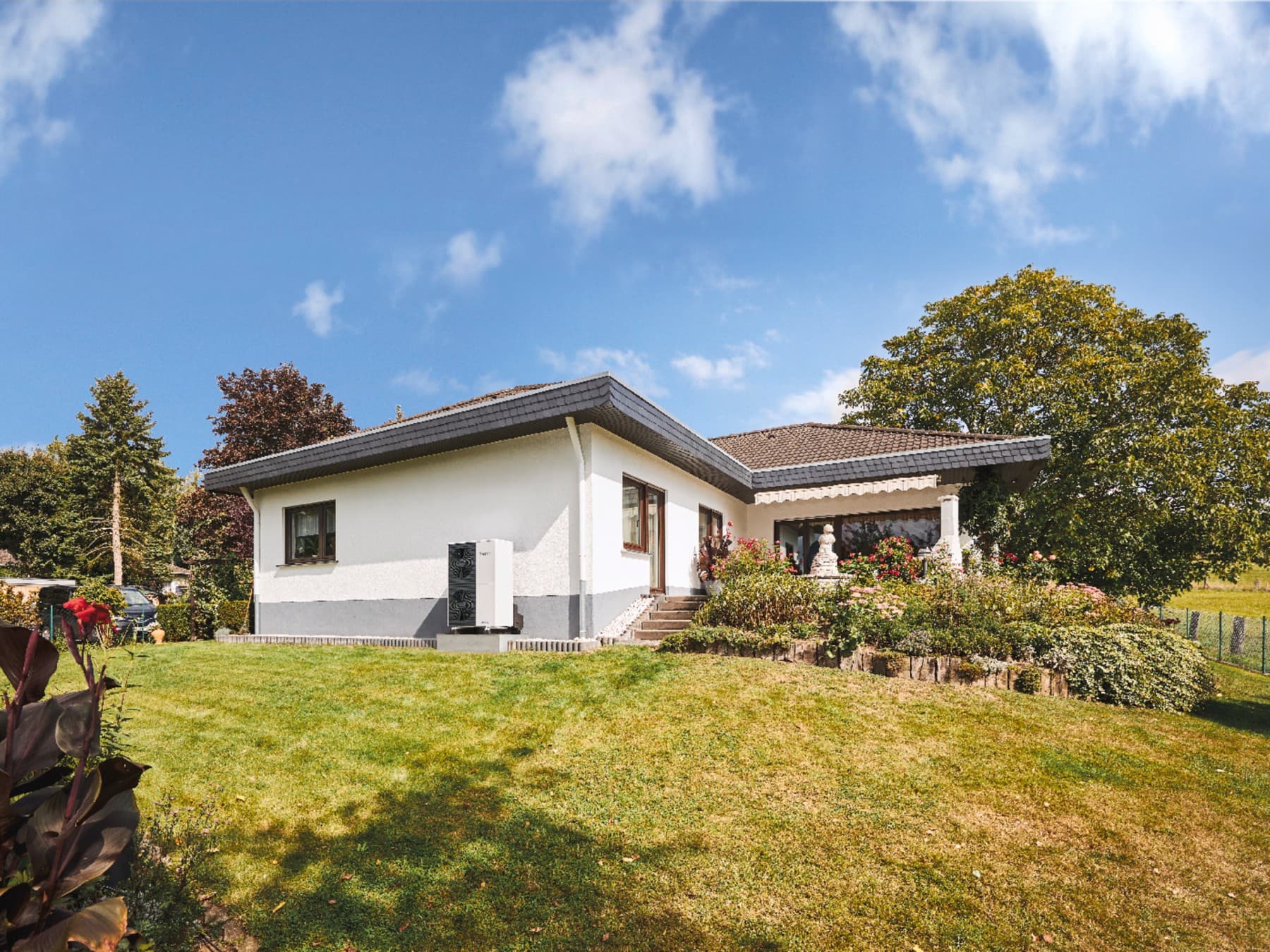
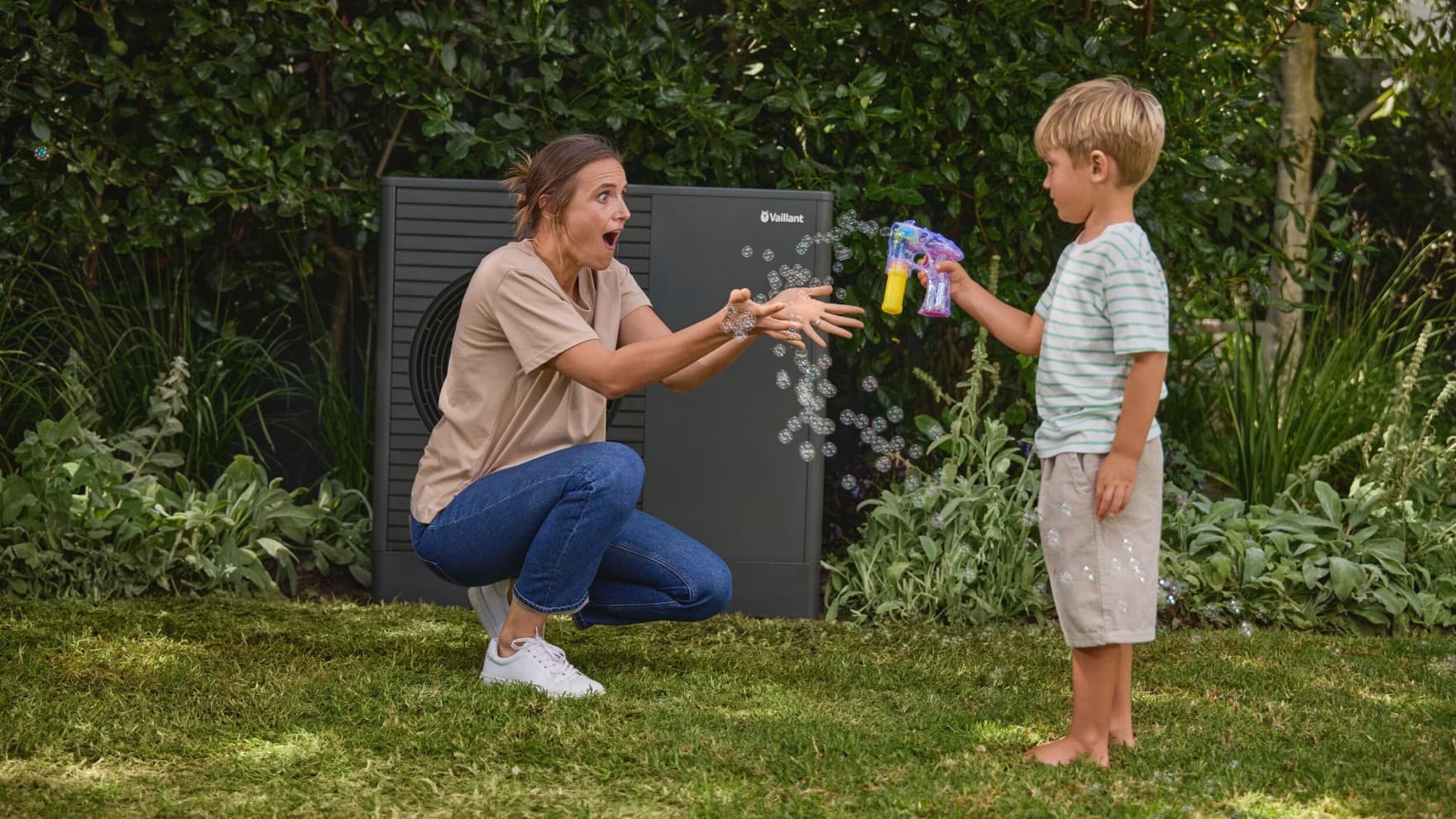
Choosing the ideal spot for your heat pump can greatly reduce noise levels, and our expert installers are here to guide you. Maintaining at least three metres from neighbouring properties ensures a peaceful environment. A grassy base is used to naturally absorb sound. For optimal quiet, avoiding placement against walls, between walls, or on tiles helps prevent noise amplification. If needed, a soundproof hood can be installed to reduce noise by up to ten decibels.
A heat pump won't fit my old home?
Heat pumps have evolved impressively, making them a fantastic option even for older buildings. They work most efficiently at flow temperatures between 35° and 45° Celsius, which usually requires proper insulation of the roof, walls, windows, and doors, and ideally underfloor heating.
However, even without these measures, heat pumps can still be a great fit. Standard units now easily reach temperatures of 55° to 60° Celsius without a significant increase in electricity consumption. For those seeking even more warmth, modern high-temperature heat pumps can achieve up to 75° Celsius, making them compatible with radiators. The key to success is a tailor-made plan that outlines every step before installation.
Learn more about how to modernise an existing building with a heat pump.

Do heat pumps deliver effective cooling?
A common myth is that heat pumps can't cool as effectively as traditional air conditioners. Yet, heat pumps are true multitaskers, offering warmth in winter, hot water year-round, and refreshing coolness in summer.
There are two ways to cool with a heat pump: passive cooling gently lowers temperatures by three to five degrees Celsius, ideal for ground source heat pumps, while active cooling uses more electricity for a stronger effect, engaging the compressor for enhanced performance.
Air-source, ground-source and water-source heat pump disdadvantages
Comparing disadvantages of different heat pump technologies.
- Air-source heat pump
- Ground-source heat pump
- Water-source heat pump
In principle, outside temperatures affect the efficiency of an air-to-water heat pump. Since these heat pumps use heat from the ambient air, they have to work harder in winter and therefore require more electricity than in summer in comparison to the other technologies.
Even in winter, on the coldest days when temperatures outside can drop as low as -20°C, air-water heat pumps provide reliable heating and ensure a constant supply of hot water.