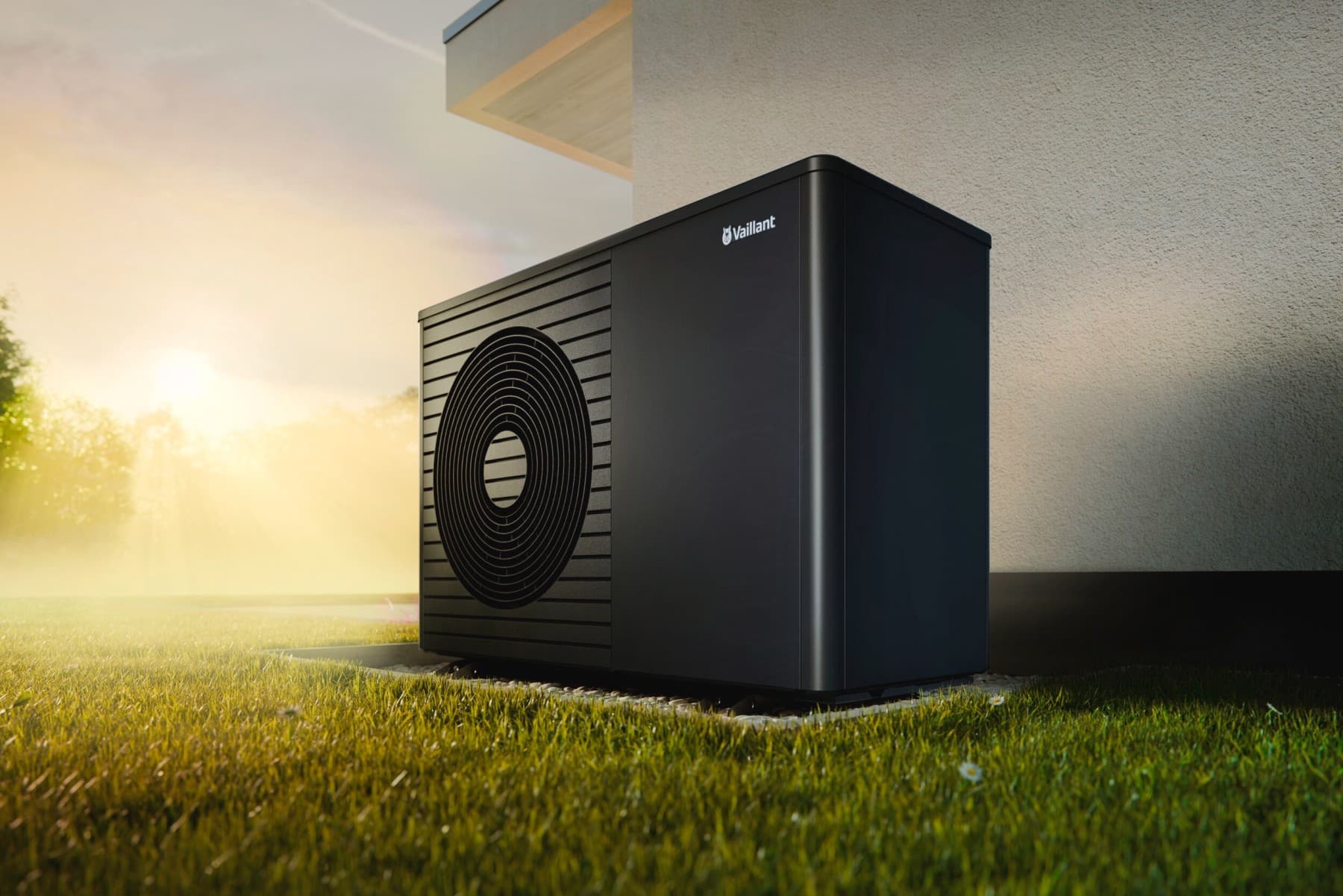
The new F-gas regulation: making way for even more sustainable heat pumps.

The EU F-gas regulation.
In February 2024, the EU introduced a new regulation aimed at further protecting the environment by reducing emissions of fluorinated greenhouse gases (F-gases).
In a nutshell the regulation stipulates: The heat pump technology, which is already significantly more resource-efficient than fossil fuel-based heating solutions, is now set to become even more climate-friendly. This makes heat pumps a key part of the energy transition in Europe.
This progress paves the way for sustainable and innovative climate solutions, making your home greener and more efficient.
F-Gas definition
What are F-gases?
Refrigerants in heat pumps are used to move heat, enabling heating and cooling. These refrigerants circulate within the system, absorbing and releasing heat as needed. Refrigerants can be natural or synthetic, with synthetic ones known as fluorinated gases or F-gases.
F-gases, are human-made synthetic greenhouse gases that containfluorine. Although F-gases do not harm the ozone layer, they have a high global warming potential, meaning they significantly contribute to climate change when released into the environment.
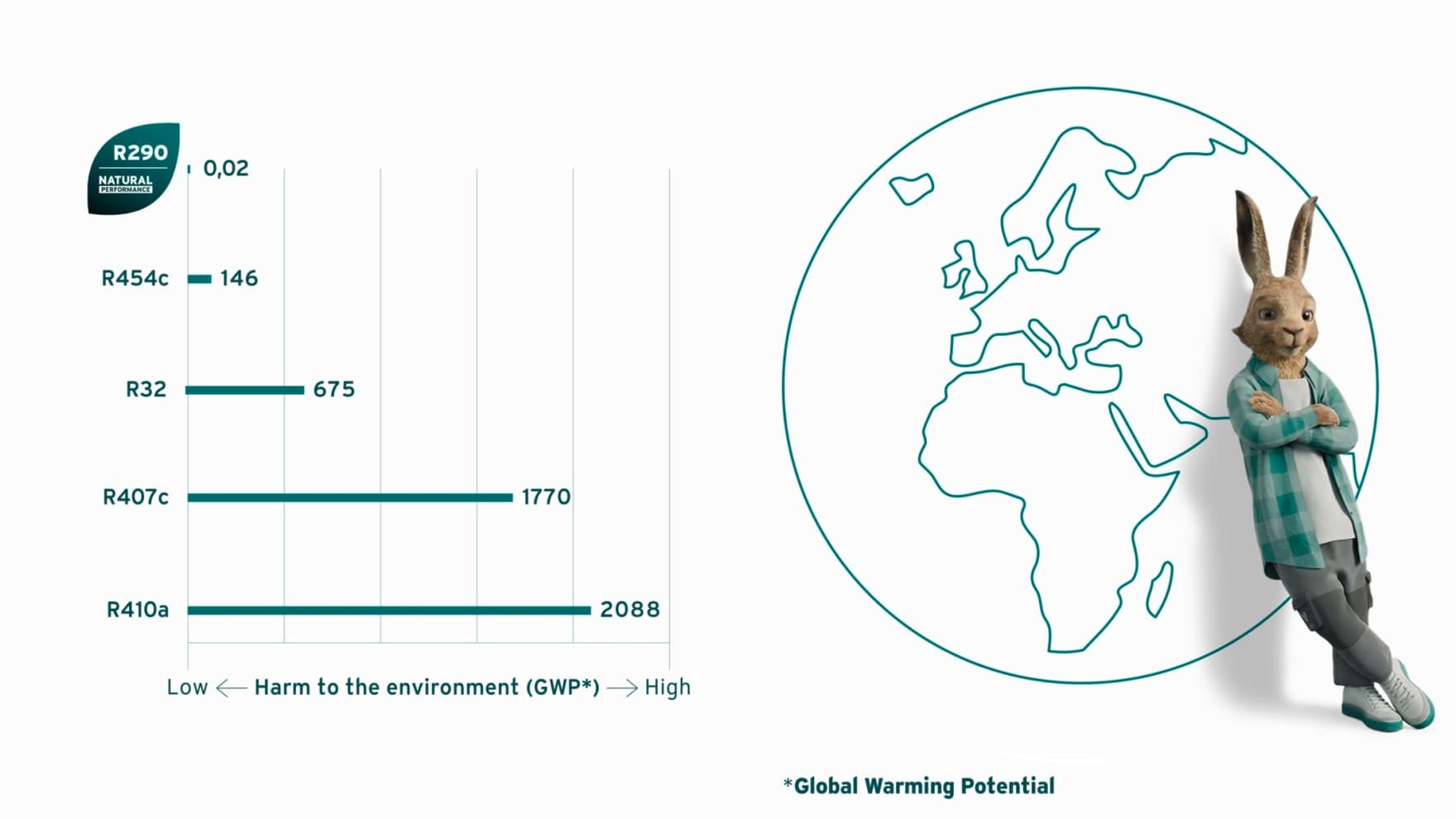
Definition of Global warming potential
The GWP of refrigerants.
GWP stands for "Global Warming Potential." It measures how much heat a substance can trap in the atmosphere compared to CO₂, which has a GWP of 1.
A higher GWP means more harm to the environment. For example, a refrigerant with a GWP of 2,000 is 2,000 times more impactful than CO₂.
Harm of f-gases
Why is action needed on synthetic refrigerants in heat pumps?
Under normal heat pump operating conditions, no refrigerant is released into the atmosphere, because heat pumps do not consume it. However, if the refrigerant escapes due to improper use or a technical defect such as a leak in the cooling circuit, it enters the atmosphere and poses an environmental hazard due to its high GWP.
The regulation was introduced to minimise the risk overall.
EU Ban on Harmful F-Gases
What does the regulation cover?
The EU's new regulation on refrigerants impacts heat pumps that use synthetic F-gases. The sale of synthetic refrigerants will be gradually reduced and eventually banned in a step plan, promoting climate-friendly alternatives with natural refrigerants.
In summary, monobloc heat pumps will need to be F-gas free from 2032. Split systems have a transition period until 2035.
By 2050, the use of synthetic refrigerants will be entirely phased out. The key factor in the new regulation is the Global Warming Potential (GWP) of F-gases or refrigerants.
Appliances with banned refrigerants may continue to be used and repaired without any limitations. Already installed heat pumps using a banned refrigerant can of course be used and repaired in the future without any limitations.
Alternative refrigerants in heat pumps
Our latest Vaillant heat pumps are worry-free for you and run on natural refrigerants.

aroTHERM plus.
At Vaillant, we are committed to a sustainable future. The aroTHERM plus air-water heat pump, using the natural refrigerant R290, is our high runner. For good reason: R290 is not an f-gas, has a GWP of 0,02 and therefore already meets all future requirements today!
It allows for higher flow temperatures, making it suitable for radiators, and therefore existing properties. As the refrigerant is widely available, it ensures long-term reliability.
This leads the way for further innovation of our heat pump portfolio, aiming to develop new solutions that reduce greenhouse gases and meet future demands.
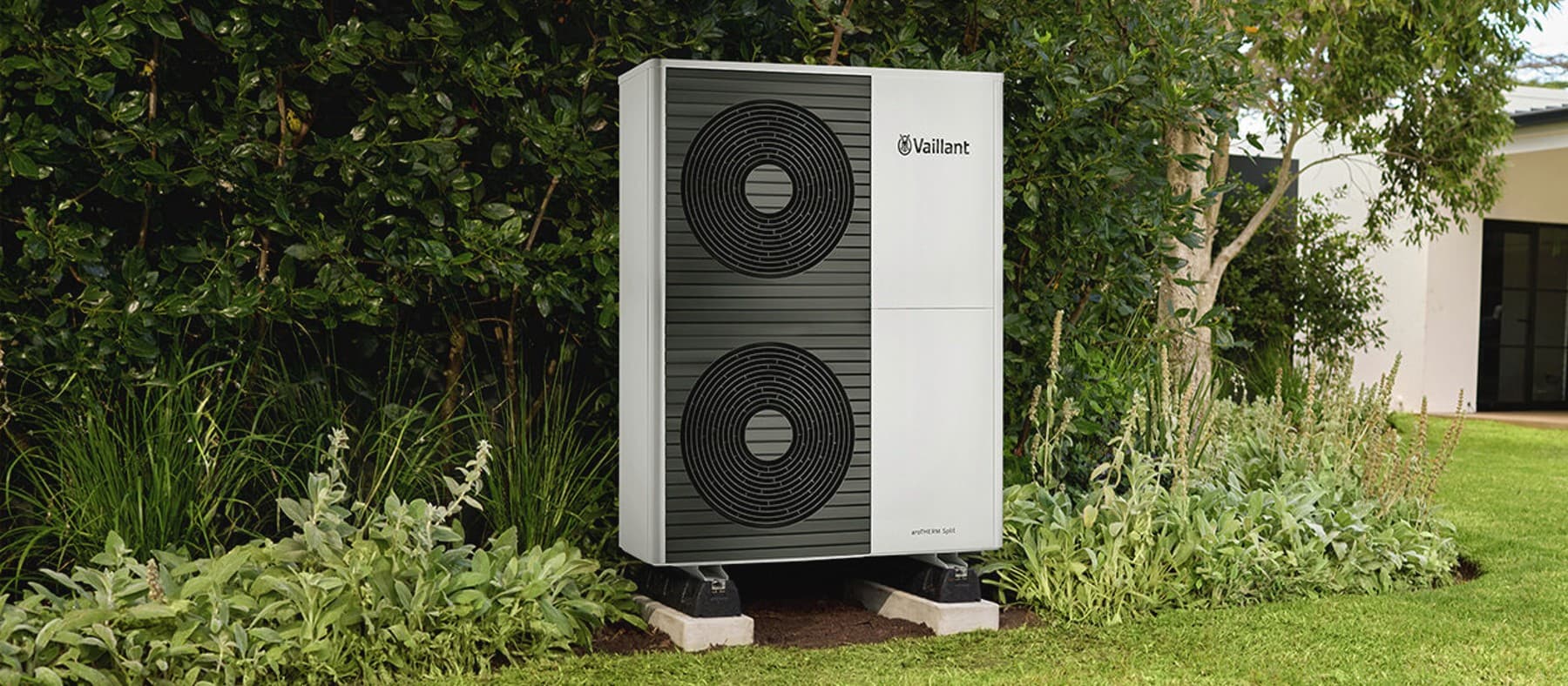
aroTHERM Split.
Powered by the innovative R32 refrigerant, our latest split heat pump offers a range of benefits. With its low running costs and quiet operation, it ensures maximum efficiency and comfort. R32 has a GWP of 675 and is therefore much more sustainable than its predecessor. The new aroTHERM Split plus convinces with an increased energy efficiency value ETAs of 203%, thus achieving A+++* ErP label for all models.
Heat pumps affected by the phase-out
Here's what you need to know if your heat pump is affected.
Get expert consultationThis regulation affects all new appliances that are produced and sold from January 1, 2027, and later.
Should you have an appliance containing a banned refrigerant you may continue to be used and repaired without any limitations.
- ≤ 5 tons CO₂ equivalence: no regular leakage tests.
- 5-50 tons CO₂ equivalence: annual checks necessary.
- 50-500 tons CO₂ equivalence: check every 6 months.
Do you have specific questions about the F-Gas Regulation or your heat pump? Are you looking for new heat pump solutions or alternatives that comply with the provisions of the regulation? Contact your trusted installer.