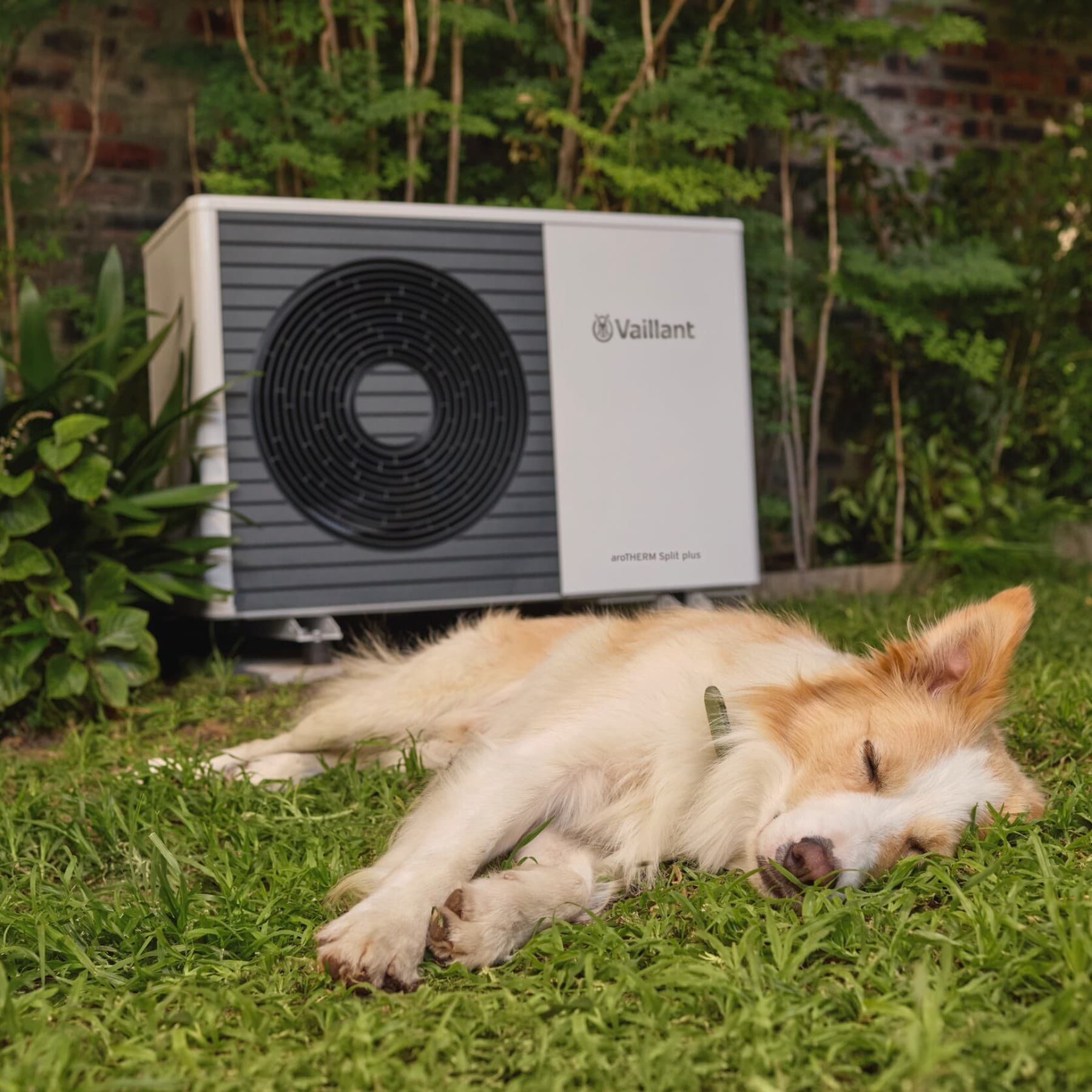
Uncovering the brilliance of how a heat pump works.

What's behind a heat pump
The basic principle of how a heat pump works.
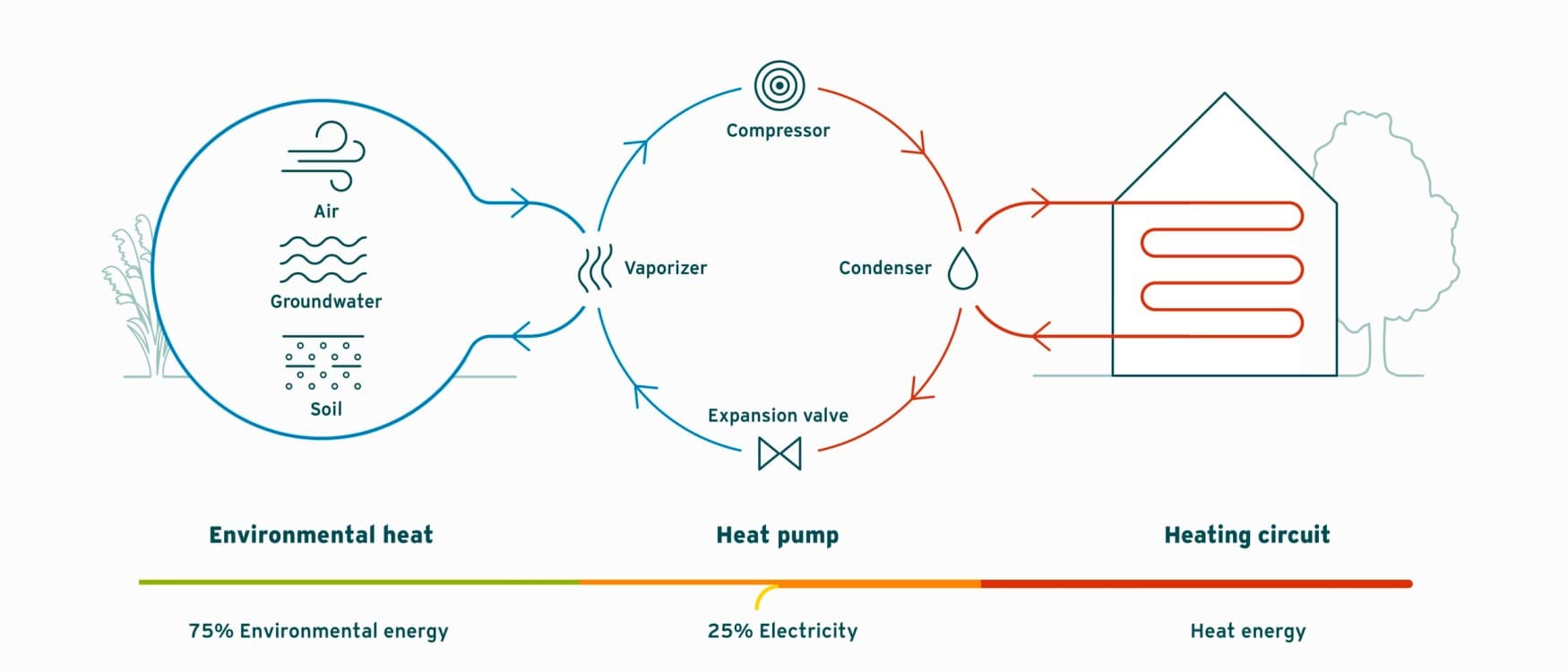
The operating principle of a heat pump is similar to that of a refrigerator, only in reverse. Instead of removing heat and releasing it into your kitchen, a heat pump draws heat from the environment and transfers it into your home. Even in freezing weather, air, ground, and water contain energy that can be tapped. At its core, this works through a thermodynamical process that shifts energy from a lower to a higher temperature level. Let’s take a closer look inside:
Opertaion principle step-by-step
The four steps of the heat pump cycle.
- 1/4
The evaporator collects heat from the environment (air, ground, or water) and transfers it to a refrigerant fluid circulating within the heat pump. This refrigerant has a very low boiling point, allowing it to absorb heat and transform from liquid to gas even at low temperatures. The refrigerant's special properties enable it to capture thermal energy even when the source temperature is quite low – as cold as -20°C with modern systems.
- 2/4
An electrically-powered compressor pressurises the gaseous refrigerant. This process significantly increases its temperature because of the Joule-Thompson phenomenon. It states that gases change their temperature when they expand without the addition of external energy. And this is where the magic happens – the compression process raises the temperature to a level suitable for home heating.
- 3/4
In the condenser, the now-hot refrigerant transfers its heat to your home's heating system through a heat exchanger. As the refrigerant releases heat, it cools down and returns to a liquid state, while your heating system distributes the warmth throughout your home.
- 4/4
Finally, the refrigerant passes through an expansion valve, which reduces its pressure and temperature further. Now it's ready to begin the cycle again – collecting environmental energy for your home.
The different heat pump types
The heat source makes the heat pump.
- Air-source heat pumpsLearn more
Air-source heat pumps extract heat from the surrounding air and transfer it to your home’s heating system. They are particularly popular thanks to their straightforward installation and versatility. Depending on the design, the refrigeration cycle can either be integrated entirely within one unit or divided between an indoor and an outdoor unit.
- Ground-source heat pumpsLearn more
Ground-source heat pumps harness the energy of the earth through collectors or boreholes. The ground maintains a relatively constant temperature throughout the year, making these systems particularly efficient even during the coldest winter days. While installation requires more extensive groundwork, the consistent performance and higher efficiency often make this investment worthwhile.
- Water-source heat pumpsLearn more
Water-source heat pumps extract heat from groundwater or nearby water bodies. They typically achieve the highest efficiency levels of all heat pump types due to the excellent heat transfer properties of water. They require access to a suitable water source and appropriate permissions, but deliver exceptional performance year-round.
Heat pumps in cold temperatures
How do heat pumps work in winter?
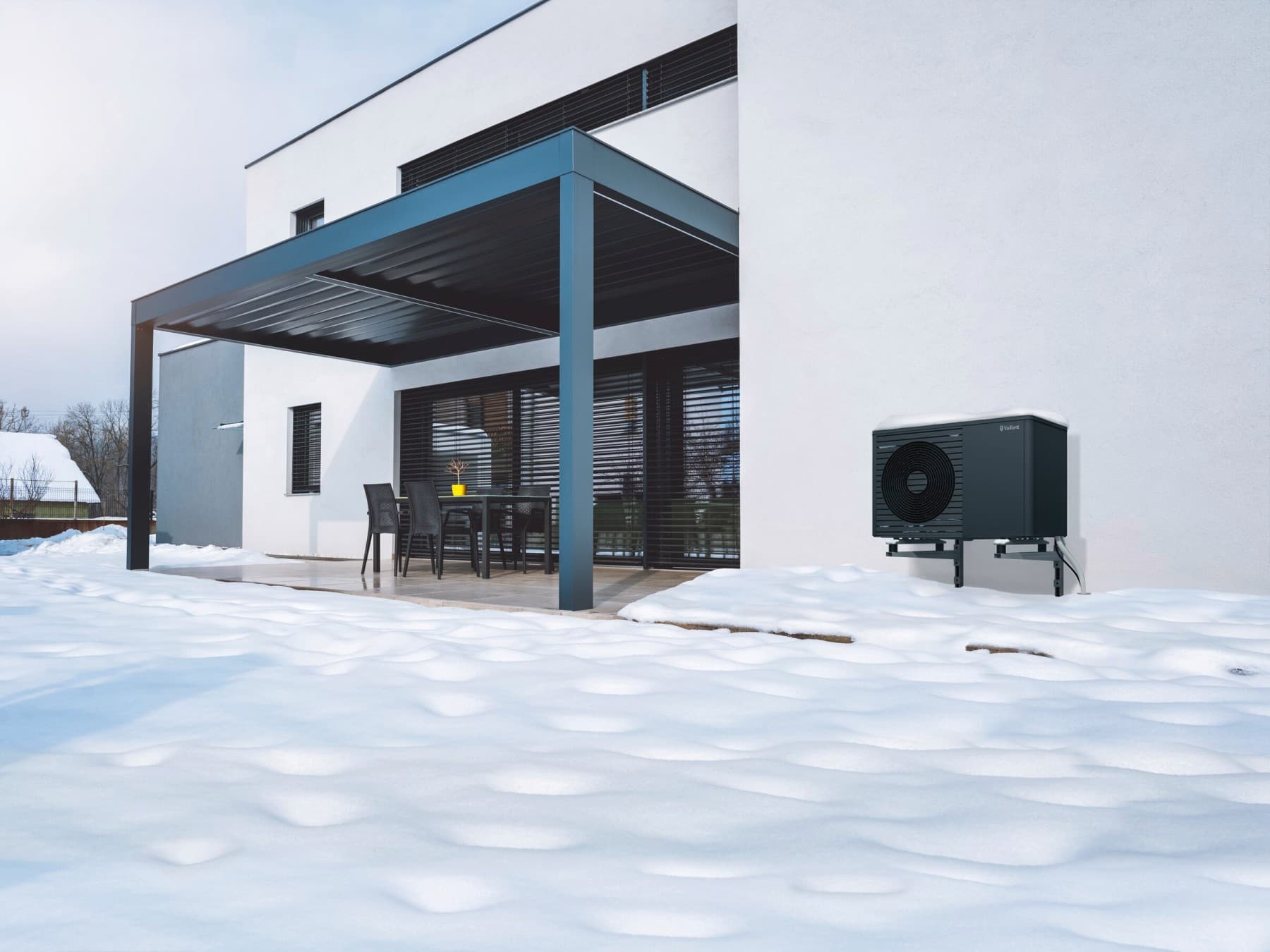
A question that is particularly important for air-source heat pumps. The modern ones are designed to operate efficiently even in cold weather. While the efficiency decreases somewhat as outside temperatures drop, today's systems maintain effective heating capability in temperatures as low as -20°C.
For extremely cold winters, many heat pump systems are complemented by a backup heating element that activates only when necessary, ensuring your home remains warm regardless of outside conditions. Alternatively, hybrid systems combine a heat pump with another heating, like a gas boiler, to optimise efficiency across all weather conditions.

Cooling with a heat pump
How a heat pump can cool your home in summer.
Heat pumps can do more than just heat your home – they can also keep it cool in summer. In systems designed for cooling, the process simply runs in reverse: the pump removes warmth from your rooms and releases it into the air, ground, or water outside. Often, the underfloor heating system is used to spread the cooling indoors.
Learn all about active and passive cooling with a heat pump in our guide.


Efficiency advantage
The efficiency of a heat pump.
Heat pumps are remarkably efficient because they don't generate heat – they simply move it from one place to another. This fundamental difference allows them to deliver 3-5 units of heat energy for every unit of electricity consumed. A ratio that makes the technology significantly more efficient than even the best conventional heating systems.
You can find various parameters for efficiency, which are measured in different ways. The coefficient of performance (COP) is the best known and is measured under laboratory conditions. However, the seasonal coefficient of performance (SCOP) and the annual performance factor (APF) are also key figures that you will encounter frequently. You can find more information on this in our guide.